


By Oyo Amebo


Once upon a time in Oyo State, farming was a story of grit rather than growth. The fields stretched endlessly, but so did the struggles. Generations of farmers tilled the same soil with the same tools, guided more by inherited instinct than by innovation. To farm was to survive, not to succeed.


Today, that narrative is being rewritten. Across the state, farming is no longer an act of endurance, but of intelligence. The old rhythm of hoe and cutlass has given way to a new symphony of learning, science, and enterprise.




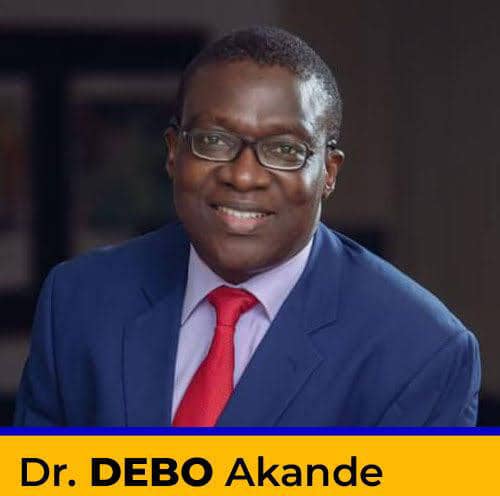
Dr. Debo Akande, who is the Director-General of the Oyo State Agribusiness Development Agency (OYSADA) and Executive Adviser to the Governor on Agribusiness and International Cooperation is the man with the vision in this pursuit.
Akande’s revolution is a quiet one, carried not by slogans but by ideas. His belief is clear and unwavering: to truly transform agriculture, one must first cultivate the mind. “Agriculture,” he says, “is applied knowledge, a blend of science, economics, and technology.” It is this conviction that underpins the new wave of agribusiness sweeping through Oyo State.
The Fashola Agribusiness Industrial Hub, one of the state’s most striking initiatives, captures this philosophy in action. It is not merely a centre of production, but a place of continuous learning.
Within its grounds, farmers, students, investors, and entrepreneurs trade insights as freely as they trade goods. Workshops and mentoring programmes unravel the mysteries of value chains, post-harvest processing, and digital marketplaces. The hub functions almost like a living laboratory, where ideas grow as steadily as crops.
This reimagined approach to agriculture goes far beyond machines and markets. Akande envisions a complete ecosystem, one that values knowledge as much as yield. Under the Youth in Agribusiness Initiative, young people are discovering that farming can be both high-tech and high-profit.
They are learning the intricacies of precision agriculture, mastering digital tools for trade, and managing cooperatives with the discipline of start-ups. Many have become “agripreneurs,” innovators who merge curiosity with commerce and transform local harvests into global opportunities.
Yet, this renaissance is not confined to youth. In rural communities, farmers who once watched their children leave for the cities now watch them return, with new skills, fresh ideas, and renewed confidence in the soil that raised them.
Through OYSADA’s outreach, they are discovering that technology and tradition can coexist, that small farms can be smart farms, and that prosperity need not be urban.
Dr Akande’s idea of education is expansive. It does not end in classrooms or conferences. It reaches into the very fabric of governance. “Policy is not a decree,” he insists. “It is a living experiment.” Under his guidance, Oyo State’s agricultural policies are becoming learning tools, responsive, data-driven, and participatory.
Government officials, cooperatives, and investors alike are being trained to think systemically, to see logistics, infrastructure, and export frameworks as parts of an interconnected whole.
This approach has opened the door to partnerships that extend Oyo’s influence far beyond its borders. Collaborations with international research institutions and development agencies are no longer about aid, but exchange.
Knowledge, technology, and markets now flow in both directions. Oyo’s produce is meeting export standards that demand traceability and sustainability, proving that local farmers can compete on the world stage.
Climate change, too, has found its place in Oyo’s agricultural curriculum. Through OYSADA’s climate-smart programmes, farmers are learning how to adapt, rotating crops, regenerating soil, conserving water, and reducing waste.
Renewable energy and organic farming are being treated not as luxuries, but as lifelines. Sustainability, as Akande frames it, is simply “good economics.”
The results are increasingly visible. Post-harvest losses are falling. Processing industries are growing. Incomes are rising. And perhaps most meaningfully, rural life is regaining its dignity.
The farmer in Oyo today does not simply cultivate crops, he cultivates ideas. He experiments, innovates, and collaborates. He is part of a wider story that links education to empowerment, and learning to livelihood.
Dr. Debo Akande has not only redefined agriculture; he has redefined what it means to govern intelligently. By turning farms into classrooms and farmers into thinkers, he has shown that development is not just about what is built on the land, but what is built within the mind.
Across Oyo’s fields, you can now sense that shift, a quiet confidence, a new understanding of what growth truly means. Every seed planted carries not just the promise of food, but of knowledge. And in this new season of cultivation, the harvest is more than grain; it is wisdom itself.
