


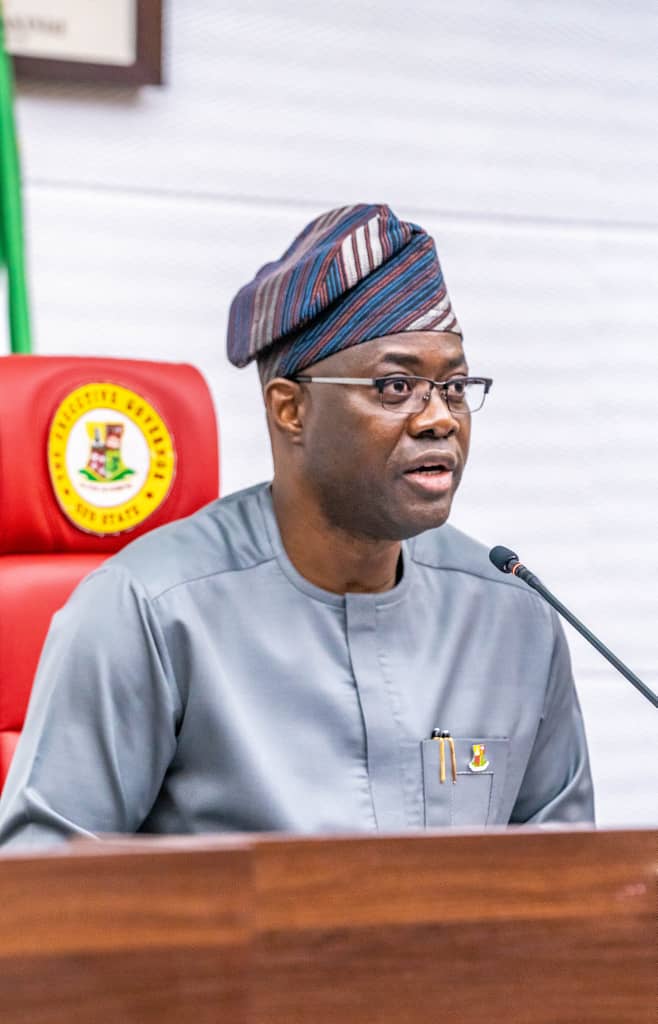
One of the oldest principles of justice is that actions speak louder than words.
By that standard, the allegation by the Muslim Rights Concern (MURIC) that Governor ‘Seyi Makinde is anti-Islam falls flat on its face.
Enemies of Islam do not build mosques years before seeking public office.
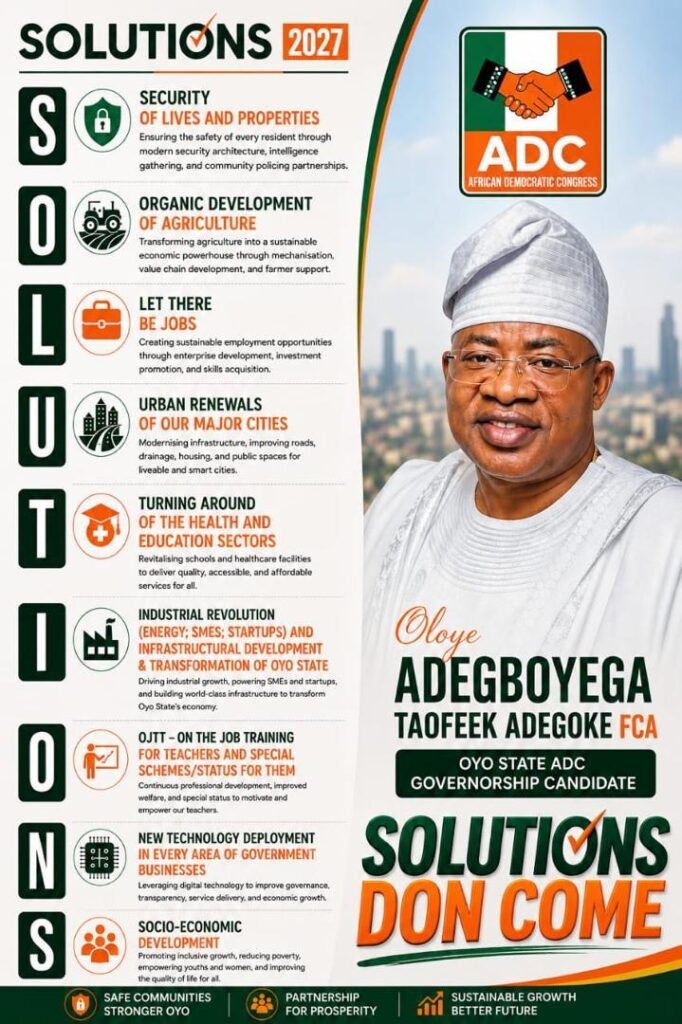
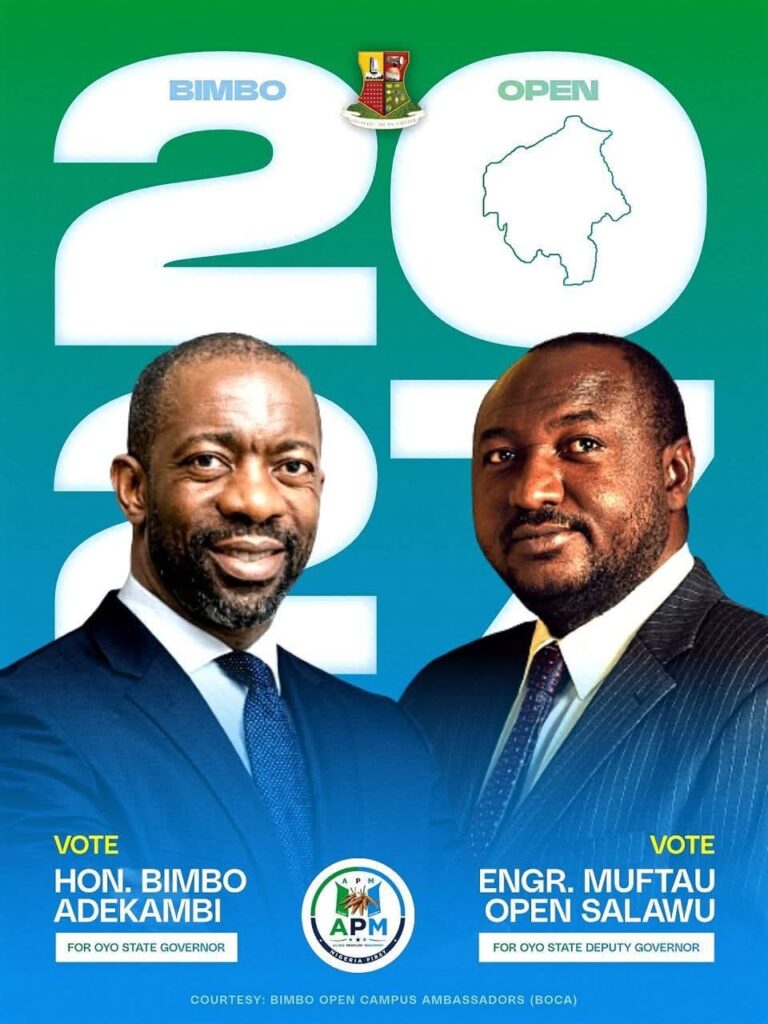

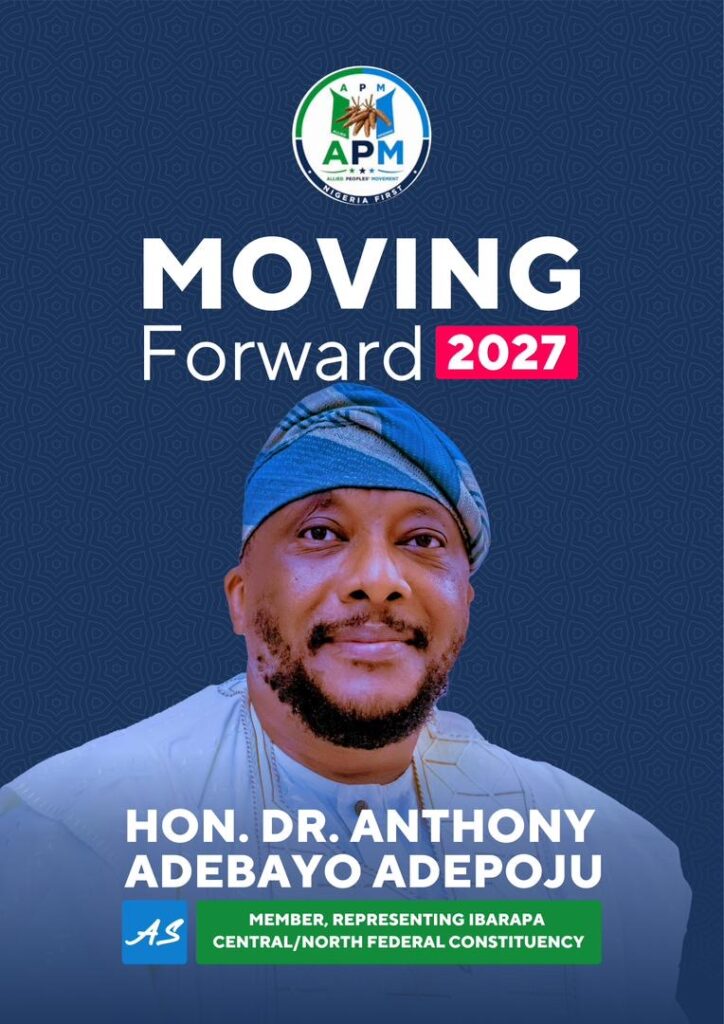
This was contained in a statement issued and signed by the Co-Director, Media and Publicity, Oyo State APM Campaign Council, Dr Sulaimon Olanrewaju, made available to newsmen on Thursday.

They do not employ Imams. They do not organise and support Islamic programmes. They do not donate buses to Muslim organisations. They do not recognise the Islamic New Year with a public holiday. And they certainly do not worship alongside Muslims before undertaking a public project and then fulfil a public commitment to rebuild a mosque affected by that project.




Yet these are precisely some of the actions associated with Governor Makinde.
Long before becoming governor, he built the Omituntun Mosque and employed a resident Imam. For years, the Omituntun family maintained engagement with the Muslim community through Ramadan lectures, Islamic programmes and other religious activities. His relationship with Muslims did not begin after assuming office.

It predates public office itself.
This is significant because it predates political power, state resources and any ambition for higher office. It was undertaken at a time when there was no public office to defend and no election to contest.
The obvious question is this: Why would a man allegedly driven by anti-Muslim prejudice invest his personal resources in building and maintaining a mosque years before becoming governor?
Indeed, one of the strongest tests of sincerity is what a person does before acquiring power. Actions taken before there are votes to win often reveal more about an individual than accusations made during political contests.
More importantly, since becoming governor, what Islamic practice has Makinde abolished? What Muslim institution has he proscribed? What Islamic celebration has he banned? What Muslim right has he withdrawn?
The answer is simple: none.
On the contrary, his administration formally recognised the significance of the Islamic calendar by declaring a work-free day to commemorate Hijrah, the Islamic New Year.
The evidence of Governor Makinde’s engagement with the Muslim community extends beyond symbolism. Over the years, he has supported Muslim organisations and institutions in practical ways, including donations and support to Islamic bodies.
Equally important is the fact that MURIC’s allegations regarding Christmas carols in schools and attendance at Christian crusades remain allegations.
These are serious claims. However, no official directive, circular, executive instruction or policy of the Oyo State Government has been produced showing that Governor Makinde ordered or approved the alleged forcing of Muslim students or teachers to participate in Christmas carol activities or Christian crusades.
One of the most frequently cited allegations against Governor Makinde concerns the demolition of the Adogba Central Mosque during the reconstruction of the Iwo Road Interchange. Ironically, this is also the issue that exposes the weakness of the anti-Islam narrative.
What critics, like MURIC, often omit is that before the demolition took place, Governor Makinde personally visited the mosque, joined Muslims in worship, explained why the structure had to give way for the infrastructure project and publicly committed to rebuilding it.
More importantly, he fulfilled that commitment and handed over the mosque with many modern facilities, to the community.
The commissioning of the mosque was attended by eminent Muslim leaders, including the Sultan of Sokoto, the spiritual leader of Nigerian Muslims.
The question to ask is that would the Sultan publicly align himself with a programme meant to estrange Muslims?
The answer is a loud ‘No’.
The allegation that Governor ‘Seyi Makinde is anti-Islam ultimately rises or falls on a very simple test:
Name one Islamic practice he abolished.
Name one Muslim right he revoked.
Name one Islamic institution he dismantled.
Name one government policy specifically designed to suppress Islam.
Till date, no evidence has been presented showing that Governor Makinde abolished any Islamic practice, revoked any right enjoyed by Muslims, dismantled any Islamic institution or adopted any policy designed to restrict the practice of Islam.
What the public record shows instead is a longstanding pattern of engagement with the Muslim community, support for Islamic activities, recognition of the Islamic New Year, assistance to Muslim organisations and the rebuilding of the Adogba Mosque after its demolition became necessary for a major infrastructure project.
The available facts tell a story of inclusion rather than exclusion, engagement rather than hostility.
Indeed, if Governor Makinde’s conduct before and during his tenure is any indication, there is every reason to believe that, if elected President of Nigeria, he would continue to uphold the constitutional rights of all Nigerians, regardless of religion, and support an environment in which Muslims, Christians and adherents of other faiths are free to practise their beliefs in peace, dignity and mutual respect.
