
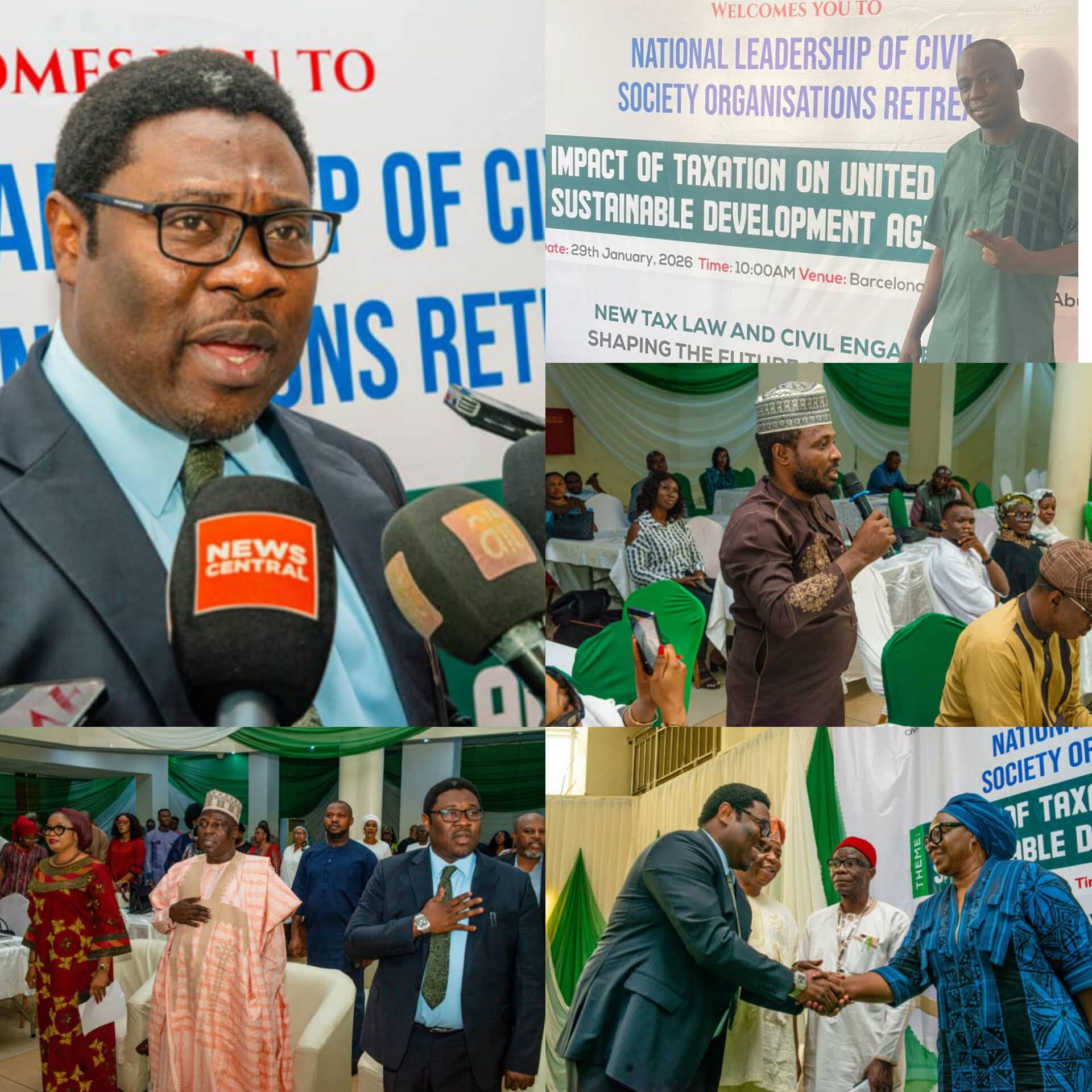
…Seek Equitable Distribution of Resources
Civil Society Organisations (CSOs) and Community-Based Organisations (CBOs) across Nigeria have endorsed the new tax reforms introduced by the current administration of President Bola Tinubu, urging Nigerians to comply with their tax obligations as a civic responsibility essential for national development.

This was the outcome of the National Retreat on the New Tax Law Development, which was held at Barcelona Hotel, on Thursday, in Abuja.
The Director General of the Civil Society Organisations on Community Advancement and Humanitarian Empowerment Initiatives (CSCHEI) Kunle Yusuff, MON, on behalf of over (200) national leadership of accredited CSOs and CBOs, while delivering his welcome address, noted that taxation remains a critical tool for driving progress towards the Sustainable Development Goals (SDGs) Agenda 2030.
He stresed further that the newly introduced tax law presents both opportunities and challenges that require collective engagement, vigilance, and strategic advocacy from civil society.
According to him, the retreat was convened to align CSOs and CBOs towards promoting a tax regime that supports Nigeria’s development aspirations, strengthens domestic resource mobilisation, and guarantees accountability in the management of public funds.
“We will explore how effective taxation can accelerate progress on the SDGs, foster inclusive growth, and improve the overall well-being of Nigerians,” Yusuff said.
The CSCHEI Director General acknowledged the efforts of the Federal Government in introducing the New Tax Law, describing taxation as a key driver for sustainable development and improved citizen welfare.
Yusuf emphasised that when properly implemented, taxation enables governments to allocate resources effectively for both human and capital development.
He further outlined the commitments of accredited CSOs and CBOs, which include promoting transparency and accountability so citizens can understand how their taxes are utilised; advocating fairness and equity, particularly for low-income households and vulnerable groups; supporting tax education through workshops, media campaigns, and community outreach; and engaging in sustained policy dialogue with government agencies, the private sector, and international partners.
Continuing, he stressed the importance of monitoring the implementation and impact of the New Tax Law, adding that civil society would deploy media and digital platforms to raise awareness, encourage compliance, and deepen citizen engagement on tax-related issues.
Highlighting the broader development impact of taxation, Yusuff explained that tax revenues fund essential services such as healthcare, education, infrastructure, and security (SDGs 3, 4, 9, and 16), reduce inequality through progressive taxation (SDG 10), drive sustainable growth by incentivising green investments and innovation (SDGs 7, 8, and 13), and finance infrastructure and urban development initiatives (SDGs 9 and 11).
He called for stronger collaboration between the Federal Inland Revenue Service (FIRS) and anti-graft agencies, noting that the Independent Corrupt Practices and Other Related Offences Commission (ICPC) and the Economic and Financial Crimes Commission (EFCC) remain key players in Nigeria’s fight against corruption and financial misconduct.
He disclosed that national accredited CSOs would also establish robust monitoring mechanisms to track compliance and revenue utilisation.
“I trust this retreat will foster meaningful dialogue, build consensus, and chart a clear course for CSOs to champion the effective implementation of the new tax law,” Yusuff concluded.
At the end of the retreat, representatives of over 200 accredited CSOs and CBOs adopted a set of resolutions and recommendations, formally endorsing the New Tax Law and acknowledging its potential to promote development and support the masses.
In their desperate resolutions, the organisations called for effective and transparent implementation of the law, continuous engagement with civil society and other stakeholders, enhanced tax education and awareness to promote voluntary compliance, and strict accountability in the management of tax revenues, with a focus on SDG-aligned programmes and projects.
Reaffirming their commitment, the CSOs and CBOs pledged to continue advocating transparency and equity, supporting tax education initiatives, engaging policymakers, monitoring outcomes, and using media platforms to deepen public understanding of taxation.
They also reiterated the need for synergy among FIRS, ICPC, EFCC, and civil society to combat tax crimes, curb leakages, and ensure that tax revenues translate into tangible development outcomes for Nigerians.
