


By Oyo Amebo
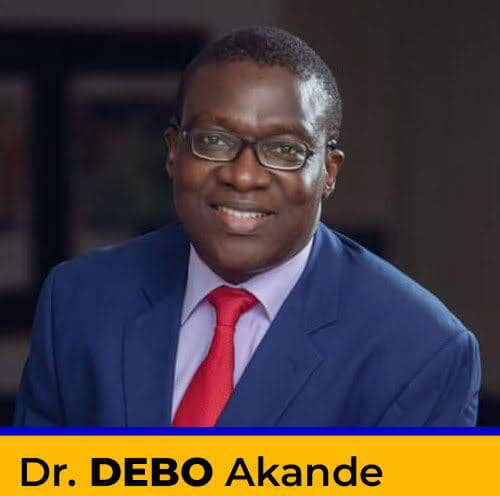
Agriculture is often spoken of as land, labour and yield. Under Dr Debo Akande’s stewardship in Oyo State, it became something more strategic: a language through which the state introduced itself to the world.

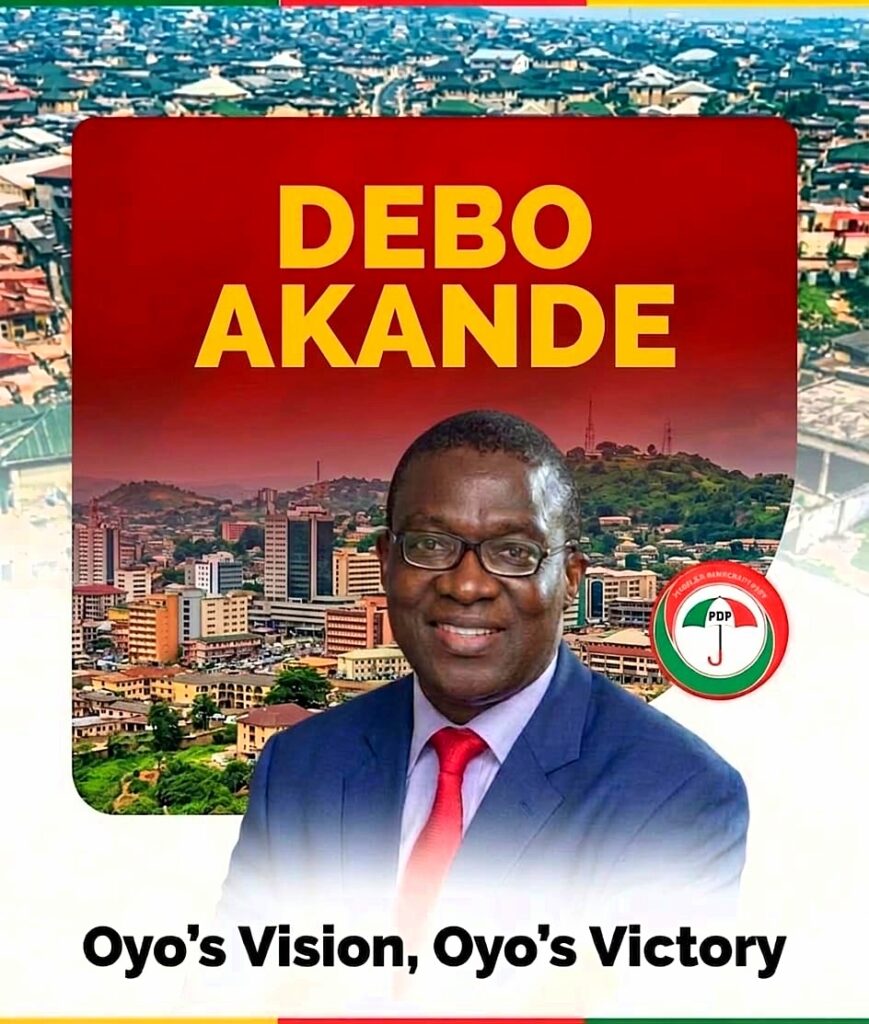
What emerged was not simply an expansion of farming activity, but a deliberate repositioning of agriculture as a diplomatic, industrial and economic instrument, capable of carrying Oyo from local production into global relevance.

Akande’s approach marked a clear departure from conventional portfolio management. Rather than treating agriculture as a self-contained sector, he framed it as an interface between Oyo State and international capital, policy, technology and markets.
The farm, in this vision, was no longer an endpoint. It became a gateway into global value chains, a site where local enterprise met foreign investment and where standards, scale and sustainability mattered as much as soil and rainfall.


At the centre of this shift was a carefully constructed strategy of engagement. International cooperation was neither incidental nor ornamental. It was pursued with intent, sequence and clarity of purpose.



Through sustained interactions with foreign governments, multilateral development institutions, global agribusiness corporations and trade bodies, Akande steadily repositioned Oyo’s agricultural narrative from one of regional output to one of international participation.

Each engagement served a defined function. Memoranda of understanding were not ceremonial documents but frameworks for investment and technical collaboration.
Investment dialogues were grounded in demonstrable capacity rather than speculative promise.
Diplomatic exchanges consistently reinforced the same message: Oyo State was open, prepared and institutionally aligned with global agribusiness expectations.
This outward-facing posture rested firmly on the development philosophy of Governor Seyi Makinde, whose administration reframed agriculture as an industrial driver rather than a subsistence activity.
Akande emerged as the principal translator of that vision, carrying it into international spaces with coherence and discipline.
His argument was both simple and persuasive: modern agriculture thrives on value addition, processing infrastructure, export readiness and structured markets, not on raw output alone.
What distinguished the strategy was its insistence on substance. International partnerships were tied directly to on-ground development. Agro-industrial zones expanded in both capacity and functionality.
Logistics improved. Production systems modernised. Foreign capital did not displace local enterprise; it intersected with it, strengthening institutional capacity and accelerating scale. Agriculture was integrated into a broader industrial ecosystem, linking farms to factories, markets and transport corridors.
Akande was equally clear that effective cooperation extends beyond funding. Under his leadership, partnerships prioritised technology transfer, quality control, standards harmonisation and access to export markets.
Engagements with European and African trade institutions strengthened compliance with international requirements, while alignment with frameworks connected to the African Continental Free Trade Area repositioned Oyo’s producers within continental and global trading systems.
In doing so, he quietly reframed the expectations placed on local agriculture. Farmers were no longer producing solely for informal or proximate markets. They were participating, directly or indirectly, in cross-border commerce.
The narrative shifted accordingly: from volume to value, from isolation to integration, and from potential to performance.
The Oyo State International Agribusiness Summit became the most visible expression of this orientation. It functioned less as a showcase and more as a verification exercise.
International participants encountered not projections, but processes already underway. Policy alignment, infrastructure development and institutional coordination had been advanced well before the event convened, lending credibility to the state’s claims and confidence to its partners.
Yet the most compelling dimension of Akande’s strategy lay in its social grounding. Global engagement was consistently framed as a means to local advancement. Farmers, processors and rural communities remained central to the policy logic.
By linking international markets to employment creation, income stability and dignity of labour, he presented diplomacy not as abstraction, but as a practical lever for inclusive development.
The effects of this approach became increasingly evident. Farmers were integrated into structured value chains supported by international investment and institutional backing. Agro-industrial zones connected more effectively to national infrastructure.
Regulatory and policy frameworks reflected an understanding of global trade realities. Oyo State demonstrated not only the ability to attract partnerships, but the institutional maturity required to sustain them.
What emerged, therefore, was not a moment, but a method. Akande’s work illustrated how subnational leadership can operate confidently on the global stage without losing sight of local realities.
Agriculture, in his hands, became both an economic engine and a diplomatic signal, announcing Oyo State as a serious participant in global agribusiness.
Through this deliberate internationalism, Oyo learned to cultivate more than crops. It cultivated credibility, partnerships and long-term positioning.
In doing so, Dr Debo Akande showed how thoughtful strategy, rooted in local capacity yet oriented towards global systems, can transform a traditional sector into a platform for enduring growth and relevance.
