


By Oyo Amebo

What does real development look like when it no longer trickles down from distant offices, but rises from the people themselves?

In Oyo State, under Honourable Abideen Tokunbo Adeaga, the answer is clear: it looks like communities taking charge, like ordinary citizens shaping their own destinies, and like governance measured not by speeches, but by lived experience.

Over the past year, the State’s approach has shifted decisively. Across towns, villages, and peri-urban settlements, residents, mothers, elders, youths, and local leaders, have moved from the margins to the centre of decision-making.
They are no longer spectators of development; they are co-creators. Together, they identified priorities, designed solutions, and assumed responsibility for outcomes, demonstrating what can be achieved when leadership truly listens.


By the end of 2025, more than 250 community-led micro-projects had touched over 350,000 lives. Solar-powered boreholes brought clean water to previously neglected settlements.


Classrooms were strengthened to provide safe, consistent learning environments. Healthcare centres were sited and equipped according to actual need rather than convenience.

These were not gestures of charity, they were tangible signs of what happens when people are empowered to act.
Adeaga’s leadership is distinguished not only by its scope but by its insistence on sustainability.
Communities contributed land, labour, and oversight, forming monitoring committees to safeguard projects long after official ceremonies ended. Development became a shared responsibility, integrated into daily life rather than imposed from above.
Inclusivity is woven into every facet of this approach. Widows received support to build sustainable livelihoods; orphans found mentorship and community integration; persons with disabilities were actively involved in decision-making.
Women and youth increasingly assumed leadership roles, strengthening civic participation and social trust, the quiet yet indispensable pillars of lasting progress.
One of the year’s most emblematic initiatives, delivered under the Nigeria Community Action for Resilience and Economic Stimulus programme in partnership with the World Bank and the Federal Government, reached over 10,000 vulnerable citizens with food and cash support.
But its significance went beyond immediate relief: it sent a powerful message that the State’s most marginalised were seen, valued, and central to Oyo’s story of growth.
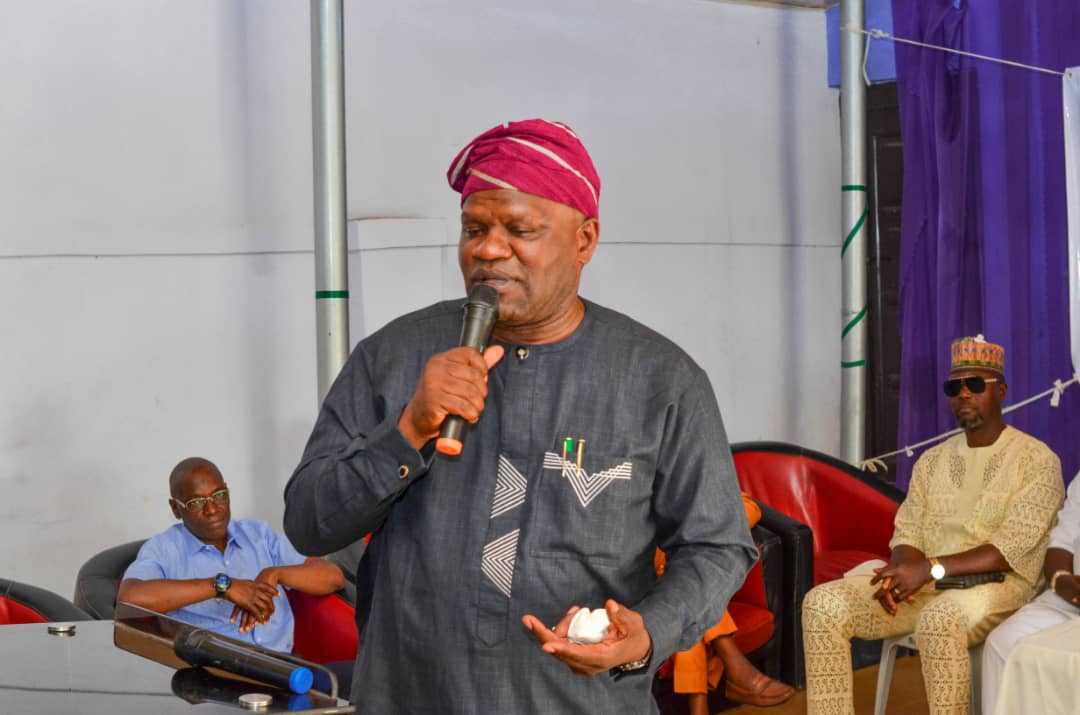
At the Alegongo Community Hall in Lagelu, Adeaga addressed beneficiaries with a mixture of gratitude and resolve. Residents were reminded that safeguarding infrastructure and programmes is as important as implementing them, a call for continuity, ownership, and pride in what has been built together.
Simultaneous interventions across Ibadan, Oke-Ogun, Oyo, Ibarapa, and Ogbomoso reinforced a statewide ethos: true development leaves no one behind.
As Oyo State moves forward into 2026, one lesson resonates above all: development is nurtured, not decreed. It thrives when citizens are empowered, when leadership listens, and when progress is structured around the realities of everyday life.
In functioning schools, clean water points, thriving markets, and resilient healthcare centres, the quiet revolution of 2025 has established a blueprint for the future, one built on purpose, inclusivity, and enduring impact.
Under Adeaga’s stewardship, Oyo State is not merely sustaining progress; it is expanding it, deepening it, and proving that when governance becomes participatory, development becomes permanent.
