


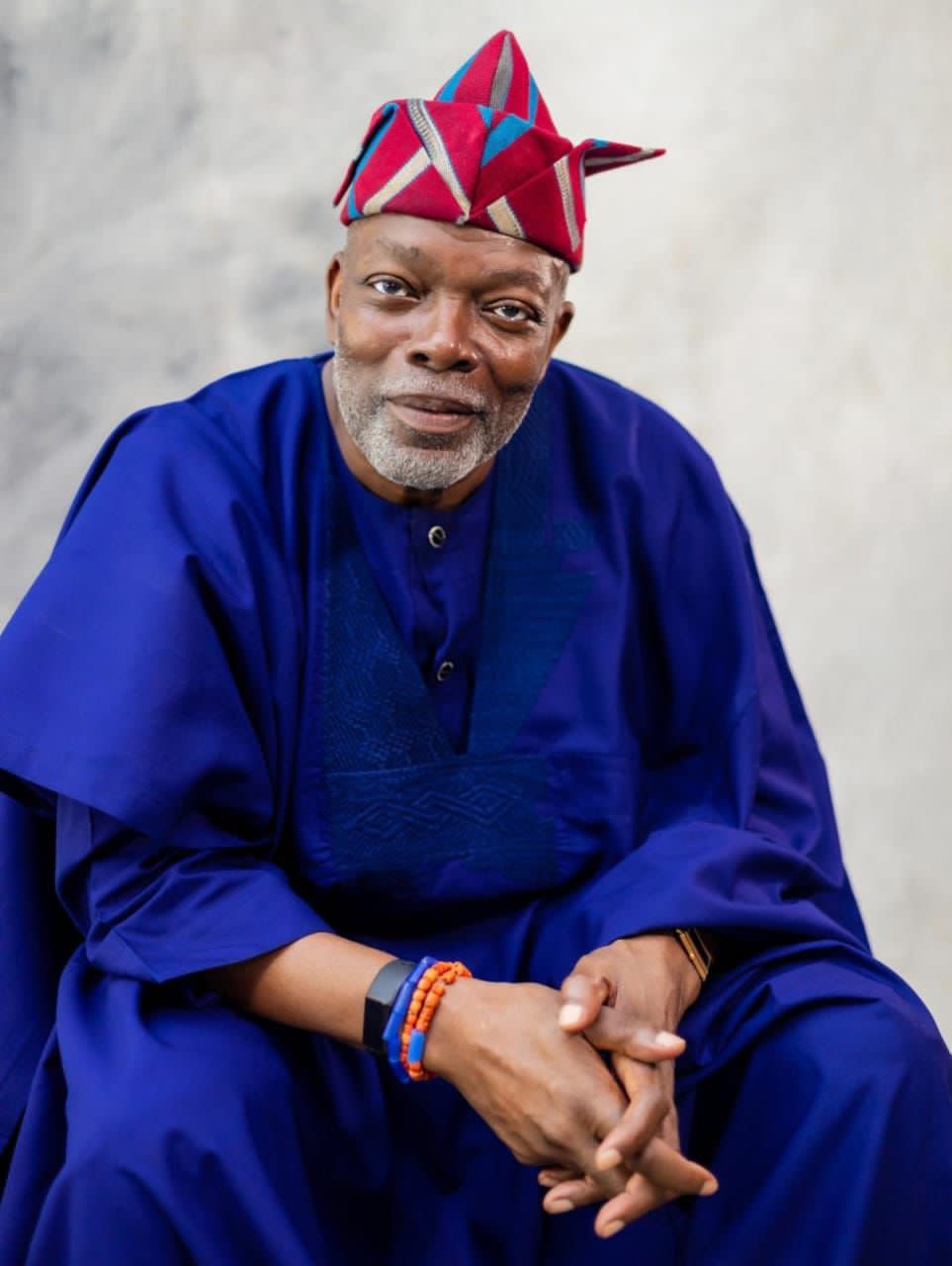
How the ADC wave is rewriting Tinubu’s home base
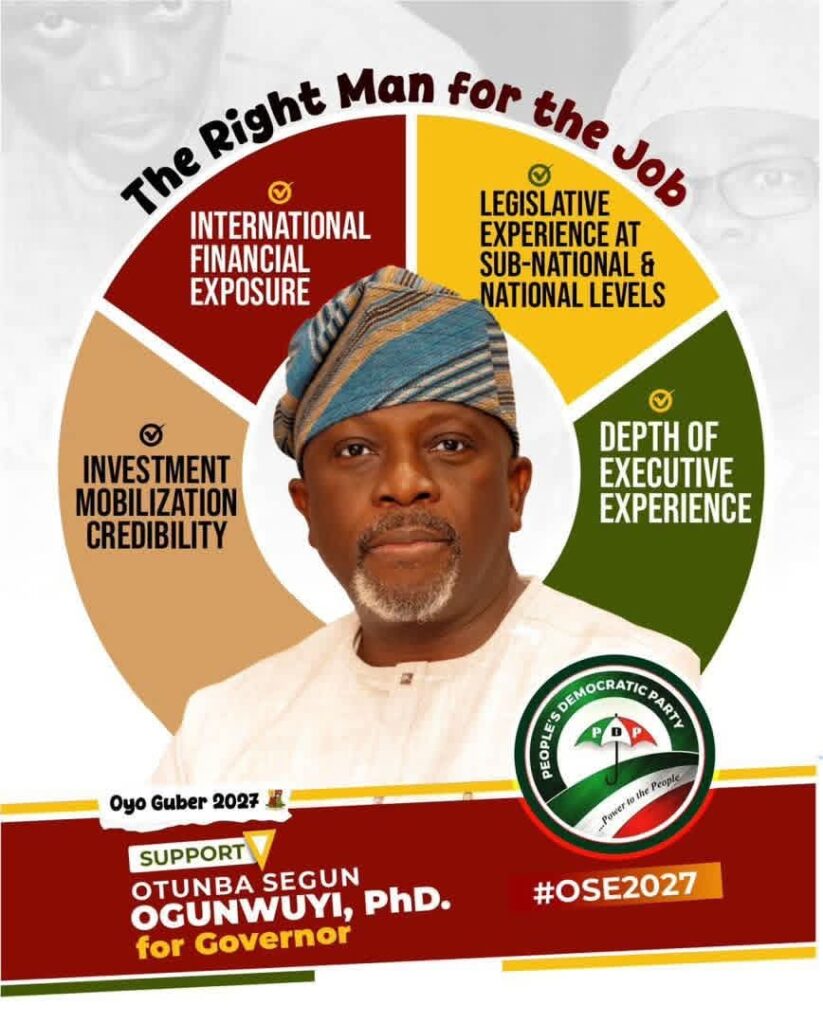
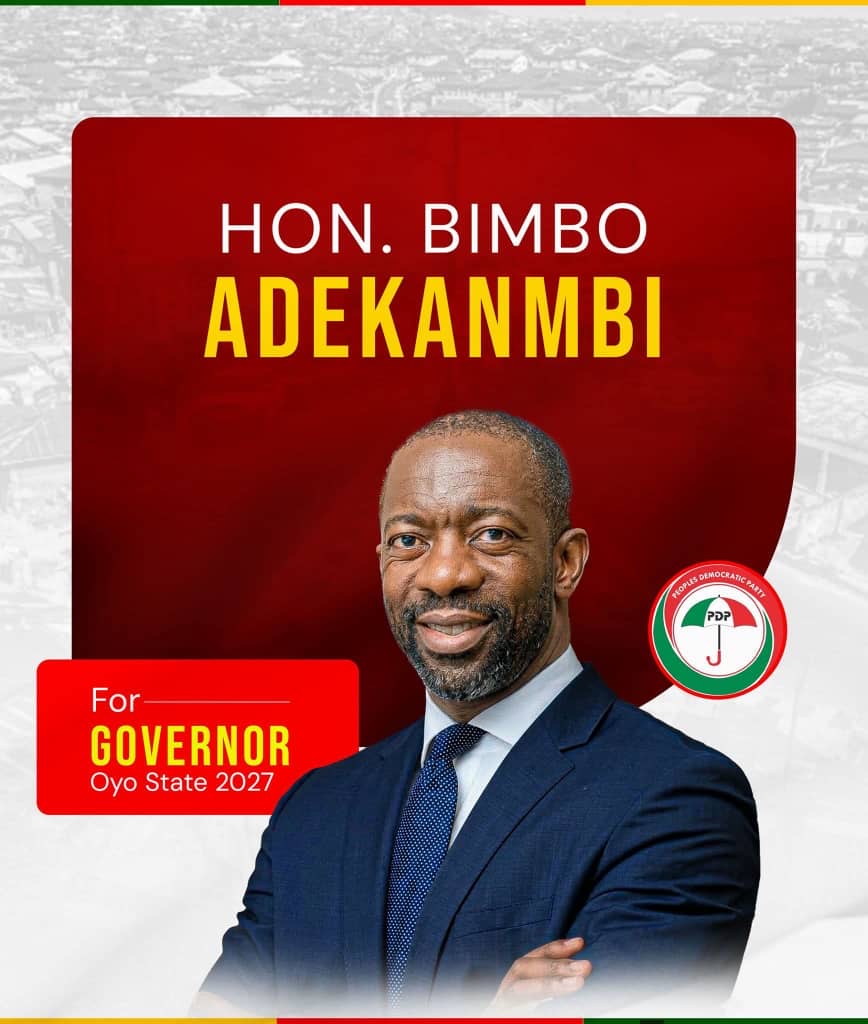
As powerful figures defect to the African Democratic Congress, one name looms largest in the battle for Oyo State — and the struggle for the soul of Nigeria’s South-West

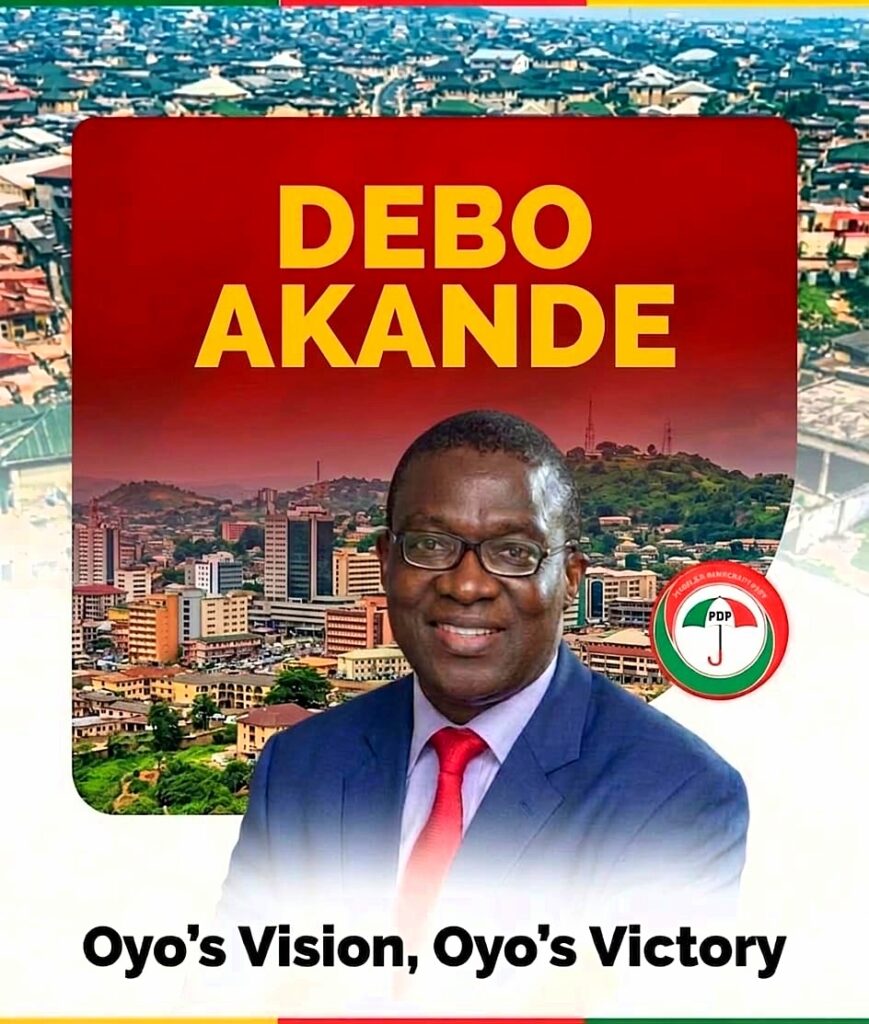
In Nigerian politics, when the South-West sneezes, Aso Rock catches a cold. For President Bola Ahmed Tinubu, a man who built his entire political identity on the granite foundations of Yoruba solidarity and South-West dominance, the tremors now rippling through his home base must feel less like a sneeze and more like a full-blown political earthquake.

The African Democratic Congress (ADC) — once dismissed as a marginal platform — has in recent months transformed into the most consequential vehicle in Nigerian opposition politics. Armed with the coalition-building gravitas of former Vice President Atiku Abubakar, the mass-movement energy of former Labour Party presidential candidate Peter Obi, and now nine serving senators who formally defected to its platform, the ADC has emerged as the only credible opposition tent large enough to shelter Nigeria’s fractured anti-incumbency vote.
But the story that political analysts are watching most closely is not playing out in Abuja’s Senate chambers or on Lagos’s Third Mainland Bridge. It is unfolding quietly — and strategically — in the dust of Oyo town, in the corridors of Ibadan’s Government Secretariat, and in the palace forecourts where turbaned kings hold court with civil servants and farmers alike. It is the story of how a single, carefully positioned political figure may become the ADC’s most powerful weapon in the one region President Tinubu absolutely cannot afford to lose.


THE ADC’S SOUTH-WEST GAMBLE
Nigeria’s political geography has rarely been so fluid. Since late 2025, the ADC has absorbed political heavyweights at a pace that has left pundits scrambling for historical analogies. Former Vice President Atiku Abubakar led the charge, abandoning the PDP he helped to build in order to anchor a coalition under the ADC’s banner. Peter Obi’s formal registration with the party on December 31, 2025, added a nationally mobilised, youthful support base that the ADC previously lacked entirely.

In the Senate, the drama was equally riveting. Nine senators — drawn from the Labour Party, the PDP, and the APGA — simultaneously defected to the ADC in March 2026, catapulting the party over the PDP to become the leading opposition bloc in the upper chamber. The signals from the House of Representatives have been no less seismic, with six members from the Labour Party and Young Progressives Party crossing over to the ADC in recent weeks.
Yet for all this national momentum, seasoned political operators know a fundamental truth: presidential elections in Nigeria are won or lost at the state level. And nowhere is this truth more exquisitely illustrated than in the South-West, the six-state geopolitical zone that is simultaneously Tinubu’s greatest strength and his most exposed flank.
The South-West gave Tinubu his most decisive 2023 margins. Lagos, Ogun, and Ekiti delivered for the President with the reliability of a metronome. But Oyo State has always been the region’s most unpredictable variable — a state where Governor Seyi Makinde demonstrated in 2019 and again in 2023 that a determined opposition, properly organised and correctly positioned, could defy every structural advantage that Abuja could marshal against it.
It is no coincidence, then, that ADC’s South-West calculations begin and end with Oyo. And increasingly, those calculations converge on a single name.
OYO STATE: THE FAULT LINE IN TINUBU’S FORTRESS
To understand the political significance of Oyo State, one must first appreciate what the state represents in Yoruba political culture. With approximately 7.8 million registered voters, Oyo is the most populous state in the South-West. Its civil service is the largest single organised voting constituency in the entire zone. Its traditional institutions — the Olubadan of Ibadanland, the Alaafin of Oyo, and dozens of lesser but influential stools across its thirty-three local government areas — command a deference that no campaign machine can replicate with money alone.
Moreover, Oyo carries within it a political grievance that has quietly simmered for the better part of three decades. Since Nigeria’s return to democracy in 1999, power at the Government House on Agodi has resided in Ibadan-oriented hands for an overwhelming twenty-four of twenty-eight years. The arithmetic is not lost on millions of Oyo citizens from beyond Ibadan’s boundaries, who have come to articulate their frustration in three pointed Yoruba words that now echo from motor parks to marketplaces and through WhatsApp groups with the force of a political manifesto:
“Ibadan o to ge. — Ibadan has had enough.”
These three words encapsulate a yearning for inclusion, a demand for rotation, and a barely suppressed political restlessness that any shrewd politician could channel into an electoral hurricane. The only question was: who would be the vessel? Who possesses the combination of biography, networks, credibility, and strategic positioning to transform “Ibadan o to ge” from a social media hashtag into a governing mandate?
THE MAN IN THE CENTRE OF THE STORM
Chief Bisi Ilaka is not a name that announces itself with the thunderclap of populist grandstanding. His political style is closer to the quiet hum of high-voltage current — the kind that powers entire cities without announcing its presence. Yet in the specific political ecosystem of Oyo State, few figures have accumulated a more carefully layered combination of assets.
Begin with geography. Chief Ilaka hails from Oyo town, the ancient capital of the Oyo Empire and the seat of the revered Alaafin of Oyo. In a political environment where the cry of “Ibadan o to ge” grows louder by the month, a candidate from Oyo town carries the symbolic weight of historical restoration. He is, in the most literal sense, the political answer to the question that millions of voters have been asking.
Then consider religion. The outgoing Governor Seyi Makinde is a Christian, and in Oyo State — where an informal but deeply observed tradition of Muslim-Christian rotation in the governorship has operated as an unwritten social contract for years — the next governor is, by that logic and by the expectations of a substantial proportion of the electorate, expected to be Muslim. Chief Bisi Ilaka is Muslim. The alignment is not coincidental; it is constitutive. It means that before a single campaign poster is erected or a single radio jingle plays, he satisfies a fundamental equity test that a significant segment of the Oyo electorate will apply.
Then there is his institutional pedigree. As former Chief of Staff to Governor Seyi Makinde, Chief Ilaka did not merely occupy a ceremonial title. He operated at the nerve centre of one of Nigeria’s most effective state administrations — managing the interface between political will and bureaucratic execution, building relationships across every ministry, department, and agency of the Oyo State government. In a state where the civil service forms the single largest organised voting bloc, this is not an incidental advantage. It is a structural one.
Civil servants in Oyo State know Chief Bisi Ilaka. They have sat across tables from him. They have watched him navigate the corridors of power with competence and respect. They have seen him as an ally, not a distant politician who materialises only in election season distributing rice. The affection and trust that exist between Ilaka and the Oyo civil service represent a political asset that no amount of campaign spending can manufacture overnight.
“In Oyo State, the man who holds the civil service holds the election. And those who know the Secretariat corridors best already know who that man is.”
A MAN WHO HAS WALKED EVERY YARD OF OYO’S POLITICAL TERRAIN
What separates Chief Bisi Ilaka from the legion of politicians who declare governorship ambitions on the strength of money and connections alone is something far more durable: a lifetime of engagement with the people of Oyo State across its full geographic and political breadth. His electoral journey did not begin in an Abuja boardroom. It began at the grassroots, in the local government councils that form the bedrock of electoral mobilisation — and crucially, it began not in one zone, but across multiple zones simultaneously.
Chief Ilaka’s early attempts at elective representation spanned from Surulere in the Ogbomosho zone all the way to Oluyole in the Ibadan zone — a political arc that cuts through the very heart of Oyo State’s three dominant geopolitical axes: Ogbomosho, Oyo, and Ibadan. This is not the biography of a politician who has managed one constituency. This is the biography of a man who went to the people — to market women in Surulere, to farmers in Oyo’s hinterlands, to urban professionals in Oluyole — and asked for their trust. He did not parachute in from Lagos or Abuja. He walked the terrain.
THE TRADITIONAL DIMENSION: COURTS, KINGS AND COALITION-BUILDING
Nigeria’s political analysts often underestimate the enduring influence of traditional institutions in South-West elections. This is a costly analytical error. In Oyo State, where the Olubadan’s authority in Ibadan and the Alaafin’s prestige across the old Oyo axis represent two powerful gravitational centres of political culture, a candidate who enjoys genuine goodwill from both palaces occupies an almost unassailable positional advantage.
Chief Bisi Ilaka has cultivated relationships with traditional rulers not as a transactional political exercise, but as a natural expression of who he is — a man of Oyo stock who understands the protocols, the histories, and the sensitivities of palace culture. Particularly noteworthy is his closeness to the Soun of Ogbomosho, the paramount ruler of Ogbomosholand and one of the most influential royal figures in Oyo State. In a zone that has historically felt politically marginalised despite its size and population, a governorship candidate who enjoys the warmth of the Soun’s court carries a weight that no billboard campaign can replicate. His closeness to the traditional kinship stools in Ibadan and across the state provides him with an unofficial endorsement infrastructure that operates in spaces where campaign budgets and social media algorithms simply do not reach: the Friday Juma’at mosque grounds, the community hall after a wake-keeping ceremony, the quiet counsel of an Oba to his chiefs.
In a state as politically complex as Oyo, where urban Ibadan, semi-urban Ogbomosho, historically layered Oyo town, and dozens of rural communities each have distinct political temperaments, a candidate who can speak credibly to each of these constituencies — not through proxies but through genuine relationships — is rare. Chief Ilaka appears to be precisely that candidate.
WHY THE ADC’S TIMING COULD NOT BE BETTER
The political context within which Chief Bisi Ilaka emerges as a figure of consequence could hardly be more favourable to his trajectory. At the national level, the ADC’s momentum is building with an organic energy that the party’s founders could scarcely have anticipated. With Atiku’s coalition-building credibility, Obi’s mobilisation infrastructure, and a Senate bloc that has made the ADC the de facto leading opposition party in the upper chamber, the platform now offers a governorship candidate in Oyo State something that candidates in previous cycles have lacked entirely: a credible presidential coattail.
In 2027, voters across the South-West will face a ballot paper that asks them to choose, at the presidential level, between President Tinubu’s bid for a second term and a formidable ADC coalition. The strategic logic is elegant: a vote for the ADC governorship candidate in Oyo State and a vote for the ADC presidential candidate become mutually reinforcing. The gubernatorial campaign drives presidential turnout; the presidential contest energises the gubernatorial base. In a state where Tinubu cannot afford to haemorrhage votes, the ADC’s two-level contest represents a pincer movement of considerable sophistication.
There is also the matter of the APC’s own challenges in Oyo State, where the party has struggled to build an organic support base in the post-Abiola Ajimobi era and has relied heavily on federal patronage and structural resources that may not prove decisive against a well-positioned, credible opposition.
THE ARITHMETIC OF AMBITION
Let us be precise about what Chief Bisi Ilaka would need to assemble to win the Oyo State governorship on an ADC platform. He would need to hold the civil service vote — where his relationships give him a natural base. He would need to activate the “Ibadan o to ge” sentiment among non-Ibadan voters — where his Oyo town origin makes him the symbolic beneficiary of that energy. He would need to satisfy the Muslim rotation expectation — where his faith positions him as the natural choice. And he would need to benefit from a presidential-level ADC surge that could push Oyo’s historically volatile political waters in the opposition’s direction.
Each of these conditions exists independently. The extraordinary political reality is that Chief Bisi Ilaka may be the only figure in Oyo State’s current political landscape in whom all four conditions converge simultaneously.
Political mathematicians will recognise this as more than a confluence of favourable factors. It is a once-in-a-generation alignment — the kind that produces governors, and occasionally, political legacies.
“Oyo State has been waiting not just for the right moment, but for the right man. In politics, when both arrive together, history tends to happen.”
BEYOND OYO: THE SOUTH-WEST POWER EQUATION
The implications of a credible ADC push in Oyo extend well beyond the state’s borders. For President Tinubu, the South-West has always been the guarantee — the backstop against which every electoral calculation is made. If the ADC can demonstrate in Oyo that the South-West is genuinely competitive, the psychological ripple effects across Lagos, Ogun, Ondo, Osun, and Ekiti could prove significant.
Opposition forces in the South-West are watching Oyo closely, not merely as a state to be won, but as a proof of concept. Can the ADC’s national coalition translate into the kind of ground-level, community-rooted mobilisation that wins state elections? The answer, political observers suggest, depends enormously on the quality of the candidates the party presents and the degree to which those candidates embody, rather than merely espouse, the values and aspirations of their constituencies.
In Oyo State, at least, the answer to that question appears increasingly clear.
CONCLUSION: THE POWER BROKER IN WAITING
Nigerian politics has long rewarded the patient over the impulsive, the strategically positioned over the merely ambitious. Chief Bisi Ilaka has, whether by design or by the fortunate convergence of circumstances, arrived at precisely the right moment, with precisely the right profile, on precisely the platform that the political season demands.
He has not yet declared. In the calculus of power, timing is itself a form of strategy. But in the tea rooms of Ibadan, in the corridors of the Oyo State Secretariat, in the forecourts of traditional palaces, and in the WhatsApp groups where civil servants and political activists discuss the state’s future in between emojis and voice notes, a consensus is quietly forming.
The ADC has found its South-West anchor. Oyo has found its moment. And a man from the ancient capital of a great empire may be about to remind Nigeria that the most enduring power brokers are not those who shout the loudest, but those who, when the moment arrives, are simply — and perfectly — in place.
