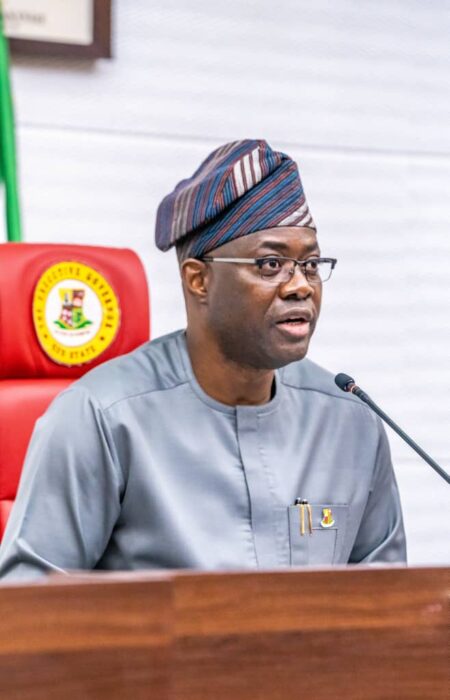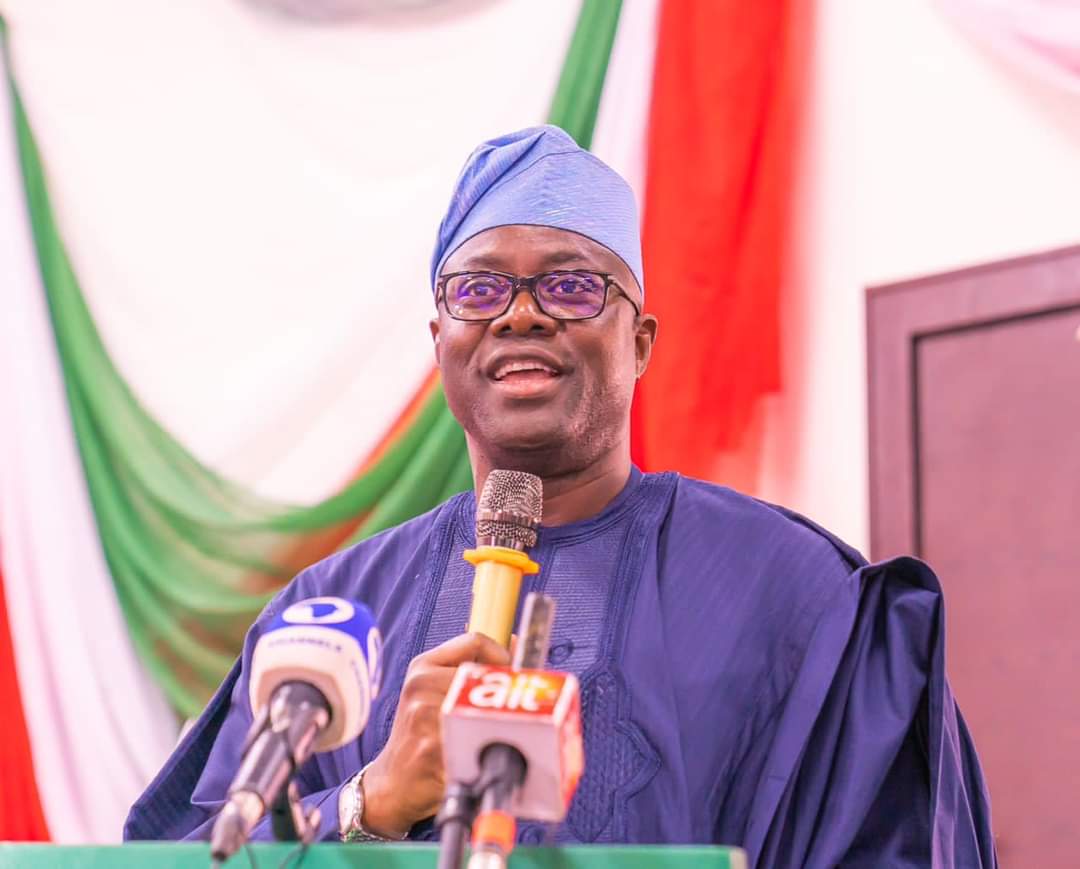
The Oyo State Government has said the 2027 Appropriation Bill will prioritise infrastructure development, entrepreneurship, job creation and efficient resource allocation to sustain economic growth and improve the living standards of residents across the state.
The government noted that the budget is designed to consolidate gains recorded in key sectors and accelerate socio-economic development through strategic investments in infrastructure, agriculture, human capital development and public-private partnerships.
The 2027 Budget, tagged “Budget of Sustained Progress,” has a total size of ₦1.115 trillion and was presented to the Oyo State House of Assembly last week by Governor Seyi Makinde.
Speaking during the presentation of the budget breakdown and analysis at the Ministry of Budget and Economic Planning, Ibadan, the Permanent Secretary, Mr Julius Ayanleke, said the proposal aligns with the administration’s vision of making Oyo State the fastest-growing economy in Nigeria.
According to him, the budget’s key priorities include completing ongoing projects, boosting Internally Generated Revenue (IGR), attracting public and private investments, supporting Micro, Small and Medium Enterprises (MSMEs), expanding infrastructure and ensuring efficient resource utilisation through Public-Private Partnerships (PPPs).
Ayanleke disclosed that capital expenditure of ₦670.03 billion accounts for 60.1 per cent of the budget, while recurrent expenditure of ₦445.31 billion represents 39.9 per cent.
He added that major infrastructure projects, including the Ibadan Circular Road, Ido-Eruwa Road and several rural roads, have been adequately funded to ensure timely completion.
Reviewing the performance of the 2026 Budget between January and September, Ayanleke stated that the state generated ₦618.72 billion, made up of ₦401.44 billion in recurrent revenue and ₦217.28 billion in capital receipts.
He explained that the 2027 budget was developed through the Medium-Term Expenditure Framework (MTEF), sectoral planning and stakeholder consultations across the state’s seven geopolitical zones.
According to him, key fiscal targets of the budget include:
•Prioritising completion of ongoing projects;
•Reducing non-essential overhead costs;
•Improving efficiency in personnel and recurrent spending;
•Growing IGR by a minimum of 10 per cent annually between 2027 and 2029;
•Funding recurrent expenditure through sustainable revenue sources;
•Diversifying the state’s revenue base;
•Accelerating the execution of critical capital projects; and
•Expanding access to grants, development funding and PPP arrangements.
He noted that maintaining the 60:40 capital-to-recurrent expenditure ratio demonstrates the government’s commitment to development-oriented spending and long-term economic growth.
Also speaking, the Executive Assistant to the Governor on Finance, Budget and Economic Planning, Alhaji Gafar Bello, commended the state’s budget performance since 2019, attributing it to transparency, fiscal discipline, efficiency and the effective deployment of fiscal management tools.
In his remarks, the President of the Multi-disciplinary Finance Professionals (MFP), Dr (Prince) Oyedepo Oyebade, praised the Oyo State Government and the Ministry of Budget and Economic Planning for the transparent presentation of the 2027 budget and the impressive implementation of the 2026 budget.
He noted that the state’s 103 per cent performance on statutory allocation on a pro-rata basis reflects prudent and realistic revenue projections.
Oyebade also commended the government for sustaining transparency, accountability and the January-to-December budget cycle, noting that the allocation of 60 per cent of the budget to capital projects underscores its commitment to completing ongoing projects and driving development across the state.
Those present at the session included the Senior Special Assistant to the Governor on Budget, Mr Kehinde Ogunsanya; the Accountant-General of Oyo State, Mrs Kikelomo Adegoke; the Permanent Secretary, Ministry of Finance, Mr Taiwo Popoola; and other senior government officials.