



By Amofin Beulah Adeoye
The ballot box possesses no mechanism for interpreting frustration; it computes only participation. In the quiet, hollowed-out spaces of tired societies, a dangerous misunderstanding persists—a whisper that stepping back from the threshold of the polling booth is a form of protest, a dignified refusal to validate a fractured process. It is a seductive delusion: the belief that silence is a private way of declaring the options unworthy of one’s endorsement. But democracy does not interpret silence emotionally. Democracy interprets silence mathematically.

A society does not lose its grip on destiny in a single, sudden collapse; it surrenders control through a thousand small absences that accumulate into a permanent, icy distance between the rulers and the ruled. Each election defined by low participation serves as a curriculum for political actors. The lesson they learn is not that the citizenry is angry, but that the citizenry is absent—and in the ruthless arithmetic of power, absence communicates permission more loudly than protest communicates rejection.


We must, therefore, reframe civic participation. It is not an act of enthusiasm; it is a policy of insurance. It is not an endorsement of a personality; it is the construction of a boundary. Voting is less about the celebration of a candidate and more about the mitigation of the consequences of power. The ballot is not a love letter to a politician; it is a physical border drawn around authority, and boundaries exist only where they are physically defended. While the weary citizen believes withdrawal preserves their dignity, they are merely transferring that dignity into the hands of strangers whose interests may never intersect with their own. Once gifted, power does not automatically return; it must be reclaimed through the friction of deliberate action. Democracy does not perish from opposition; it expires from exhaustion—and that exhaustion becomes fatal the moment it convinces the public that disengagement is harmless.
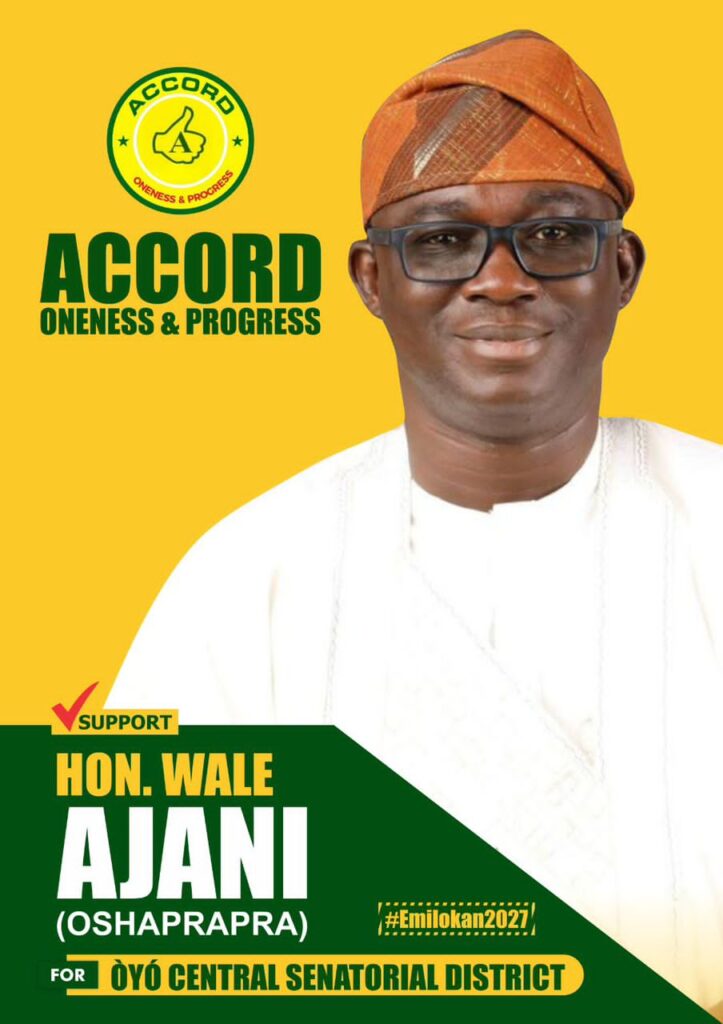
The system is indifferent to why you stayed home. It records only that you were not there, and once recorded, your absence begins to work actively against you. Elections are not competitions between the entire population; they are competitions between the people who show up. The moment you withdraw, your political weight does not evaporate—it transfers. It moves entirely to those who were motivated enough, organized enough, or desperate enough to occupy the space you vacated. Many imagine they are punishing the political class by refusing to vote, but they are actually punishing the equilibrium of their own lives. Power naturally flows toward the smallest determined group the moment the majority becomes indifferent. When frustration produces withdrawal, power does not weaken; it concentrates.
Voter fatigue is never politically neutral; it is politically decisive. The structure of our Republic rewards commitment over raw numbers. Influence does not require millions; it requires a consistent minority that is present while the majority is merely “absent and angry.” A disengaged population does not create an empty government; it creates a captured one. These captured governments rarely appear extreme at the moment of the vote, but they become extreme in their consequences. The true tragedy of our democracy is not that bad leaders sometimes win, but that citizens surrender their veto power long before the leadership is even decided. Every complaint uttered after an election must compete against the silence recorded during it—and history reveals that the recorded silence always outweighs the later complaint.
The officials of the Independent National Electoral Commission (INEC) do not count intentions; they count marked papers. The arithmetic of governance begins the moment the counting ends. This means that the quality of our roads, the safety of our schools, and the priorities of our economy are shaped not by the population, but by the participating fraction of it. The result is a government perfectly responsive to the minority that voted and perfectly insulated from the majority that did not. Consider the stakes for Oyo State in 2027: if five million citizens are eligible to steer our direction, yet only one million appear, the election remains legally “lawful” and “legitimate.” But in that gap, legitimacy and representation diverge, leaving a government that reflects participation rather than the people.
In 2027, the real contest in Nigeria will not be between parties or personalities, but between participation and surrender. It is a choice between those who accept the inconvenience of a day and those who endure the consequences for a decade. The arithmetic is unforgiving: governance follows the smaller, active group every single time. We see this paradox across our national landscape, where power obeys the “least common multiple” rather than the “highest common factor.”
In Oke-Ogun, which commands about sixty percent of Oyo State’s landmass across ten local governments, the cry of marginalization is constant. Yet, despite their vast numbers, they remain strategically weak because their strength is scattered across local rivalries, while more cohesive political blocs in Ibadan and Ogbomoso negotiate the dividends of power. This pattern is mirrored in Ogun East, where a disciplined minority translates internal cohesion into victory long before the general electorate finds its voice. It is seen in Imo State, where political machines in Owerri and Orlu dominate through superior coordination, and in Kaduna, where an informed urban core sets the rhythm for a fragmented rural majority. In Adamawa, we see the final proof: structure beats sentiment. The so-called powerless are not weak because they are few; they are powerless because they are fragmented.
For decades, the refrain has been “next time.” Next time, the worker will be paid; next time, the roads will last; next time, the children will not fear the night. But “next time” is a ghost that haunts the progress of a nation. This time, we must choose differently. We must treat the ballot as a cold responsibility rather than a warm approval. The winner of an election is decided by those who vote, but the leader is chosen by those who do not.
To those within this zone, you require three immediate actions:
First, provide financial support to the organized movement in your area. Funds run campaigns, well-wishes do not. Make the movement visible. For the price of a few meals, plant a flex banner in your ward or sponsor a jingle. Finance the transport of one neighbour to a registration center.
Secondly, register to vote where you live, not where you work, ensuring that no movement restriction can strip you of your voice on election day.
Finally, Go out on election day and vote. You would have done your part. The change we seek is not found in our hope, but in our discipline. While the election is a year away, the candidates—and thus our destiny—will be decided in the next ninety days. The arithmetic of 2027 has already begun.
