By Oyo Amebo
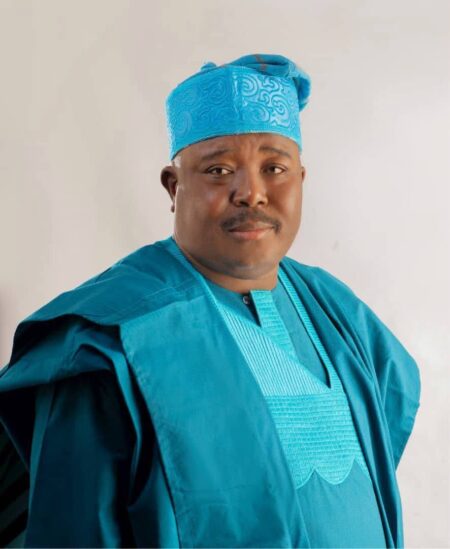
Water is life, yet in many communities, access to clean and reliable water has long been a daily struggle. In Oyo State, a quiet revolution is reshaping this essential truth, led by the Commissioner for Water Resources, Adeojo.
Where stagnant pipelines and neglected boreholes once defined the state’s water infrastructure, a new era of accessibility, sustainability, and innovation is now taking hold.
This transformation is not merely technical; it is profoundly social, political, and human, affecting the everyday rhythms of life, work, and health for millions.
Adeojo’s vision for water goes beyond infrastructure. He approaches it as a tool for empowerment, equity, and development.
He understands that water is more than a commodity, it is the foundation upon which communities build health, education, and economic prosperity.
In many parts of Oyo, water scarcity meant more than inconvenience; it limited school attendance, constrained small businesses, hindered agriculture, and exposed households to health risks. By treating water as a public good and a shared responsibility, Adeojo has reframed it as a vehicle for social transformation.
When he assumed office, the state’s water sector was fragmented and underperforming. Boreholes often ran dry or were in disrepair, pipelines suffered from leaks and poor maintenance, and many rural communities relied on unsafe wells or streams.
The challenge required more than repairs; it demanded a comprehensive strategy that combined technology, community engagement, and effective governance. Adeojo’s response was both bold and practical.
He launched a phased plan prioritising sustainability, access, and community ownership, signalling a break from the traditional, top-down approach that had dominated previous administrations.
At the heart of his approach is a commitment to accessibility. In rural communities, water projects are designed with local participation in mind. Villagers are involved in the construction, maintenance, and management of boreholes and mini water networks, creating a sense of ownership that ensures the longevity of infrastructure.
This participatory model not only improves accountability but also empowers communities to see themselves as active stakeholders in their development. It is a philosophy Adeojo frequently emphasises: infrastructure alone does not solve problems; people must be part of the solution.
In urban areas, Adeojo has focused on modernising existing water networks and expanding coverage to underserved neighbourhoods.
Aging pipelines are being replaced with durable, leak-resistant materials, while water treatment plants are being upgraded to meet higher safety and quality standards.
Strategic partnerships with private technology firms have introduced smart monitoring systems that detect leaks and pressure issues in real time, enabling rapid response and reducing wastage.
This blend of technology and governance marks a significant departure from the reactive, maintenance-heavy strategies of the past.
One of Adeojo’s signature initiatives is the “Community Water Hubs” programme. These hubs serve as multi-purpose water access points, combining treated water supply with educational outreach on hygiene, sanitation, and water conservation.
Each hub is staffed by trained local personnel who not only manage daily operations but also conduct workshops for schoolchildren, women’s groups, and local entrepreneurs. In areas where water scarcity previously limited productivity, the hubs have become centres of opportunity.
Small-scale enterprises, ranging from local bakeries to vegetable farming, are thriving, demonstrating the economic multiplier effect of reliable water access.
The commissioner’s work has also foregrounded equity. Special attention is given to marginalised communities where water access has historically been poorest.
Through data-driven mapping, Adeojo’s team identifies “water deserts” and targets investments strategically, ensuring that progress reaches those who need it most.
This commitment to fairness extends to pricing policies as well. While water must remain financially sustainable, tariffs are structured to ensure affordability, especially for low-income households.
Subsidised schemes and community payment models ensure no one is left behind in the pursuit of a water-secure state.
Public engagement is central to Adeojo’s philosophy. Regular town hall meetings, media briefings, and social media campaigns keep citizens informed about project timelines, service disruptions, and future expansions.
By demystifying the technical aspects of water management, he fosters trust and encourages civic participation.
Residents are not passive recipients; they are informed advocates who can hold service providers accountable, report faults, and contribute to long-term planning.
The commissioner has also tackled challenges beyond physical infrastructure. In many regions, water-borne diseases had become endemic due to contaminated sources.
Adeojo’s integrated approach combines access with hygiene education, vaccination drives, and community health partnerships.
Clinics, schools, and local health volunteers collaborate to teach safe water storage, handwashing practices, and disease prevention. This holistic method underscores that water provision is inseparable from public health and social well-being.
Innovation plays a defining role in Adeojo’s strategy. Solar-powered boreholes have been installed in areas where electricity is unreliable, reducing operational costs and environmental impact.
Rainwater harvesting systems complement traditional water networks, particularly in schools, healthcare facilities, and community centres.
These projects are designed not only for immediate relief but also for resilience against climate change, ensuring that Oyo’s water infrastructure is prepared for increasingly erratic weather patterns.
Adeojo’s achievements are also evident in crisis response. During periods of drought or pipeline disruption, rapid-deployment teams ensure continuity of supply. Emergency water distribution points are pre-positioned in vulnerable zones, while temporary storage tanks prevent service interruptions in critical areas.
This proactive planning contrasts sharply with the reactive models that left communities stranded in past crises, reflecting a governance approach that anticipates needs rather than merely responds to complaints.
Economic impact is measurable. Reliable water has enabled small-scale industries to thrive, reduced healthcare costs associated with water-borne illnesses, and improved agricultural productivity.
Farmers report higher yields because irrigation systems now function consistently, while urban entrepreneurs expand operations with confidence in a steady water supply.
Schools report improved attendance, particularly for girls, whose absence in the past was often linked to water collection duties. In short, water provision has become an engine of development, not merely a utility service.
Adeojo’s leadership has inspired a cultural shift around water usage. Educational campaigns emphasise conservation, responsible use, and community stewardship. Residents are encouraged to view water as a shared resource rather than an inexhaustible entitlement.
This cultural reorientation complements infrastructure improvements, creating long-term behavioural change that ensures sustainability. When combined with the technological and institutional measures, it forms a comprehensive model of modern water governance.
Challenges remain, of course. Urban population growth continues to strain networks, while climate variability affects rainfall and groundwater levels.
Yet Adeojo’s combination of foresight, technical expertise, and community engagement positions Oyo to meet these challenges more effectively than ever before.
His approach demonstrates that water management is not simply a matter of pipes and pumps, it is a societal project, linking technology, policy, health, and human development into a coherent whole.
The “People’s Water Revolution,” as many have begun to call it, is thus a story of transformation that reaches beyond Oyo’s borders. It exemplifies what happens when government leadership is rooted in vision, competence, and accountability.
It shows that public services, when managed strategically and inclusively, can dramatically enhance quality of life, economic opportunity, and social cohesion. Adeojo’s work underscores a central truth: water is not just a resource; it is a foundation for hope, dignity, and progress.
Ultimately, the revolution is not defined solely by infrastructure projects but by the lives it touches. Mothers no longer spend hours queuing for water; children attend school without interruption; entrepreneurs expand operations; farmers irrigate reliably; and communities thrive.
Adeojo’s philosophy proves that when leadership couples technical skill with empathy, policy with participation, and vision with action, even the most basic services can become transformative.
The chairman’s work stands as a testament to what public service can achieve when it is driven by purpose and executed with precision.
Oyo State’s water story is no longer one of scarcity and frustration; it is one of renewal and opportunity. Adeojo has turned pipes into lifelines, boreholes into beacons of hope, and water provision into a platform for sustainable development.
Through a combination of innovation, inclusivity, and determination, he has built a model for other states to emulate, proving that water governance, when done well, is more than engineering, it is the art of enabling life itself.