


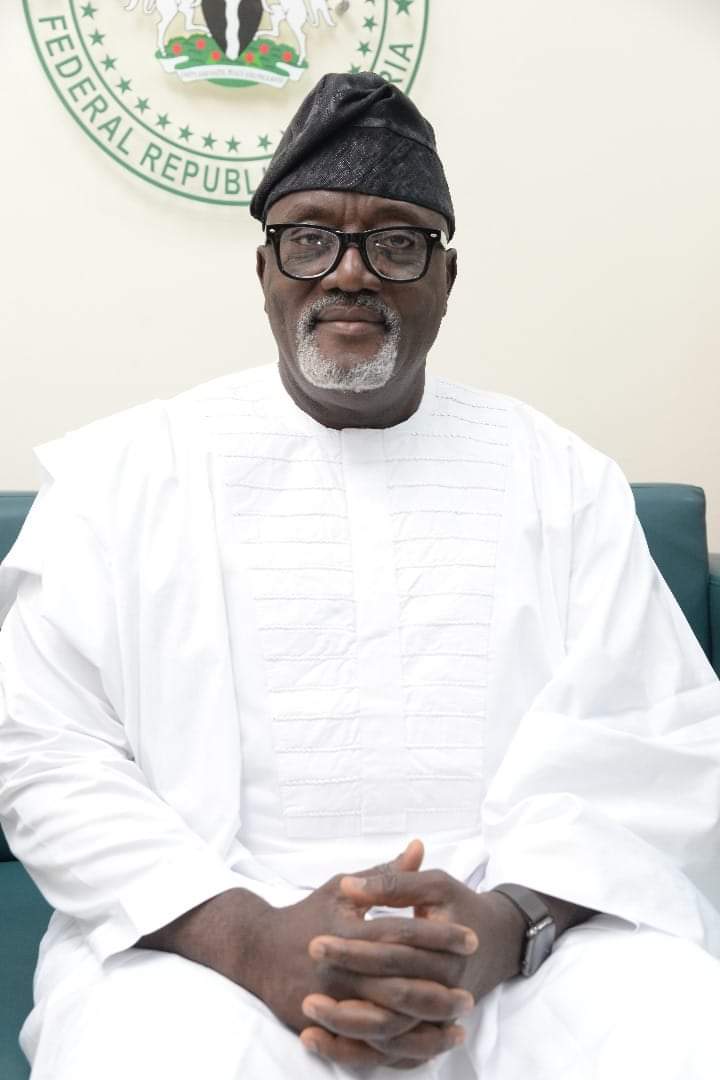
By Oyo Amebo
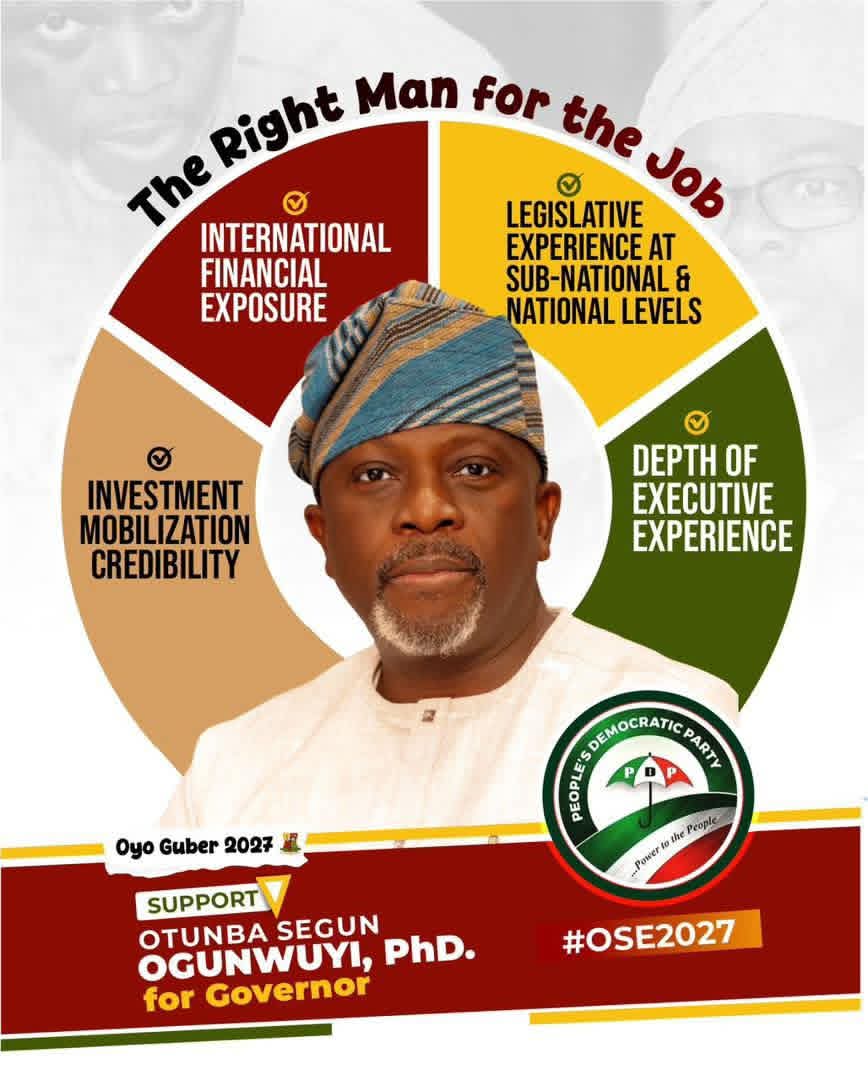
In politics, declarations are often treated as defining moments, loud markers that signal ambition and intent. Yet, beyond the theatre of announcement lies a deeper and more consequential question: what does governance truly demand of those who seek it?


It is within this broader reflection on public responsibility that the emergence of Adedeji Dhikrullahi Stanley Olajide, widely known as Odidiomo, begins to take on a more significant meaning.

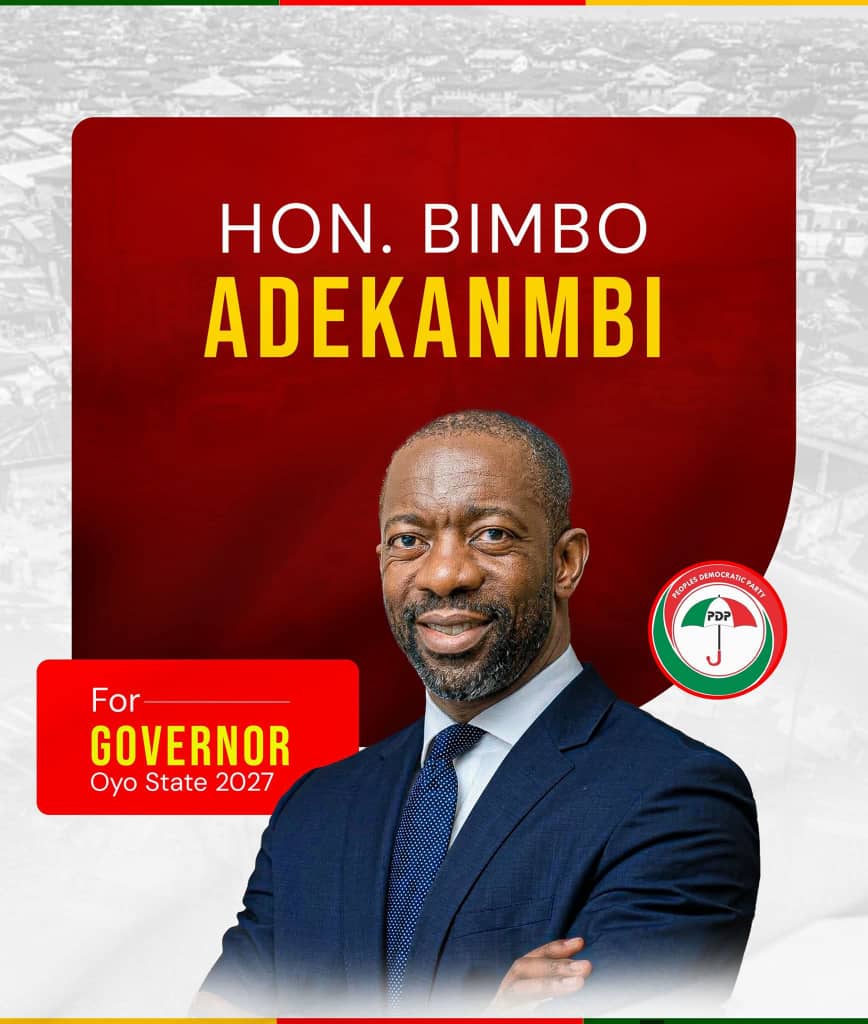
His entry into the 2027 governorship conversation in Oyo State is not merely an act of political positioning; it is an inflection point that invites scrutiny of a quieter, more deliberate philosophy of leadership.
For years, his relevance did not depend on slogans or spectacle, but on a pattern of engagement that unfolded steadily within communities, far removed from the predictable rhythms of political showmanship.

Long before his ambition became public, his presence had already been felt in the lived realities of ordinary people. Educational interventions that opened doors for students, modest but impactful infrastructure improvements, healthcare outreach, and social support systems for vulnerable households were not presented as grand achievements, but as necessary responses to everyday challenges.
In this sense, his trajectory speaks less to the pursuit of office and more to an evolving understanding of service. This distinction is crucial. In a political climate where declarations often precede substance, Odidiomo’s path suggests an inversion of that order, where action comes first and ambition follows. His candidacy, therefore, does not attempt to manufacture credibility; it seeks to formalise it.
What had existed as a network of trust, built through consistency and restraint, is now being tested in the open arena of statewide politics.
Yet, the transition from community-centred influence to the demands of governing a complex and diverse state introduces a different scale of responsibility.
Governance, in its truest sense, is not an extension of goodwill alone; it is the capacity to translate localised success into systemic impact. It requires not only empathy and presence, but also structure, vision, and the discipline to balance competing priorities.
Observers who have followed his journey often point to his preference for listening rather than declaring, for dialogue rather than dominance. These traits, while understated, align with a broader conception of leadership that places human needs at the centre of policy. They suggest a model of governance that is less about authority imposed from above and more about legitimacy earned from below.
However, the realities of state leadership demand more than admirable instincts. The expectations of economic expansion, infrastructural coherence, youth engagement, and social stability cannot be met through incremental interventions alone.
They require a clearly articulated framework capable of integrating these priorities into a unified agenda. It is here that Odidiomo’s candidacy enters its most critical phase, the movement from demonstrated goodwill to a fully realised vision of governance.
His emergence also unfolds within the context of an administration that has, in many respects, recalibrated public expectations around performance and accountability. The emphasis on results over rhetoric has set a benchmark that any aspiring successor must not only meet but exceed.
For his supporters, Odidiomo represents a continuation of this ethos, a figure whose record appears to align with the principles of disciplined execution and loyalty to purpose.
Yet continuity, while valuable, is not sufficient in itself. Each political moment carries its own demands, shaped by shifting economic realities and evolving public expectations.
The true measure of his candidacy will lie in his ability to demonstrate that the principles guiding his past engagements can be expanded into policies that address the future.
As the political landscape gradually intensifies towards 2027, the noise of campaigns will inevitably grow louder, alliances will realign, and scrutiny will deepen.
Within this environment, the significance of Odidiomo’s declaration may ultimately be judged not by its timing or reception, but by the clarity and coherence of what follows it.
For now, his journey offers a subtle but important reframing of political ambition. It suggests that leadership is not defined at the point of declaration, but in the accumulation of choices made long before it.
It raises the possibility that governance, at its most meaningful, is less about the pursuit of power and more about the quiet fulfilment of responsibility.
In that sense, his step forward is not simply the beginning of a campaign.
It is an invitation to reconsider what leadership should look like when it is stripped of performance and measured instead by its impact on human lives.
Whether that proposition can withstand the pressures of a statewide contest remains to be seen, but it is a question that will shape not only his candidacy, but the broader conversation about the future of governance in Oyo State.
