


By Oyo Amebo



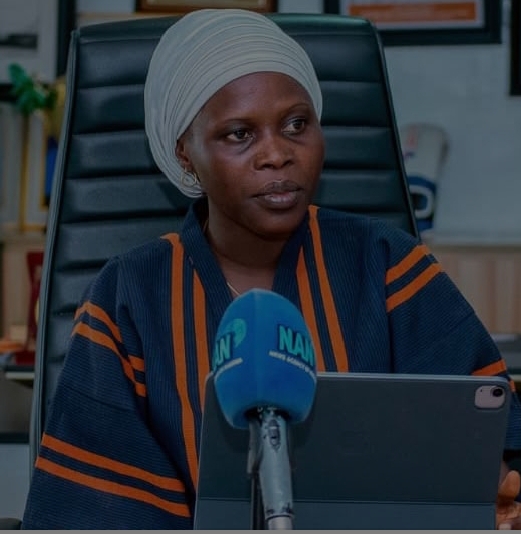
If leadership were measured by impact rather than rhetoric, then 2025 would stand as a compelling endorsement of Wasilat Adegoke’s tenure in office.

In a year marked by heightened expectations for youth inclusion, gender equity, and sustainable development, she did not merely occupy the office of Commissioner for Youths and Sports in Oyo State; she animated it with vision, urgency, and measurable results.




As the year draws to a close, her record speaks with clarity, and her pursuit of 2026 unfolds with quiet confidence and unmistakable ambition.
Across Oyo State, the narrative around youth and sport has been fundamentally altered. What once felt like scattered efforts has evolved into a coherent, inclusive ecosystem where opportunity is deliberately created and carefully nurtured.
In 2025, Wasilat Adegoke consolidated grassroots development programmes, strengthened institutional support for sports, and ensured that talent identification was no longer accidental but intentional.
Training structures became more organised, access to coaching improved, and young athletes, particularly young women, began to see sport not as a pastime but as a pathway.
Her most defining achievement, however, lies in how she repositioned young women within the sporting space. In communities where female participation in sport had long been constrained by culture, confidence, or lack of support, 2025 became a turning point.
State-backed female teams and clubs gained visibility and credibility, supported by improved facilities, mentorship schemes, and structured competitions. These initiatives did more than produce athletes; they produced belief.
Girls who once watched from the sidelines stepped onto the field with confidence, discovering not only their physical strength but their voice and leadership potential.
Yet Wasilat’s impact in 2025 extended far beyond medals, tournaments, or applause from the stands. She consistently advanced the idea that sport is a tool for human development, not an end in itself.
Through youth-focused programmes linked to sports development, many young people found new direction. Some transitioned into coaching and officiating, others into small-scale enterprises connected to sports and recreation, while many gained transferable skills such as discipline, teamwork, and resilience.
In a challenging economic climate, these outcomes mattered deeply, offering young people dignity, purpose, and a sense of belonging.
Inclusivity remained a defining principle of her leadership throughout the year. Marginalised youths, rural communities, and those previously excluded from mainstream opportunities found deliberate representation in state programmes.
By amplifying unheard voices and celebrating diverse achievements, she fostered a culture where excellence was no longer confined to a few but became accessible to many.
This approach reshaped public perception of governance, presenting it as something that could be felt in everyday lives rather than admired from a distance.
The influence of her work rippled outward into broader community development. Youth-driven initiatives linked to her ministry contributed to cleaner neighbourhoods, improved school engagement, health awareness campaigns, and increased civic participation. Sport became a unifying language through which education, responsibility, and social consciousness were promoted.
In this sense, 2025 was not just a year of administrative success; it was a year in which policy met people and delivered tangible change. As attention turns towards 2026, Wasilat Adegoke’s pursuit is clearly not about consolidation alone, but expansion.
The foundations laid in 2025 point towards a future of deeper institutional reform, stronger public-private partnerships, enhanced sports infrastructure, and broader pathways for youth empowerment.
There is an evident determination to move from progress to permanence, ensuring that gains made are not temporary victories but enduring systems that outlive political cycles.
What distinguishes her journey is a consistent belief in young people as assets rather than problems to be managed.
She administers with the conviction that, given guidance, opportunity, and trust, youths can evolve from participants into leaders and from beneficiaries into contributors. That philosophy has defined her achievements in 2025 and continues to shape her vision for 2026.
In the unfolding story of Oyo State’s development, Wasilat Adegoke occupies a rare space, one where purpose aligns with performance and ambition is grounded in service.
As 2025 closes and 2026 beckons, her record invites not just commendation, but expectation: that the limits already broken are only the beginning, and that the champions built so far will soon be joined by many more.
