By Oyo Amebo
Who, in this age of clamour and spectacle, could inherit a mantle of leadership not through self-promotion but through earned trust?
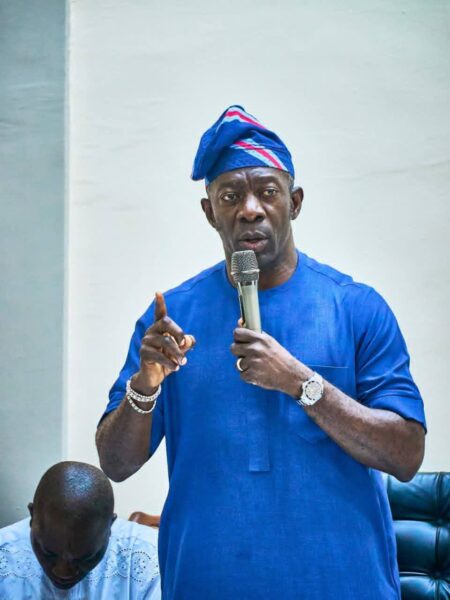
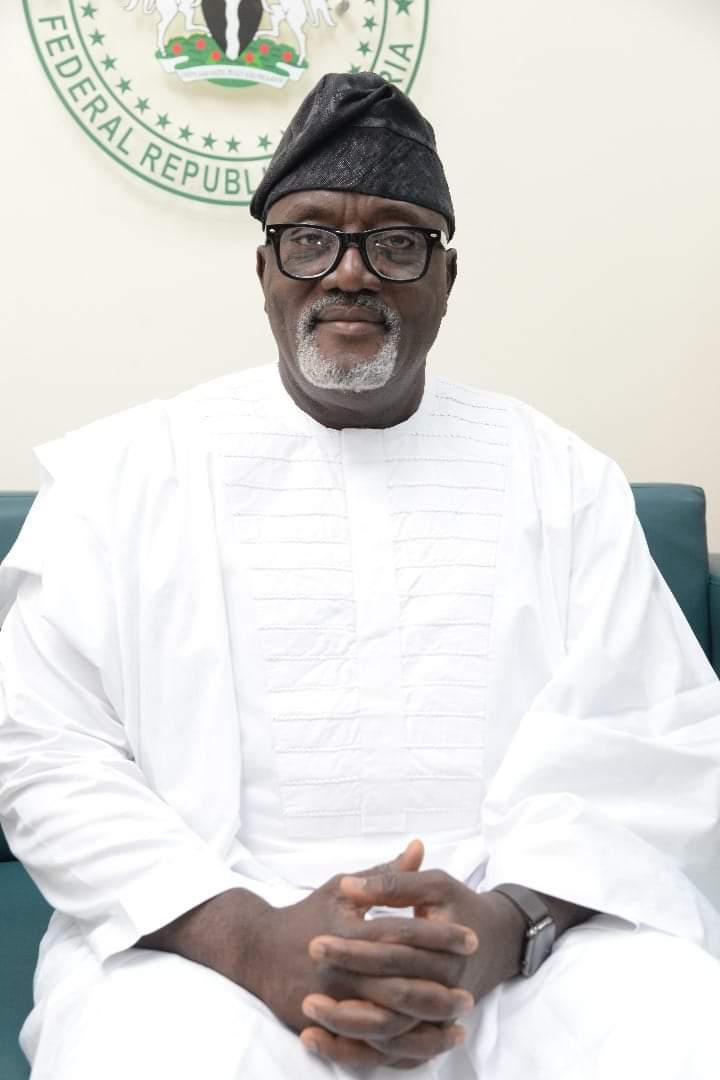
Who could take the reins of power and command loyalty without fanfare, without the theatrics that often define Nigerian politics? The answer, increasingly, points to one man: Honourable Adedeji Dhikrullahi Stanley Olajide—Odidiomo.
Odidiomo is not the politician who seeks headlines, nor the one who courts controversy to prove relevance. He does not arrive with a blare of trumpets, yet his presence is felt wherever he treads. In the streets of Ibadan, among traders, artisans, and schoolchildren, he has quietly become indispensable.
And it is precisely this grounding, this deep, patient familiarity with the rhythms of ordinary life, that makes him the natural successor for Governor Seyi Makinde.
Consider the trajectory that has brought him here. While others pursued titles, he pursued people. Before he ever set foot in Abuja, he was already immersed in the daily challenges of his constituency, stepping into voids left by bureaucracy.
Clinics without medicines, schools with peeling walls, communities left to fend for themselves, he addressed them, not as photo opportunities, but as duties owed to his neighbours. In doing so, he learned lessons no formal office could teach: empathy, patience, and the quiet power of service.
In federal politics, Odidiomo’s record is a reflection of that foundation. His motions, his bills, his debates, all echo the lived realities of Ibadan.
Unemployment, neglected education, struggling local industries: these are not abstract statistics to him; they are the faces and stories he has carried in his heart for years. In a system often defined by posturing, his approach is almost subversively simple: serve first, announce later.
Perhaps most compelling is his governance style. Town halls with Odidiomo are not theatre; they are accountability in action. Citizens ask uncomfortable questions, budgets are dissected, timelines scrutinised.
Transparency is not performative, it is habitual. Such discipline, such integrity, is the rare quality that distinguishes a true leader from a mere office holder.
Beyond policies and programmes, he cultivates empowerment quietly but effectively. Scholarships that broaden horizons, skill initiatives that transform job seekers into professionals, grants paired with mentorship to nurture small businesses: these are the building blocks of generational change.
In every neighbourhood he touches, there is evidence of progress: roads no longer impassable, schools awakening with activity, health centres revived. The results speak without the need for fanfare.
And yet, for all his accomplishments, Odidiomo does not chase the next office. There are no veiled announcements, no calculated whispers of ambition. There is only a relentless focus on the work at hand.
This restraint, rare in Nigerian politics, is precisely why many see him as Makinde’s natural heir, a man who could assume leadership without ego, without disruption, and with the continuity that progress demands.
Ibadan has watched as Odidiomo transforms quiet service into political gravitas. In a climate dominated by loud declarations and fleeting gestures, he proves that influence can grow from trust, credibility, and consistency. He stands not as a figure of spectacle, but as a reminder that leadership is first earned, not claimed.
So the question emerges with increasing urgency: in a state searching for stability, vision, and continuity, could Odidiomo be the successor Makinde never had to worry about?
Could the quiet man who knows his people, who serves without applause, be the one to carry Oyo forward? Those who have observed him closely suggestef that, perhaps, the answer has always been yes.