By Oyo Amebo
As the political horizon gradually shifts towards the 2027 governorship in Oyo State, the conversation has evolved beyond the routine question of succession.
Increasingly, attention is focused on continuity, specifically, who possesses the discipline, insight, and administrative depth to sustain and advance the governing ethos established by Seyi Makinde.
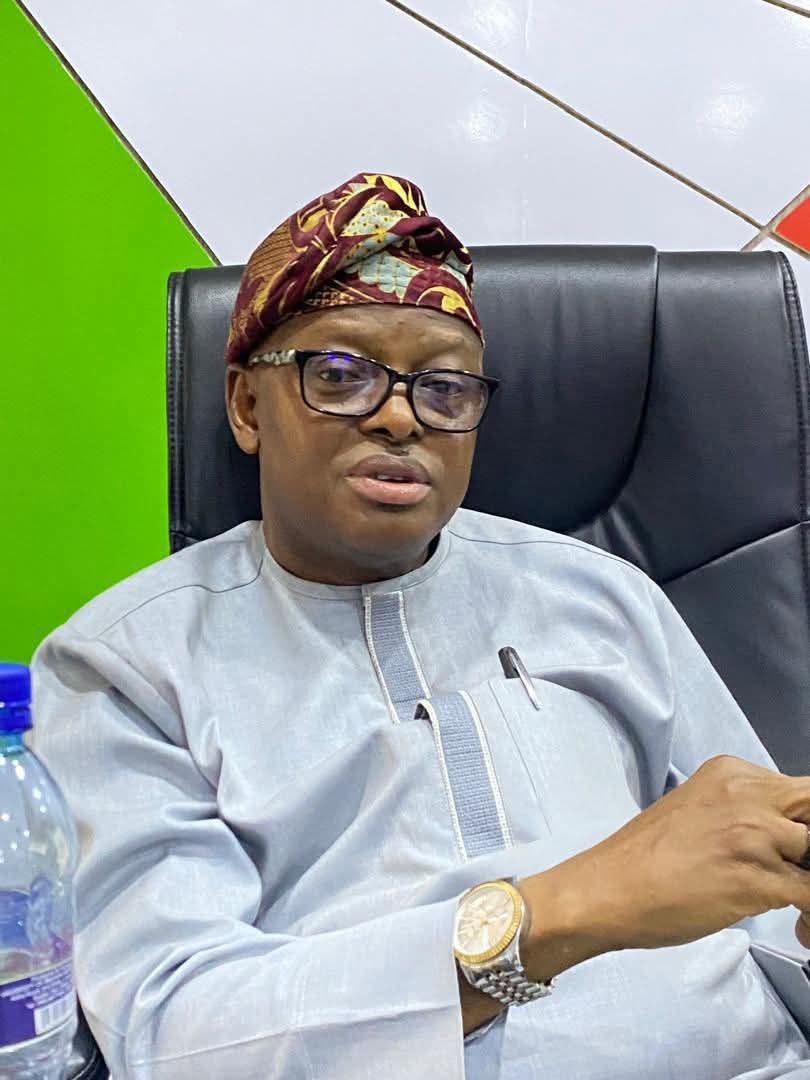
Within this emerging discourse, Daud Shangodoyin stands out not simply as an aspirant, but as a compelling embodiment of that continuity.
His career reflects a convergence of experience and perspective that aligns closely with the principles that have underpinned Makinde’s stewardship of the state.
Governor Makinde’s tenure has been widely characterised by a pragmatic approach to governance, one that privileges measurable outcomes over rhetoric, inclusivity over division, and long-term planning over fleeting political gains.
His ability to harmonise forward-thinking policies with grounded execution, while maintaining a steady grip on the complexities of party politics, has redefined expectations of leadership in Oyo State.
Shangodoyin’s professional record reveals a comparable orientation. Over the years, his stewardship across critical ministries, including Education, Public Works, Transport, and Energy, has demonstrated a consistent emphasis on delivery.
His approach is neither ornamental nor detached; rather, it is rooted in the operational realities of governance, where policies are judged by their tangible impact on citizens’ lives.
This shared commitment to execution is significant. Like Makinde, Shangodoyin appears to understand that effective leadership lies not in the articulation of grand visions alone, but in the disciplined translation of those visions into functional systems and visible improvements.
His work reflects an appreciation for the intricate balance between planning and implementation—a balance that has been central to the current administration’s achievements.
Beyond administration, Shangodoyin’s political acumen further strengthens the argument for continuity.
His involvement in strategic initiatives such as diaspora engagement efforts underscores a capacity for coalition-building and forward planning.
In a state as politically nuanced as Oyo, success depends on more than popularity; it requires an ability to navigate diverse interests, foster unity within party structures, and maintain resonance with grassroots constituencies.
These are competencies that both he and Makinde demonstrably share. Equally important is the question of values.
Makinde’s leadership has been defined by a blend of integrity, openness, and progressive thinking, qualities that have enabled him to pursue reform while retaining broad-based support.
Shangodoyin’s public persona reflects a similar equilibrium. His personal convictions are complemented by a pragmatic outlook on governance, allowing him to engage with Oyo’s diverse social fabric in a manner that is both principled and inclusive.
This alignment becomes particularly evident when examining their respective visions for development. Under Makinde, emphasis has been placed on infrastructure renewal, educational advancement, and institutional strengthening, all pursued with a view to long-term sustainability. Shangodoyin’s track record suggests a parallel commitment.
His initiatives across key sectors reveal a focus on modernisation, efficiency, and resilience, hallmarks of a leader attuned to both present demands and future challenges.
What distinguishes both men is a shared capacity for anticipation. In a political environment often shaped by reactive decision-making, they demonstrate an ability to identify emerging issues and respond with clarity and purpose.
This forward-looking mindset is indispensable for a state seeking to consolidate gains while navigating an increasingly complex socio-economic landscape.
Taken together, these factors present Shangodoyin as more than a successor in waiting; they position him as a credible steward of an established governance philosophy.
He brings to the fore a blend of administrative competence, strategic awareness, and ethical grounding, qualities that are essential for maintaining momentum while introducing fresh layers of innovation.
As Oyo State prepares to enter its next phase, the stakes extend beyond electoral victory. The central issue is whether the progress achieved in recent years can be preserved and deepened.
Continuity, in this sense, is not about replication, but about evolution—building upon a solid foundation to meet new realities.
In Daud Shangodoyin, there appears a figure capable of bridging that transition. His experience, alignment with proven leadership principles, and capacity for strategic execution suggest readiness for the demands ahead.
If the objective is to safeguard and extend the trajectory set by Makinde, then Shangodoyin offers a proposition grounded not in speculation, but in demonstrable capability.
The choice before Oyo, therefore, is less about change for its own sake and more about informed progression.
And within that frame, Shangodoyin emerges as a leader equipped to carry the state’s ambitions forward, steadily, competently, and with a clear sense of purpose.