


By Oyo Amebo



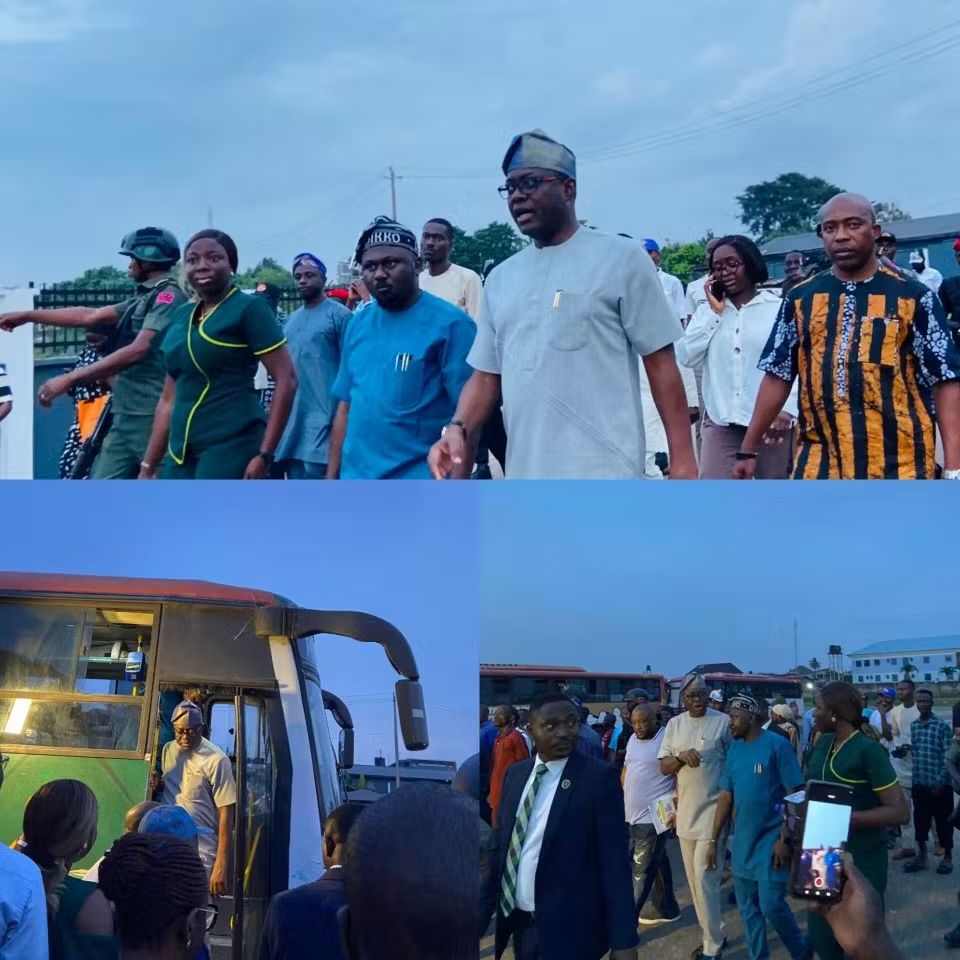
When Dr Ibraheem Salami Dikko assumed leadership of the Pacesetter Transport Service in Oyo State, many observers believed the agency had reached its lowest point. Years of mismanagement, debt accumulation, and an archaic operational system had created a transport service that was unreliable at best and dysfunctional at worst.

Buses broke down frequently, revenue records were unreliable, fuel consumption was nearly impossible to track, and leakages had become woven into the fabric of daily operations.




For passengers, the experience was often frustrating. For staff, morale was sinking. And for the state, the service that was supposed to be a model of public transport had instead become a source of embarrassment.

Yet Dikko approached the situation without theatrics, publicity stunts, or the all-too-common instinct to begin by purchasing new buses simply to impress the public. Instead, he started from the point where few public administrators dare to begin: the system itself.
His conviction was firm, no number of shiny vehicles could compensate for a broken structure. If change was to be meaningful, it had to start with the invisible architecture that determines how an organisation behaves.
This thinking guided his first major decision: dismantling the cash-based operations that had defined Pacesetter Transport for years.
Fare payments made in cash had created fertile ground for leakages, discrepancies, and revenue loss. Drivers and conductors handled money manually, reconciliation processes were inconsistent, and record books were riddled with gaps.
The result was predictable, revenue never matched ridership, and the agency remained perpetually financially unstable. Dikko introduced a fully digitised system that eliminated cash collection entirely.
Through electronic ticketing, every passenger transaction could be tracked, audited, and accounted for in real time. It was a cultural shock, but a necessary one, signalling that accountability had finally arrived.
Beyond e-ticketing, technology became the backbone of the agency’s revival. GPS tracking units were installed across the fleet, allowing managers to monitor routes, journey durations, fuel efficiency, and compliance with schedules.
Previously, drivers could deviate from assigned routes undetected or engage in unofficial trips that drained fuel and reduced income.
The new digital system removed these blind spots. Buses were no longer metal boxes drifting across the city; they became data-generating assets.
For the first time in years, decision-making within the agency became evidence-based rather than speculative. Managers could see where problems existed, what patterns influenced performance, and how to respond swiftly.
To reinforce this new culture of openness, Dikko introduced CCTV cameras in the buses and at operational points. It was a bold step, one that communicated that transparency was not optional.
Conflicts between passengers and staff reduced, cases of misconduct could be investigated with impartial evidence, and drivers conducted themselves with renewed professionalism. The cameras did more than monitor behaviour, they restored a sense of safety to passengers and instilled operational discipline in the workforce.
The transformation was not only technological; it was deeply human as well. Behind every machine and digital platform is a system of people, and Dikko understood that reform could not be sustained without winning the hearts of the staff. Many employees had endured years of irregular salaries, unclear job expectations, and lack of motivation.
They had watched the agency slide into disorganisation, and many had resigned themselves to the idea that nothing could change. Dikko reversed this atmosphere. Salaries became prompt, welfare improved, and roles were clarified.
Staff training sessions familiarised everyone with the new digital tools. What emerged was not just a better-trained workforce, but a more confident one—employees who believed once again that their organisation could function with pride.
As the internal systems stabilised, Dikko pushed for another bold step, introducing Compressed Natural Gas (CNG) technology into the transport fleet.
This move was forward-thinking on many levels. It reduced fuel costs significantly, decreased the service’s carbon footprint, and aligned Oyo State with global standards for environmentally conscious public transport. To support this shift, the state’s first CNG refuelling station was established in Ibadan.
It was not merely an infrastructural project; it was a sign that Pacesetter Transport was no longer lagging behind global trends but actively adopting them.
The new CNG buses, operating under the government’s SAfER initiative, offered more affordable fares to the public. Students, workers, pensioners, and everyday commuters began to feel the difference. Public transport, once considered unreliable, became something citizens could depend on.
The buses ran more smoothly, the air around them was cleaner, and fares stabilised despite national economic pressures.
This improvement in efficiency and affordability had a ripple effect beyond the transport sector. Families could plan journeys with confidence, businesses benefited from predictable mobility, and the perception of the agency shifted dramatically.
Inside the administrative office, financial reforms were taking root. Debts that had plagued the agency for years were systematically cleared. Revenue leakages that once seemed inevitable were plugged convincingly.
With the digital system, fraud became almost impossible to conceal. Budgeting improved because income could finally be projected accurately.
What had been a drain on public funds now became a dependable public asset. The numbers told a story of recovery, but more importantly, trust began to return. The agency no longer appeared as an institution waiting for government bailouts; it looked like one capable of sustaining itself responsibly.
In the wider context of Oyo State, the transformation of Pacesetter Transport has become a valuable case study. It illustrates a simple but often overlooked truth: public institutions do not fail because Nigerians are incapable of running them.
They fail because systems are neglected, accountability is avoided, and innovation is treated as a luxury rather than a necessity. Dikko’s leadership counters that narrative. He has demonstrated that technology, when combined with sincerity and discipline, can turn even the most troubled agency into a functional entity.
Perhaps what makes this transformation most compelling is how quietly it has happened. There were no loud promises, no dramatic announcements, and no self-promotion. Dikko worked with an engineer’s precision and a reformer’s patience. He focused on processes, not theatrics; on results, not rhetoric.
In a political environment where many seek recognition first and progress second, his understated method presents a refreshing alternative.
Today, commuters in Oyo State witness the results firsthand. Buses arrive on schedule, payments are seamless, and operations flow with predictability.
Staff carry out their duties with greater professionalism, managers make decisions grounded in real-time data, and the agency’s reputation has improved significantly. The system now hums, a soft, steady rhythm of efficiency replacing the previous chaos that once defined the service.
What the Pacesetter Transport Service represents now is more than mobility. It is an emblem of what is possible when public leadership is grounded in intelligence, courage, and a willingness to embrace change. The buses may indeed run on gas, but the true fuel of this renaissance is transparency.
And because of Dikko’s reforms, the people of Oyo State now experience a transport service that finally lives up to its name.
