


By Oyo Amebo

For too long, agriculture in many subnational economies existed as a quiet rhythm, measured by yields and local markets, confined within the borders of a state or region.


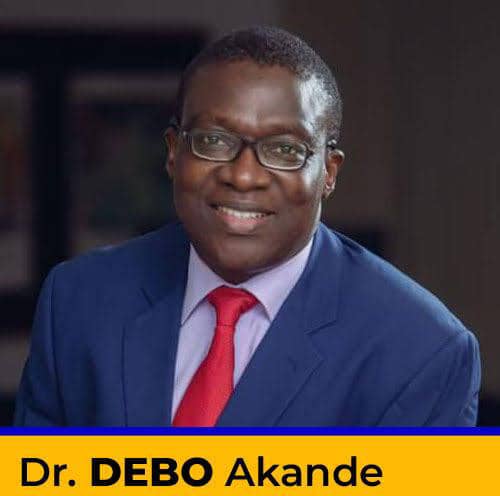
In Oyo State, that quiet was deliberately disrupted. Under the stewardship of Dr Debo Akande, agriculture stopped being a domestic routine and began to speak with a global voice.


The transformation was not in hectares tilled or crops counted. It was in vision, connectivity and ambition. Akande recognised that farms could be more than the sum of soil and seed, they could be portals to the world, linking local labour, resources and innovation to international systems, investment and standards.

Under his guidance, Oyo agriculture was no longer a silo. It became a strategic platform, a bridge between rural productivity and global agribusiness. Farms fed factories; factories fed markets; markets fed continents.


The old narrative of local consumption gave way to an architecture of value, integration and continuity. Agriculture became less an activity and more a process, an ongoing conversation with the world beyond the farm gate.



Central to this reinvention was a deliberate outward gaze. Engagements with foreign governments, multinational agribusinesses, development finance institutions and trade bodies were not ceremonial.

Each agreement, each handshake, was grounded in capacity, readiness and institutional coherence. Oyo State was no longer an aspirant hoping for attention; it was a credible partner, offering tangible assets, organised agro-industrial zones, and a regulatory framework aligned with global standards.
Akande’s strategy married diplomacy with delivery. International partnerships were never abstract; they were embedded in local systems.
Infrastructure improved, logistics networks expanded, and production systems modernise, all designed to ensure that global investment enhanced, rather than eclipsed, local enterprise.
In Oyo, international collaboration became a tool for community development as much as a lever for economic growth.
This philosophy resonated at multiple levels. Farmers, once producing for nearby markets, became participants in structured value chains.
Agro-processors moved from sporadic production to consistent output, meeting the standards required for regional and international trade. Jobs, income stability and rural livelihoods were no longer secondary outcomes, they were central metrics of success.
Events like the Oyo State International Agribusiness Summit illustrated the approach vividly. Yet the summit was never mere spectacle. It was a demonstration of readiness.
International stakeholders encountered systems that were operational, coherent, and integrated, not aspirational plans awaiting execution. Confidence was earned, not claimed.
Equally notable was the emphasis on technology, quality, and compliance.
Engagements prioritised knowledge transfer and standards alignment, ensuring that Oyo’s producers could navigate global markets with sophistication.
Links to the African Continental Free Trade Area positioned local farms within an ever-expanding continental network, while European and African partnerships reinforced adherence to international expectations.
The result was a profound recalibration of perspective. Agriculture in Oyo was no longer measured in tonnes or acres alone, but in value, connectivity, and global credibility. It became a signal, of competence, vision and seriousness, to investors, trade partners, and neighbouring regions.
Through it all, local communities remained the anchor. The internationalisation of agriculture never lost sight of the farm, the processor, the rural household. Diplomacy and capital flowed outward, but their purpose was inwardly directed: to empower, sustain, and elevate the local economy.
In effect, Dr Debo Akande reimagined agriculture as a global enterprise rooted in local strength. He demonstrated that a subnational economy can operate confidently on the world stage without compromising domestic priorities.
Oyo did not simply increase its output; it earned a place in the global agribusiness dialogue, proving that leadership, when thoughtful and disciplined, can transform sectors, communities, and reputations simultaneously.
The legacy is clear: under Akande, Oyo agriculture became more than a state endeavour, it became a model of what is possible when vision meets execution, and local potential meets global opportunity.
