By Oyo Amebo
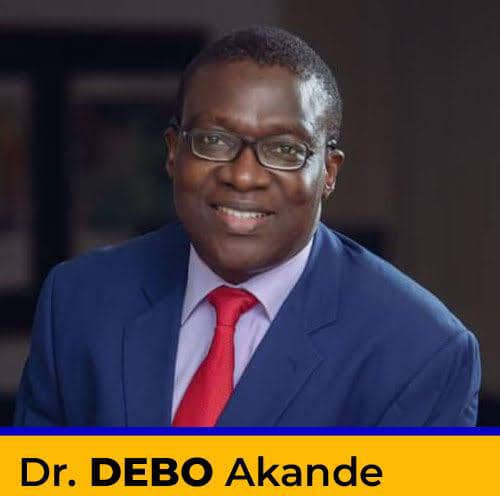
By the close of 2025, it had become clear that Dr Debo Akande was not merely managing an agricultural portfolio; he was curating an international conversation.
What unfolded over the year was less a sequence of isolated engagements and more a coherent strategy, one that treated agriculture as a platform for diplomacy, investment, and long-term economic positioning.
In Oyo State, the farm was reimagined. It was no longer only a place of cultivation, but a point of entry into global value chains, a meeting ground for foreign capital and local enterprise, and a persuasive statement of readiness.
Under Akande’s stewardship, agriculture evolved into an outward-looking enterprise, speaking confidently to international partners in the shared language of scale, standards and sustainability.
The defining feature of Akande’s 2025 was intentional cooperation. International engagement was not pursued for symbolism, but deployed as policy.
Through structured partnerships with foreign governments, multilateral development institutions, global agribusiness firms and trade organisations, Oyo State’s agrarian narrative shifted decisively, from regional production to international participation.
Each memorandum of understanding, investment dialogue and diplomatic exchange served a clear purpose: to reposition Oyo as a dependable node in global agricultural supply chains.
Rather than asking partners to speculate on potential, Akande presented a state with functioning agro-industrial hubs, improving logistics and a policy environment aligned with international best practice.
This global posture was anchored firmly in the development vision of Governor Seyi Makinde, whose administration framed agriculture as industry rather than subsistence. Akande became the principal executor of that vision, carrying it into international forums with consistency and clarity.
Throughout 2025, he advanced a simple but compelling argument: that the future of agriculture lies in value addition, processing, export readiness and structured markets.
Crucially, rhetoric was matched by delivery. Partnerships forged with international investors and development financiers translated into tangible expansion across Oyo’s agro-industrial zones.
Foreign capital met local capacity, while institutional cooperation facilitated access to technology, improved production methods and modern processing systems. Agriculture, in this model, was no longer an end in itself, but part of an integrated industrial ecosystem.
What set Akande apart was his insistence that cooperation must go beyond funding. Under his leadership, international partnerships extended into technology transfer, quality assurance, standards harmonisation and market access.
Engagements with European and African trade institutions strengthened Oyo’s export compliance, while alignment with frameworks linked to the African Continental Free Trade Area repositioned local producers as continental and global competitors.
In effect, Akande reframed the audience. Oyo’s farmers were no longer producing solely for nearby markets, but for buyers across borders. The state’s agricultural narrative adjusted accordingly, from quantity to quality, from isolation to integration, and from promise to proof.
The 2025 Oyo State International Agribusiness Summit stood as the symbolic high point of this strategy. More than an event, it functioned as a statement of confidence.
International delegates were not invited to imagine a future; they were invited to examine systems already in motion. By the time the summit convened, the groundwork had been laid through months of engagement, infrastructure development and policy alignment.
Yet the most persuasive element of Akande’s international approach was its human focus. Throughout the year, he consistently framed global cooperation as a means to local upliftment. Farmers and rural communities remained central to the narrative.
By linking international markets to employment, income security and dignity, he recast diplomacy as a practical tool for social impact rather than an abstract exercise in foreign relations.
As 2025 drew to a close, the results were visible. Thousands of farmers were integrated into structured value chains supported by international investment. Agro-industrial zones were increasingly connected to national transport infrastructure.
Policies spoke the language of global trade. Oyo State had become confident not only in attracting partnerships, but in sustaining them.
Looking ahead, Akande has made it clear that 2025 was not a culmination, but a foundation. The new year signals an even stronger commitment to deepening cooperation, expanding partnerships and consolidating Oyo’s position within global agribusiness networks. With systems in place and credibility established, the focus now turns to scale, resilience and long-term competitiveness.
In retrospect, 2025 will be remembered as the year Oyo State learned to harvest diplomacy alongside crops. Through Debo Akande’s deliberate internationalism, agriculture became a persuasive instrument of development, one that demonstrated how subnational leadership can think globally, act locally, and prepare decisively for a future shaped by cooperation rather than isolation.