By Oyo Amebo
Looking back at 2025, the year reads less like a calendar of events and more like a carefully argued thesis on how agriculture can be elevated through international cooperation.
In Oyo State, farms ceased to be mere sites of cultivation and became instruments of diplomacy, commerce and shared knowledge.
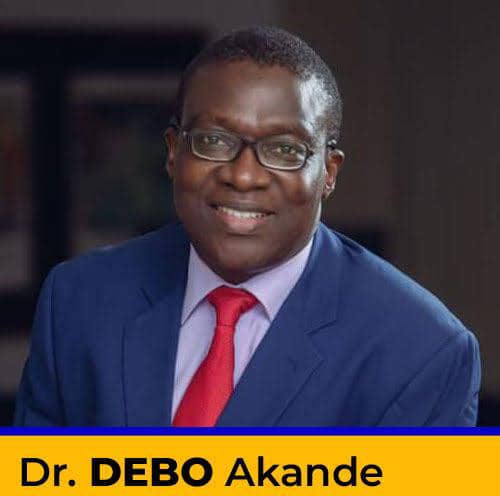
This transformation was under Dr Debo Akande, whose activities throughout the year demonstrated that partnership, not isolation, is the most persuasive language of modern agribusiness.
Akande’s work in 2025 was defined by an insistence that agriculture must speak fluently to the world. Rather than treating international engagement as ceremonial, he deployed it as a strategic tool, aligning Oyo State with foreign governments, development agencies, investors and multilateral institutions.
Each engagement carried a rhetorical purpose: to reposition Oyo from a regional producer to a credible participant in global agricultural value chains.
Through memoranda of understanding, investment roadshows and diplomatic exchanges, the state’s agrarian narrative was rewritten as one of openness, scale and reliability.
This outward-facing posture was not accidental. It was framed by Governor Seyi Makinde’s policy resolve and sustained by Akande’s execution.
Together, they advanced a discourse in which agriculture was no longer discussed as subsistence or welfare, but as industry.
In 2025, Akande repeatedly returned to this argument in international forums, insisting that value addition, processing and export readiness were the only sustainable futures for agrarian economies. His rhetoric was matched by results.
Partnerships forged with global agribusiness firms and development financiers translated into expanded operations at Oyo’s agro-industrial zones, where foreign capital met local capacity.
What distinguished Akande’s approach was his ability to convert dialogue into infrastructure and systems. International cooperation under his watch was not limited to capital inflows; it extended to technology transfer, standards harmonisation and market access.
Collaborations with European and African trade institutions sharpened Oyo’s compliance with export requirements, while engagements linked to the African Continental Free Trade Area reframed the state’s producers as continental competitors rather than local suppliers.
In rhetorical terms, Akande shifted the audience from the village market to the global buyer, and the argument followed suit.
The 2025 Oyo State International Agribusiness Summit became the symbolic crescendo of this strategy. More than a gathering, it functioned as a persuasive text, staged to convince diplomats, investors and policymakers that Oyo was ready for industrial agriculture.
Akande’s interventions throughout the year had prepared the ground for this moment, ensuring that when the state spoke, it did so with credibility anchored in functioning hubs, improved logistics and measurable returns. International partners were not being asked to imagine potential; they were invited to inspect evidence.
Equally important was the moral dimension of Akande’s narrative. His advocacy for global partnerships consistently returned to the impact on farmers and rural communities. By framing international cooperation as a means to dignity, employment and prosperity, he disarmed scepticism and broadened support.
The argument was simple yet powerful: global markets are not abstractions, they are pathways through which rural lives can be transformed. In 2025, this rhetoric gained traction as thousands of farmers found themselves integrated into structured value chains supported by foreign-backed investments.
By year’s end, Oyo State stood as a case study in how international cooperation can be domesticated without losing its global character. Akande’s activities had shown that partnerships are most effective when they are institutionalised, not personalised, and when they outlive the moments that created them.
The systems he championed spoke for themselves: agro-industrial zones linked to ports and rails, policies aligned with international standards, and an agribusiness sector confident enough to negotiate its place in the world.
In retrospect, 2025 will be remembered as the year Oyo State learned to harvest diplomacy alongside crops.
Through Akande’s relentless pursuit of international partnerships, agriculture became a language of persuasion, convincing the world that Oyo was not merely open for business, but prepared for it.
The legacy of that year is not just in figures or facilities, but in a transformed argument about what subnational leadership can achieve when it dares to think globally and act locally.