
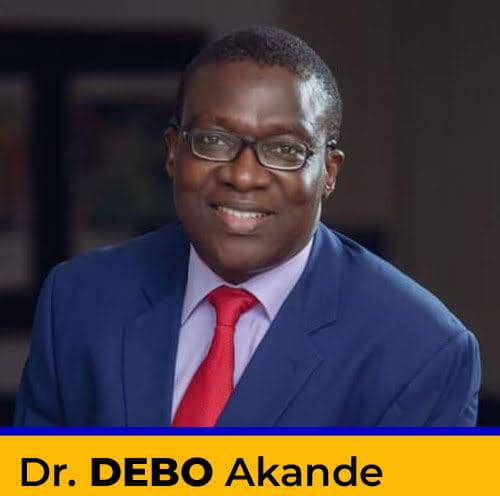
How Debo Akande’s Policy, Guidance Align with International Expectations for Oyo’s Development

By Oyo Amebo
Agriculture often changes slowly. It follows seasons, traditions and habits passed down over generations. In Oyo State, it once did exactly that, reliable, familiar and largely self-contained.
Then came a change not of weather, but of perspective.
When Dr. Debo Akande took responsibility for the agricultural direction of the state, the most important shift did not occur in the fields. It occurred in the mind of the system itself. Agriculture stopped asking how much it could produce and began asking where it belonged.
This single question altered everything. Akande recognised early that farming, in the modern world, is no longer an isolated rural pursuit. It is a networked enterprise, one that thrives on standards, access, logistics and trust. Without these, production remains trapped within local cycles. With them, it travels.

His response was neither hurried nor cosmetic. Instead, he began to quietly re-engineer the foundations. Agriculture was repositioned as an economic infrastructure, one capable of linking smallholders to processors, processors to exporters, and exporters to global markets without fragmentation.
The state’s farms became entry points into a wider system rather than endpoints of effort.
This reframing demanded an outward orientation. Engagement with international agribusinesses, development institutions and foreign governments followed, but only after internal readiness was established. Oyo State did not seek attention prematurely.
It prepared itself to be taken seriously. Under Akande’s guidance, policy, infrastructure and regulation were aligned with international expectations. Agro-industrial zones were structured, logistics pathways clarified and quality benchmarks prioritised. When investors arrived, they encountered coherence rather than promise.
What distinguished this approach was restraint. Internationalisation was never treated as replacement. It was an enhancement. Global partnerships were designed to amplify local capacity, not displace it. Capital was welcomed, but on terms that preserved local value and community relevance.
For farmers, this marked a subtle but profound shift. They were no longer operating at the edge of the economy. They became integral participants in defined value chains, producing not just for immediate markets but for structured demand. Stability replaced uncertainty. Planning replaced guesswork.
Agro-processors experienced a similar evolution. With clearer supply and consistent standards, production could move from irregular output to dependable scale. Compliance ceased to be an obstacle and became an advantage, opening doors to regional and international trade.
Public-facing moments, such as the Oyo State International Agribusiness Summit, captured attention, but they were never the substance of the work. They served as confirmations. What visitors saw were systems already functioning, farms connected to factories, factories linked to markets, markets anchored in policy.
Strategic alignment with continental frameworks like the African Continental Free Trade Area further embedded Oyo within larger trading networks, while partnerships beyond the continent reinforced discipline, quality and long-term credibility.
Yet even as Oyo’s agriculture extended its reach, its centre of gravity remained unchanged. The farm, the rural worker and the local processor remained the core. International engagement was a means, not an end, a way to strengthen livelihoods and secure the future of communities often left behind by growth narratives.
In this sense, Akande’s achievement was not expansion alone, but balance. He demonstrated that it is possible to globalise without losing grounding, to modernise without erasing identity.
Oyo State’s agriculture today stands as evidence of that philosophy. It operates with confidence, coherence and a sense of place in the world economy. Not as an experiment, but as a participant.
That transformation did not happen by accident. It was the product of leadership that understood that the most enduring revolutions begin quietly, with a decision to look beyond the horizon, and the discipline to build the road that leads there.
