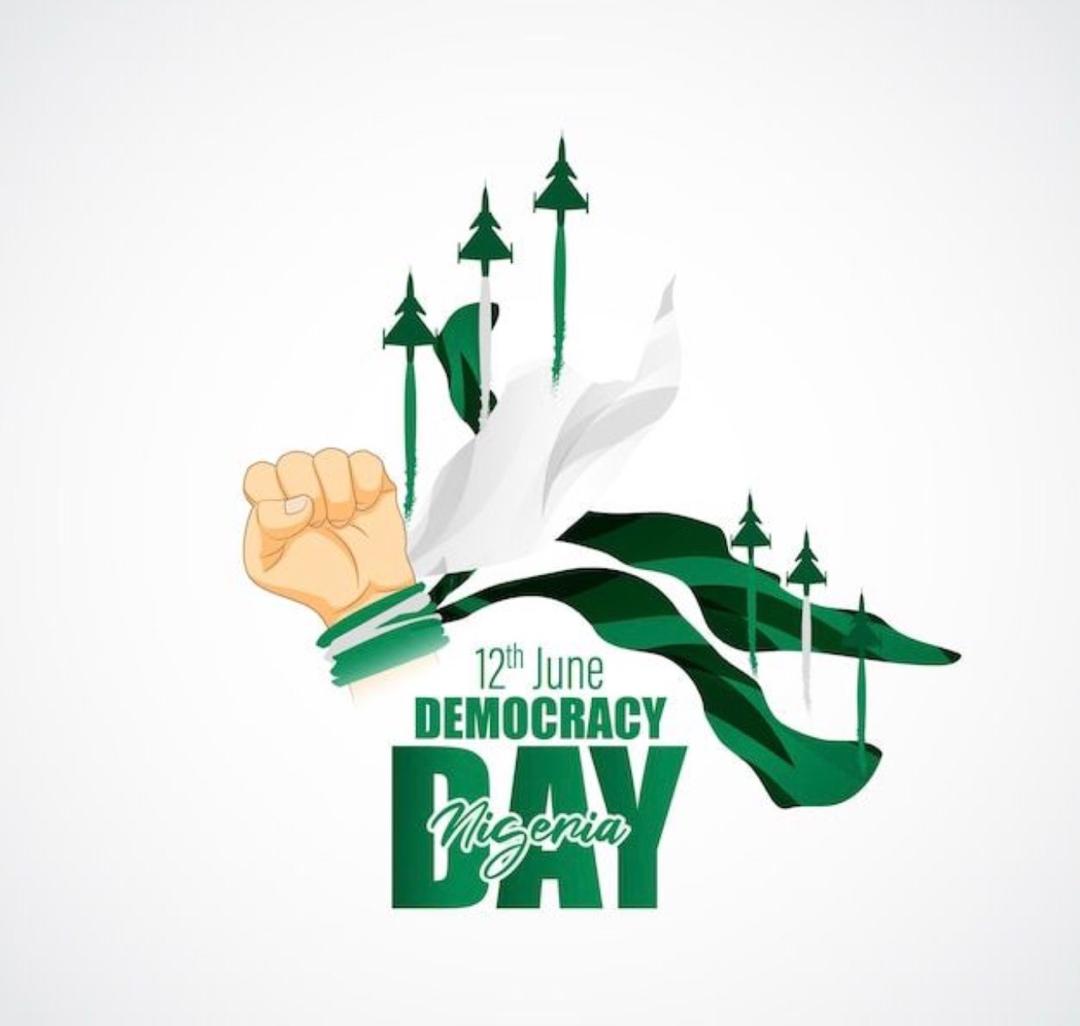
Some dates do not merely mark time; they mark identity. June 12 is one of them — a day when Nigeria rose above its fractures and, for a brief, brilliant moment, became the nation it always claimed it could be.
On June 12, 1993, Nigerians did something extraordinary. We voted — not as tribes, not as religions, not as regions — but as one people, united by hope. Observers still call it the freest and fairest election in our history. But beyond the ballots, June 12 was a revelation: a glimpse of the Nigeria we are capable of becoming when we choose unity over division, courage over fear and possibility over cynicism.
M.K.O Abiola — The Man Who Became the Mandate
At the center of that historic moment stood Chief Moshood Kashimawo Olawale Abiola — businessman, philanthropist, patriot and the man Nigerians overwhelmingly chose to lead them.
He became more than a candidate; he became a symbol of national unity, a bridge across religion, ethnicity and class. His campaign — Hope ’93 — was not just a slogan; it was a promise that Nigeria could rise above its old wounds.
When the will of the people was denied, Abiola paid the ultimate price for insisting on the truth: that the mandate belonged to Nigerians, not to power.
He died in captivity, but not in vain. His courage, sacrifice and unwavering insistence on justice are the reasons June 12 is now Democracy Day. He did not live to see the honor, but the nation remembers. And in remembering him, we remember the best version of ourselves.
Today, as we celebrate June 12, we honor Abiola’s legacy — a legacy of hope, courage and the belief that Nigeria can rise above its divisions.
The Economic Ambition That Refuses to Die
Dangote & Adenuga — Twin Pillars of Nigerian Enterprise.
Nigeria’s economic story cannot be told without acknowledging the audacity of two giants whose visions reshaped entire industries: Aliko Dangote and Michael Adenuga.
Dangote — Africa’s Industrial Architect
The Dangote Refinery stands as one of the most ambitious industrial projects in modern African history.
• At full capacity: 650,000 barrels per day; audaciously pushed to 700,000 barrels per day.
• A chance to slash fuel imports.
• A symbol that Nigeria still dreams big.
Adenuga — The Quiet Titan Who Connected a Nation
Michael Adenuga, founder of Globacom, is one of the most influential architects of Nigeria’s modern economy.
• Built Glo, the first indigenous telecom giant to challenge global competitors.
• Introduced per second billing, democratizing access.
• Expanded Nigeria’s digital footprint across West Africa.
• Embodies silent excellence & influence — strategic, patriotic, unstoppable.
Together, Dangote and Adenuga represent the entrepreneurial audacity that keeps Nigeria moving forward.
Fintech & Innovation — Africa’s Financial Engine
Nigeria’s fintech ecosystem is rewriting Africa’s economic future.
• Over $1 billion in startup funding in 2023.
• Platforms like Flutterwave, Paystack, Moniepoint, Interswitch, OPay powering payments across the continent.
• Nigeria accounts for one third of Africa’s fintech market.
Innovation born from necessity — executed with brilliance.
Afrobeats — The Soundtrack of Nigerian Resilience
If June 12 showed us who we could be politically, Afrobeats has shown the world who we are culturally — bold, inventive, joyful, unbreakable.
Afrobeats is more than music; it is the heartbeat of a nation that refuses to stay down. It is the sound of a people who turn struggle into rhythm, chaos into creativity and hope into a global export.
It is Nigeria’s most successful diplomatic mission — a cultural revolution that has carried the Naija spirit across oceans.
Davido — The Joyful Voltage of the Naija Spirit
Davido stands as one of the clearest expressions of the Naija spirit — bold, joyful, generous and unstoppable. He isn’t just an artist; he’s a movement, a cultural force, a global ambassador of joy, energy and pure Naija confidence. From selling out the O2 Arena as a headliner, to turning every stage into a celebration of home, Davido shows the world what it looks like when Nigerian talent meets Nigerian audacity. He is proof that even in tough times, Nigeria continues to produce stars who shine loudly enough to light the world.
Wizkid — The Calm Commander of Global Cool
Wizkid is the quiet storm of Afrobeats — smooth, effortless, global. He didn’t just cross over; he redesigned the bridge. From Grammy wins to chart topping collaborations, from being the first Nigerian artist to sell out the O2 Arena as a headliner, three nights in a row, to shaping the sound of modern pop, Wizkid embodies the power of subtlety, excellence and consistency. He represents the Nigerian ability to influence the world without raising our voice — just by being undeniably good.
Burna Boy — The Global Giant
Burna Boy carries the fire of a nation that refuses to be ignored. From Grammy wins to stadium tours, he became the first African artist to sell out a U.S. stadium, proving that Nigerian excellence is not local — it is universal.
Tems — The Voice That Floats Above the Noise
Tems embodies a quieter kind of power — soft, intentional, boundary breaking. She became the first Nigerian woman to win a Grammy, and her voice has become a global signature.
Ayra Starr — The New Wave of Fearless Femininity
Ayra Starr is the sound of the future — confident, stylish, unapologetic. She represents the new Nigerian woman: bold, brilliant and unafraid to assume space.
Tiwa Savage — The Queen Who Opened the Doors
Before global stages opened their arms to Nigerian women, Tiwa Savage kicked the doors down. She showed that Nigerian women could dominate charts, command arenas and shape culture — not as guests, but as leaders.
Yemi Alade — Mama Africa, The Continental Force
Yemi Alade carried Nigerian music across Africa long before global streaming caught up. Her tours across Francophone Africa cemented her as a continental icon.
Simi — The Poet of Emotion
Simi brought softness, storytelling and soul into Afrobeats. She represents the emotional intelligence of the Naija spirit.
Asa — The Soul of Nigerian Purity
Asa is the quiet storm of Nigerian music — soulful, introspective, timeless. Her artistry blends folk, jazz and soul into a sound that feels like home. She represents the reflective side of Nigerian resilience: calm, deep and unshakably authentic.
Seun Kuti — The Fire of Consciousness
Seun Kuti carries the torch of Afrobeat’s original purpose — truth telling, resistance and political courage. His music is a reminder that Nigerian art has always been a tool for awakening. He represents the uncompromising spirit of a people who refuse to be silenced.
Don Jazzy — The Architect of a Movement
Before the world danced to Afrobeats, Don Jazzy built the blueprint. He nurtured talent, shaped sound and created a culture of excellence that still defines the industry.
P Square — The Brothers Who Made Africa Dance
Before streaming numbers and global tours, P Square carried Nigerian pop on their backs. Their legacy is the foundation on which today’s stars stand.
2Baba — The Philosopher King
2Baba is the conscience of Afrobeats — a storyteller, a bridge between generations, a voice that has shaped Nigerian music for over two decades.
Afrobeats as a National Metaphor
Afrobeats is Nigeria’s story in sound:
• We innovate even when resources are scarce.
• We rise even when systems fail.
• We shine even when the world doubts us.
• We collaborate even when politics divides us.
• We export joy even when we wrestle with pain.
Afrobeats is the cultural echo of June 12: a reminder that when Nigerians move together, the world moves with us.
Nollywood — The Empire That Refused to Wait for Permission
Nollywood, another miracle of Nigerian resilience — an industry built with grit, improvisation and unstoppable ambition.
What began with handheld cameras and street corner distribution has grown into a global cinematic force.
• Nollywood is now the second largest film industry in the world by volume.
• Nigerian films consistently rank in the Top 10 on Netflix across Africa, Europe and the Caribbean.
• Movies like The Wedding Party, King of Boys, Aníkúlápó, Citation, Shanty Town, Seven Doors and Blood Sisters have become global hits.
• Nigerian directors and actors now collaborate with Netflix, Amazon Prime and international studios.
Nollywood is proof that Nigerians don’t wait for perfect conditions. We create, we adapt, we push, we build — and eventually, the world pays attention.
It is the cinematic version of June 12: a testament to what Nigerians can achieve when we believe in our own voice.
Comedy — The Laughter That Holds the Nation Together
If Afrobeats is our rhythm and Nollywood is our storytelling, then comedy is our coping mechanism — the art that keeps us sane in a country that constantly tests the limits of endurance.
Nigerian comedians are not just entertainers; they are custodians of joy, masters of satire and guardians of the national mood. They turn hardship into humor, frustration into laughter and confusion into collective relief. In their hands, comedy becomes a national language — a way of surviving, resisting and remembering who we are.
Ali Baba — The Godfather
Ali Baba is the foundation on which the entire industry stands. He professionalized comedy, elevated it and gave it dignity. Every comedian working today walks on a road he cleared.
I Go Dye — The Satirical Oracle
I Go Dye has spent decades using humor as a mirror — reflecting society’s contradictions with sharp wit and fearless commentary. His comedy blends intelligence with activism, reminding us that laughter can be a form of resistance. He represents the Nigerian ability to critique with a smile, challenge with a joke and speak truth without losing joy.
Bovi — The Storyteller of Everyday Nigeria
Bovi is the chronicler of the Nigerian experience — the traffic, the politics, the relationships, the absurdities. His comedy is relatable, intelligent and deeply human. He captures the chaos of our daily lives and turns it into something we can laugh about instead of cry over.
Basketmouth — The Global Pioneer
Basketmouth helped take Nigerian comedy to the world. From international tours to global collaborations, he opened doors for an entire generation. He is living proof that Nigerian humor travels — and lands — everywhere.
AY — The Hustler’s Hustler
AY embodies the entrepreneurial side of Nigerian comedy. From stand up to film to production, he built an entertainment empire from pure grit and relentless innovation. He represents the Nigerian instinct to diversify, to create opportunities where none exist and to keep moving no matter the obstacles.
Sabinus — The Digital Dynamo
Sabinus represents the new generation — viral, spontaneous, fearless. He mastered the language of the internet and turned skits into a cultural phenomenon. His characters, expressions and comedic timing have become part of everyday Nigerian vocabulary.
Broda Shaggi — The Street Poet of Chaos and Joy
Broda Shaggi is the pulse of the streets — raw, restless, unfiltered. He doesn’t just make skits; he distills the madness of Nigeria into moments of pure, explosive laughter.
In his world, confusion becomes creativity, pressure becomes performance and struggle becomes a punchline – e shock you?! Shaggi is the poet of the unpredictable — the one who reminds us that even when life is shouting, Nigerians will shout louder, laugh harder and rise again. He is the spirit of survival in motion: loud, inventive, dramatic and deeply human.
Comedy as a National Metaphor
Comedy is the Nigerian way of saying:
• We will not be broken.
• We will laugh even when life tries to overwhelm us.
• We will find joy in the cracks.
• We will turn our struggles into stories.
• We will survive — loudly.
Comedy is the emotional echo of June 12: a reminder that even in our darkest moments, Nigerians find a way to rise — and laugh — together.
Academia, Diaspora & Activism — The Quiet Engines of Progress
Nigerian excellence doesn’t thrive only on stages or in stadiums. It grows in laboratories, libraries, research hubs and global institutions — places where brilliance is measured not by applause, but by impact.
Across continents, Nigerians are expanding the boundaries of possibility. Our academics drive breakthroughs in medicine, engineering, economics and the humanities. Our diaspora fuels innovation from Silicon Valley to Toronto, London to Berlin. Our activists — at home and abroad — refuse to let injustice breathe. And our everyday citizens, armed with grit alone, keep pushing forward.
Then, every so often, a young star rises to remind us — again — of who we are.
On June 9, 2026, just three days before June 12, in faraway Canada, Douye Igoniderigha — a bright emblem of the Naija spirit — achieved a perfect 4.00 GPA in Neuroscience, with a minor in African Studies, at the University of Calgary. He didn’t just excel; he conquered. He earned the President’s Award and secured a scholarship to pursue a master’s in medicine at McGill University.
This is the Nigeria we know — a nation whose children wear brilliance like a birthmark.
From Nobel laureates to tech founders, global CEOs to policy shapers, medical innovators to cultural theorists, Nigerians excel in every corner of the world. They are the quiet engines of progress — thinkers, builders and truth tellers who expand the nation’s footprint without fanfare.
Their achievements echo the spirit of June 12: Nigeria’s greatest resource has always been its people — relentless, gifted, unbreakable.
June 12: A Mirror and a Mandate
June 12 reflects the Nigeria we once were — united, hopeful and courageous. And it maps the Nigeria we can be again.
June 12 is not nostalgia. It is instruction.
It tells our leaders: Govern with the courage the people showed that day.
It tells our citizens: Do not surrender your voice, your vote or your vision.
It tells the world: Nigeria’s democratic spirit may be tested, but it is unbroken.
June 12 was the day we were. And with courage, clarity and collective will, it can also be the nation we become again — a nation that honors the past, celebrates the present and inspires the future.
‘Kunle J. Adeboye writes about Democracy, Leadership, Institutional Reforms and the future of the Nigerian republic, with a sustained focus on accountability and development outcomes.