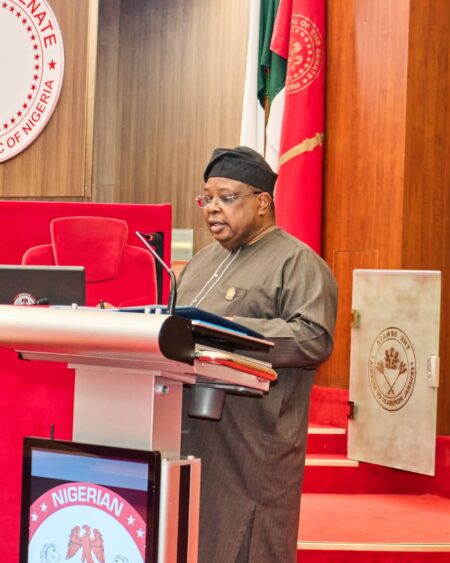
By Oyo Amebo
In politics, some leaders make noise; others make history. Honourable Mudashiru Kamorudeen belongs to the latter, the rare few who arrive not with fanfare, but with purpose, and leave a mark measured in transformed lives.
For many in Lagelu, he is not merely a politician; he is the answer they had been waiting for, a catalyst of change sent by Governor Seyi Makinde to turn vision into reality.
Leadership in Lagelu is no longer a matter of promises. Under Kamorudeen, it has become tangible, lived, and undeniable.
Roads that once cut villages off from opportunity now pulse with movement, connecting farmers to markets, students to schools, and families to healthcare centres.
Every stretch of tarmacked surface tells a story, of access restored, commerce invigorated, and hope renewed.
Markets have become engines of prosperity, buzzing with activity that reflects more than trade, it reflects confidence in governance that works quietly but consistently.
Clinics, once places of uncertainty, now offer reliable care, equipped, staffed, and maintained to serve communities day in, day out.
Security is no longer reactive; the Amotekun Corps engages proactively, creating a climate where residents feel safe to live, work, and thrive.
But perhaps Kamorudeen’s most profound impact is in education. Through the LAGELU EDU-SUPPORT initiative and the Free JAMB Forms programme, he has unlocked pathways for young people to realise their potential.
Classrooms are not symbolic spaces; they are incubators of ambition, stocked with resources, staffed with trained teachers, and infused with opportunity. For Lagelu’s youth, education has become a bridge to aspiration, achievement, and self-actualisation.
What sets Kamorudeen apart is the deliberate integration of empathy and strategy. He does not treat infrastructure, education, healthcare, and security as isolated projects. He treats them as a single, living ecosystem, where progress in one sector multiplies across the rest.
Roads enable markets, markets fund households, households invest in schools, and schools prepare the leaders of tomorrow.
Every intervention is a domino, tipping seamlessly into the next, building momentum that endures. It is this orchestration, precise, persistent, and purposeful, that has earned him the reputation of being Makinde’s sent “messiah” to Lagelu.
He does not govern for applause; he governs for impact. He does not seek visibility; he seeks permanence. And in doing so, he is redefining what grassroots leadership looks like in contemporary Nigeria.
The effects are visible, measurable, and deeply felt. Communities that once existed on the margins now thrive in the mainstream of opportunity.
Young people have access to resources and mentorship that transform dreams into achievable goals. Families experience security and healthcare that are consistent, not occasional.
And the citizens of Lagelu are discovering that governance, when executed with discipline and empathy, can be a force for dignity and progress.
Mudashiru Kamorudeen’s leadership poses a challenge to the rest of the political class: can leadership be measured not by speeches, announcements, or ephemeral visibility, but by the quiet, consistent transformation of communities?
In Lagelu, the answer is already clear, governance, when delivered with purpose, can indeed become a lifeline, and a messiah need not come in splendour, but in service.