By Oyo Amebo
Democracy, at its best, is not a monologue but a conversation, a continual exchange between those who lead and those they serve.
Yet, in much of Nigeria’s political terrain, that conversation has often faded, replaced by the clamour of ambition and the quiet of disconnection.
Every so often, however, a public servant reawakens that dialogue, reminding citizens of what leadership looks and sounds like when it listens.
In Ibadan, that figure is Honourable Adedeji Dhikrullahi Stanley Olajide, fondly called Odidiomo by those who have watched his evolution from grassroots advocacy to national representation.
For Odidiomo, representation is not a ceremonial duty but a living commitment. His politics begins not within the walls of the legislature but in the everyday rhythm of his constituency, the traders in Dugbe, the artisans in Apata, the schoolchildren in Omi Adio.
He meets governance where life happens. To him, democracy is not a distant ideal but a practical instrument to ease daily struggles and uplift collective aspirations.
His foray into politics was not driven by the pursuit of office, but by a sense of duty to his community. Long before he earned the title of Honourable, Odidiomo was already a visible advocate for social change, championing better educational facilities, improved healthcare access, and safer neighbourhoods.
These early efforts anchored his later political work in the realities of the people he represents, giving his leadership a tone of authenticity that stands out in today’s political climate.
Within the National Assembly, his record is marked by purposeful contributions rather than performative rhetoric.
His motions and bills have consistently aimed at practical reforms, initiatives that strengthen education, create jobs, promote transparency, and nurture local enterprise.
Each policy gesture reflects a memory, a conversation, a shared frustration turned into legislative intent.
Equally striking is his commitment to oversight. Odidiomo treats accountability not as a slogan, but as an obligation. He sees scrutiny as the lifeblood of governance, not an adversarial act.
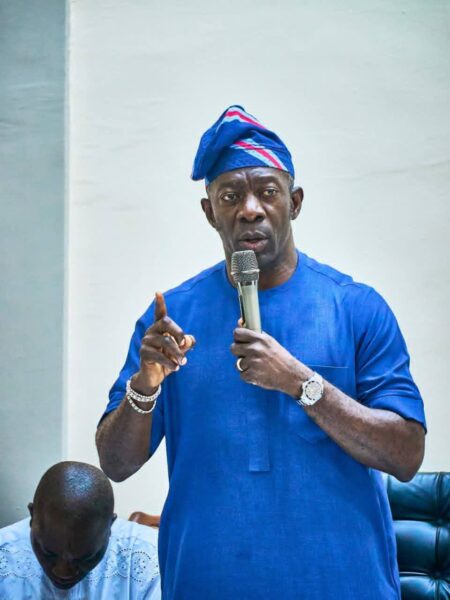
His constituency engagements and town hall meetings are genuine spaces for dialogue, where citizens can demand answers and witness transparency in motion.
In a political culture often clouded by opacity, such openness has become both refreshing and instructive.
His brand of empowerment underscores this difference. It is systematic, not sentimental. He offers scholarships to open paths for the young, training schemes that turn idle potential into productive capacity, and support funds that enable small businesses to grow sustainably.
Rather than dishing out token gestures for applause, he builds structures that endure beyond political seasons.
The results are visible. Roads have reconnected forgotten communities, schools have received new life, and healthcare centres have regained vitality.
But more profoundly, citizens have rediscovered belief in public service, an awakening that representation can still be synonymous with responsibility.
Odidiomo’s politics calls for introspection within Nigeria’s democratic space. It challenges the notion that leadership must be remote, transactional, or theatrical.
Instead, he advances a quieter, steadier model, one that prioritises sincerity over spectacle and purpose over publicity.
In a nation yearning for credible leadership, his trajectory naturally provokes the question: could this model of engaged, transparent, and people-centred governance be scaled beyond the constituency, perhaps to the state level?
Odidiomo himself does not say. But as his record continues to speak in actions rather than slogans, the question lingers in the public consciousness, inviting reflection rather than conclusion.
Odidiomo: a man of the people, a servant of the people. perhaps, just perhaps, a gubernatorial material?