Democracy was never meant to be a distant echo. It was designed as a dialogue, a living exchange between the people and those entrusted to serve them. Yet, across much of Nigeria’s political landscape, that dialogue has grown faint, often replaced by the noise of ambition and the silence of disconnection.
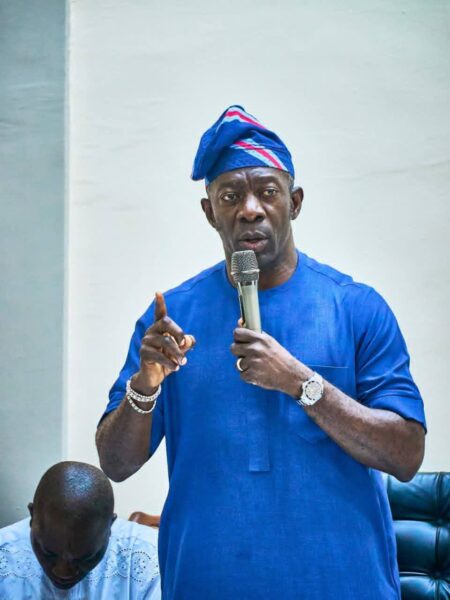
But every so often, a public figure emerges who reopens that conversation, reminding citizens what leadership sounds like when it listens. In Ibadan, that voice belongs to Honourable Adedeji Dhikrullahi Stanley Olajide, ‘Odidiomo’ to the people who know him best.
For Odidiomo, representation is not an abstract constitutional duty; it is a daily act of engagement. He does not begin his work in parliamentary chambers but in the pulse of the communities he represents, the markets, schools, and side streets where policy meets everyday life. There, democracy is not theory; it is tangible, spoken in the rhythm of shared challenges and collective hopes.
His political journey did not start with titles or offices, but with advocacy. Long before the formalities of power, Odidiomo was a familiar presence in community campaigns, calling for better schools, safer neighbourhoods, fairer access to health care. These encounters grounded his politics in the lived experience of ordinary people, a foundation that continues to shape his legislative vision today.
In the National Assembly, his contributions reflect that grounding. His motions and bills speak not of grandstanding but of problem-solving, education reforms that make classrooms work, empowerment initiatives that equip young people with real skills, fiscal accountability measures that give meaning to transparency. Each policy traces its roots to a conversation with the people most affected.
What truly distinguishes Odidiomo, however, is his understanding that democracy cannot stop at lawmaking. Oversight, for him, is not an afterthought, it is the heartbeat of public trust. He treats scrutiny not as confrontation, but as responsibility, ensuring that public promises do not evaporate into paperwork.
His constituency meetings and open forums are not ceremonial; they are spaces where accountability is made visible, and where leadership learns to listen again.
In a culture where secrecy too often masquerades as strength, this insistence on openness has become quietly revolutionary. His transparency is not performative, it is procedural, woven into how he governs. And in doing so, he has restored something that modern politics often forgets: credibility.
Odidiomo’s concept of empowerment further illustrates his departure from the familiar script of transactional politics. His interventions are structured, not symbolic, scholarships that open doors to opportunity, skill hubs that turn artisans into entrepreneurs, grants that create sustainable ventures rather than fleeting gratitude. It is empowerment as policy, not patronage.
The effects ripple through Ibadan. Roads link once-isolated settlements; schools hum with new energy; community clinics stand equipped and staffed. Each development carries his imprint, yet more importantly, it carries the validation of citizens who now see representation as partnership, not performance.
His approach invites a deeper national reflection: what does it mean to represent in a democracy still learning to trust itself? For too long, Nigeria’s governance has leaned on voices that speak about the people rather than with them. Odidiomo’s model proposes a quiet correction, that democracy finds renewal not through spectacle, but through sincerity.
It is, in essence, a politics of proximity, one that measures success not in applause or headlines, but in the distance closed between power and the people.