By Oyo Amebo
For years, development was often something delivered from the top, conceived in government offices, wrapped in bureaucracy, and handed down to communities expected simply to accept it.
But in Oyo State, a new era has quietly begun, one that replaces instruction with inclusion and bureaucracy with belonging.
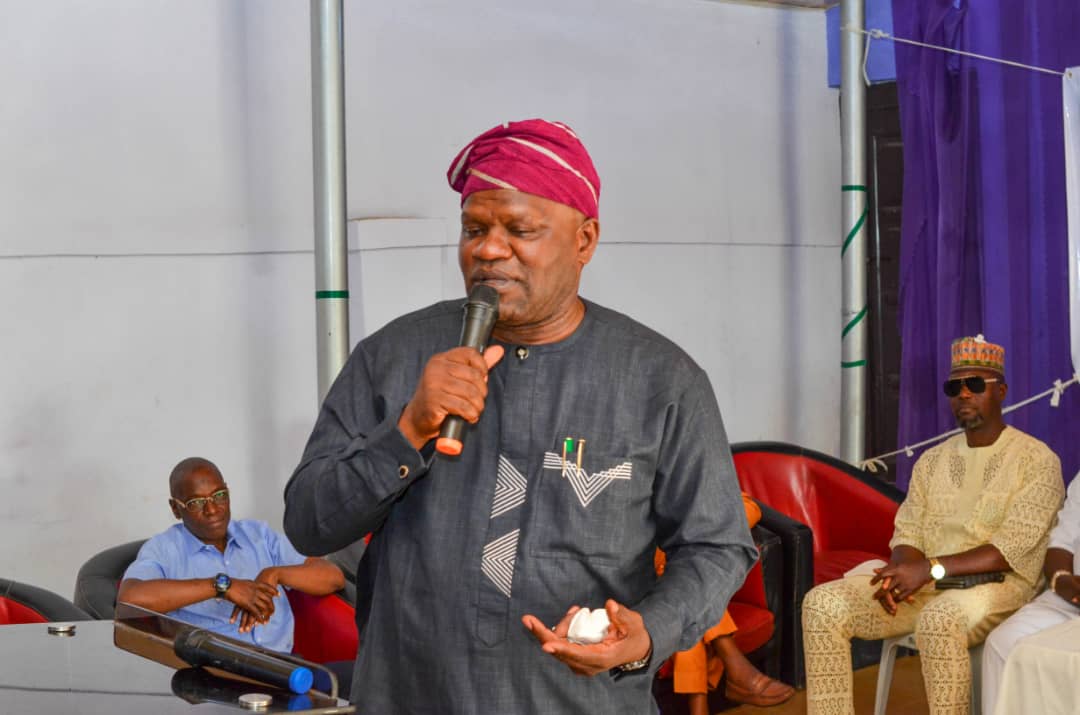
Honourable Abideen Adetokunbo Adeaga, Director-General of the Oyo State Community and Social Development Agency (OYCSDA), has brought a new sense of purpose to grassroots development in Oyo State.
Rather than viewing progress as a government-driven agenda, he sees it as a shared journey shaped by the people themselves. Through his inclusive and empathetic leadership, communities have become active participants in identifying, designing, and sustaining the projects that truly reflect their needs and aspirations.
Every project begins not with a blueprint, but with a conversation. Across towns and villages, residents gather to decide what matters most to them, whether it’s a bridge to connect farmers to markets, a borehole to end the daily search for clean water, or classrooms where children can learn in safety.
These voices form the foundation of OYCSDA’s work, turning the agency’s role into that of a trusted partner rather than a distant authority.
The results of this participatory model are visible across the state. Villages once plagued by scarcity now have clean water flowing from community-installed boreholes.
Remote areas previously cut off by poor access now boast bridges linking people and trade. Schools that once leaked under the rain now stand strong and welcoming.
Each success story is not merely a record of government expenditure, it is a testament to collective will and shared ownership.
Since 2022, over 250 such projects have been executed, touching the lives of more than 350,000 residents. Yet beyond the statistics lies something deeper, the rebuilding of trust between people and government.
When a mother no longer has to walk miles to fetch water, when a child can learn without fear, when a farmer can sell his produce without obstruction, faith quietly returns to civic life.
This renewed approach also mends an old injustice. For too long, the glow of development shone brightest in cities, leaving rural communities in the shadows. Adeaga’s leadership is changing that narrative.
Under his watch, fairness has become policy, not promise. Rural communities now find themselves included in Oyo’s broader vision of progress, their needs respected and their voices heard.
Yet, OYCSDA’s mission goes beyond physical infrastructure.
The agency recognises that true development addresses both the tangible and the emotional. Through psychosocial support programmes, counselling, group therapy, and livelihood training, widows, orphans, people with disabilities, and vulnerable groups are finding hope again.
The emphasis is not merely on constructing buildings but on rebuilding confidence, self-reliance, and dignity. Women and youth are central to this transformation.
No longer excluded from decision-making, they now sit at the tables where choices are made, where budgets are discussed, and where priorities are set. Communities do not just propose projects, they monitor and maintain them.
This sense of ownership ensures transparency, curbs corruption, and fosters accountability that lasts long after a project is completed.
Adeaga’s leadership style brings this philosophy to life. He is known not for ruling from behind a desk but for being present in the field speaking with traders, listening to teachers, inspecting wells, and walking through villages.
His approach humanises governance, proving that listening is as powerful as leading. Challenges, of course, exist. Inflation and rising costs have tested the limits of every initiative, but OYCSDA has adapted with innovation.
By sourcing materials locally and training residents in project maintenance, the agency ensures long-term sustainability and community pride in every undertaking.
Through this people-centred model, Oyo State is demonstrating that genuine development cannot be imposed, it must be co-created.
Progress flourishes where citizens see themselves not as beneficiaries, but as partners in shaping their own destiny.
Across Oyo’s landscape, from its bustling towns to its most remote hamlets, the evidence of this philosophy is unmistakable, cleaner water, sturdier classrooms, better access roads, and a spirit of renewed hope.
Development in Oyo today is no longer a gift from government, but a product of shared vision and responsibility.
And in this shared pursuit, Oyo State offers an enduring lesson: when government listens and people lead, progress is not commanded, it is cultivated.