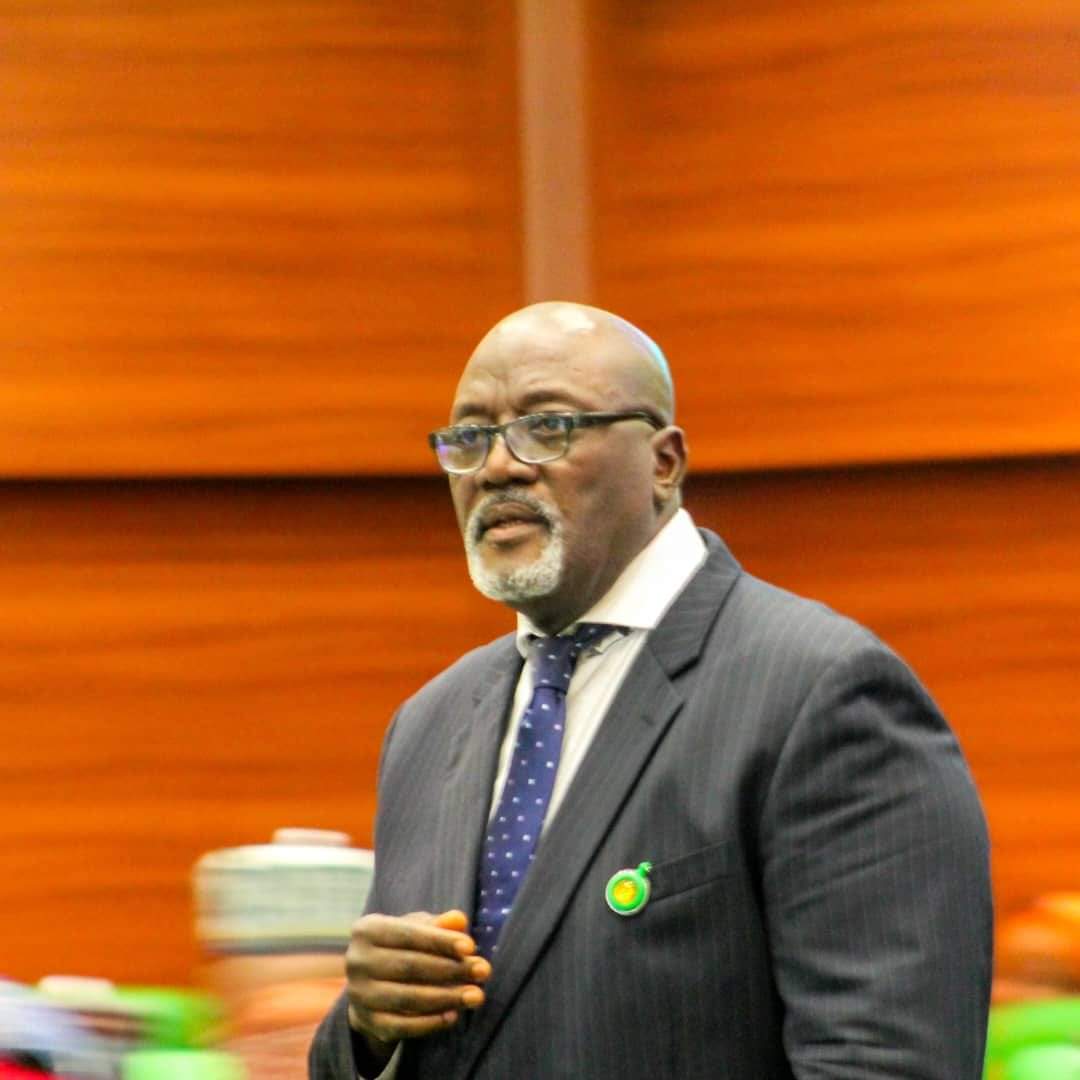
By Oyo Amebo
History is often kinder to those who do not shout for attention. In the retrospective gaze of 2025, Honourable Adedeji Dhikrullahi Stanley Olajide, widely known as Odidiomo, emerges as one of those rare public figures whose influence is measured not by visibility, but by consequence. In a political era intoxicated with spectacle, his record stands as an argument for restraint, clarity of purpose, and a stubborn fidelity to results.
Odidiomo’s leadership throughout the year reflected a conscious alignment with the governing philosophy of Governor Seyi Makinde: governance as service, not theatre. Where others pursued headlines, he pursued systems. Where rhetoric flourished elsewhere, he focused on function.
This was not an absence of ambition, but a disciplined redirection of it, towards outcomes that endure beyond election cycles.
Across his constituency, the effects of this approach were unmistakable. Educational interventions were sustained rather than episodic, with learning environments strengthened through consistent support, student-focused programmes and quiet advocacy that ensured resources arrived where they were needed most.
Healthcare facilities benefitted from attention that prioritised operational efficiency over ceremonial commissioning.
Small businesses and young entrepreneurs encountered a representative who understood that empowerment is a process, not a photo opportunity.
In the legislature, Odidiomo’s 2025 activity was marked by deliberateness. His contributions were informed by close engagement with community realities, translating lived experience into policy positions and constituency projects that made practical sense. Motions were not abstract, and interventions were rarely ornamental.
Each legislative act carried the imprint of consultation, empathy and a refusal to legislate in isolation from the people affected.
What distinguished his public service most profoundly was its moral economy. Accountability was not outsourced to public pressure; it was internalised as a principle. Town hall meetings functioned as genuine spaces of exchange rather than choreographed performances.
Commitments were tracked, revisited and fulfilled with a consistency that gradually built trust. In an environment where public confidence is fragile, Odidiomo’s steadiness became a form of reassurance.
There was also a notable absence of self-advertisement. Throughout 2025, his work spoke in quiet accumulation rather than grand declaration.
Yet this restraint amplified, rather than diminished, his profile. Observers increasingly recognised in him a continuation of Makinde’s reformist ethos: leadership that invests in institutions, values continuity over disruption, and treats governance as a long-term responsibility rather than a personal stage.
This resonance is not accidental. Like Makinde, Odidiomo appears less interested in political drama than in political durability. His style suggests an understanding that the true test of leadership is not applause at the moment of action, but stability after the moment has passed.
The schools that continue to function, the constituents who remain engaged, and the initiatives that outlive announcements all testify to this philosophy.
By the close of 2025, Odidiomo’s influence had extended beyond the boundaries of his constituency, not through proclamation, but through example.
His record offered a quiet rebuke to performative politics and a compelling case for a more grounded model of representation. It demonstrated that leadership does not always need to announce itself loudly to be felt deeply.
In the final analysis, Odidiomo’s story is not one of spectacle avoided, but of purpose embraced. It is a reminder that the most effective leaders often work in a lower register, trusting that substance, applied patiently and consistently, will eventually speak for itself.
In mirroring the Makinde doctrine of people-centred governance, Odidiomo has shown that impact, when disciplined and sincere, remains the most persuasive rhetoric of all.