
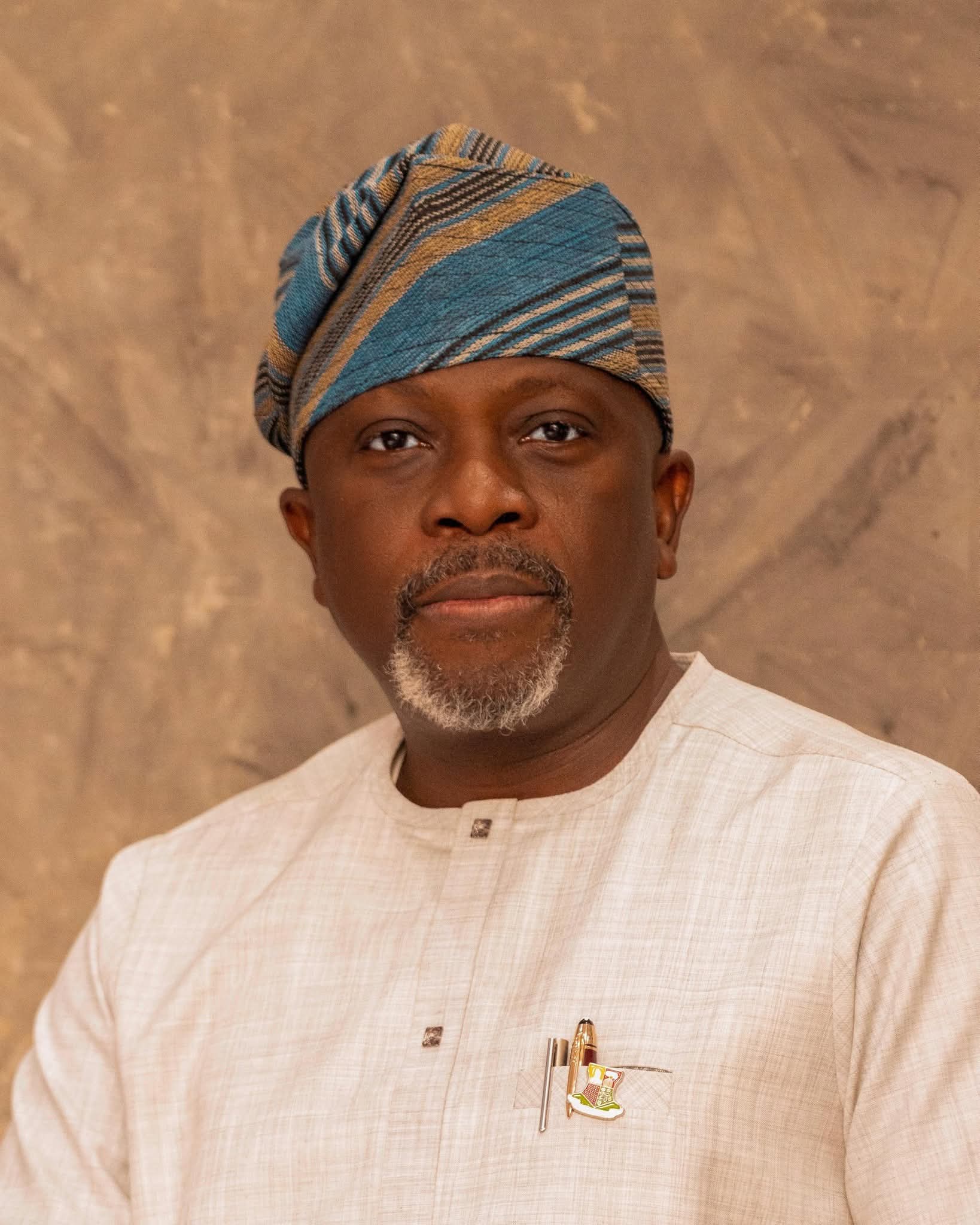
The Man Who Said No to the Senate: Why Segun Ogunwuyi and the Burden of Public Service Echoes in Oyo Politics

The Man Whose Loyalty to Oyo State Was Confirmed by Seyi Makinde
In politics, ambition is often the loudest voice in the room. It shapes decisions, fuels alliances and, in many cases, determines the trajectory of public careers.

Yet history occasionally remembers those who chose a different path; individuals who, when faced with opportunity, placed loyalty above personal advancement.
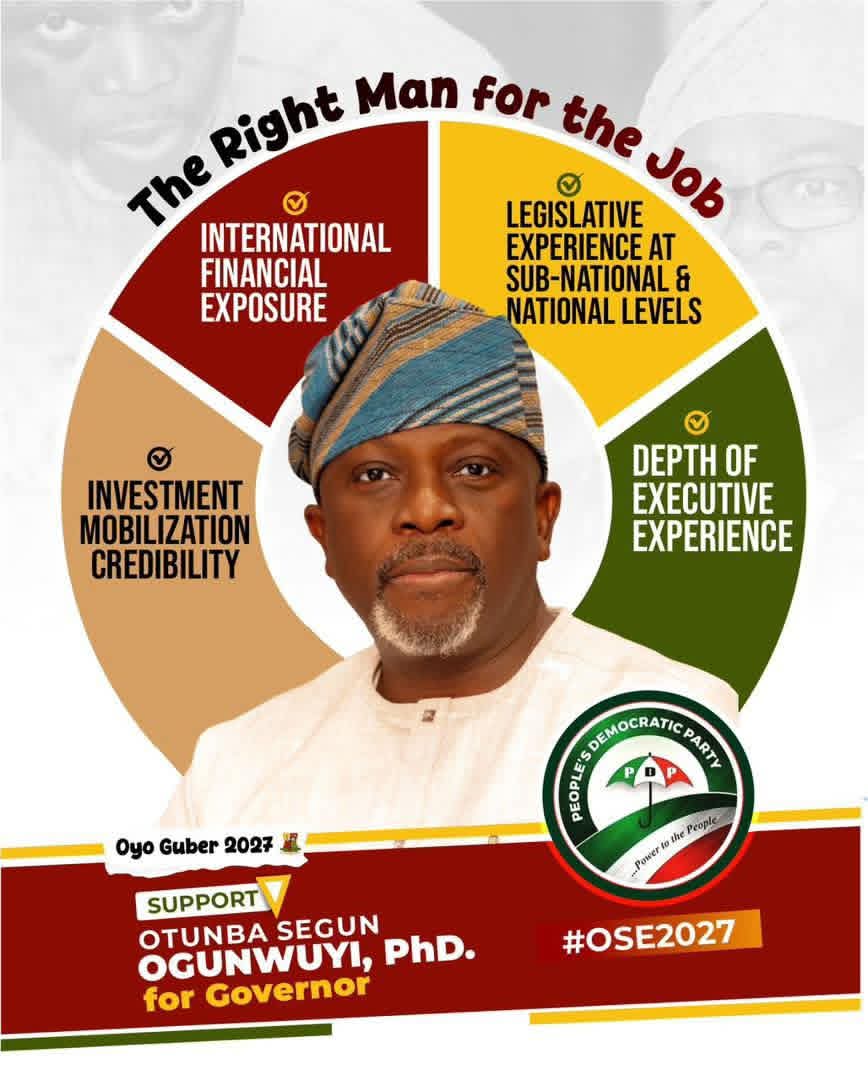
In Oyo State, a story frequently told in recent political circles reflected this rare disposition. It is a story about Hon. Segun Ogunwuyi, the Chief of Staff to Governor Seyi Makinde, and a decision that continues to generate discussion about leadership, loyalty and the future of governance in the state.
The moment resurfaced publicly during a youth award ceremony held towards the end of 2025, when Ogunwuyi was honoured with the Outstanding Public Service Award.
The recognition itself was significant, but what made the occasion memorable were the remarks delivered by Governor Makinde as he presented the award to his Chief of Staff.

The governor did not disguise his admiration. “I was not surprised when I heard that Segun Ogunwuyi was chosen for this award. There is no better person to receive an Outstanding Public Service Award than him,“ Makinde said.
The statement might have passed as routine praise were it not followed by a revealing recollection from the governor, an anecdote that illuminated Ogunwuyi’s political character.
Makinde took his audience back to 2022, when the political calculations of the Peoples Democratic Party (PDP) in Oyo State were focused on selecting a senatorial candidate from the Ogbomoso zone ahead of the general elections.
Ogunwuyi, who had previously served in the House of Representatives representing the Ogbomoso North, Ogbomoso South and Oriire Federal Constituency, was considered a strong contender.
According to the governor, the decision had effectively been made.
“In 2022, when we wanted to pick our senatorial candidate from Ogbomoso zone, I called Ogunwuyi to inform him that he was our candidate,” Makinde recalled.
In a political environment where such a call would typically be greeted with enthusiasm, the governor revealed that Ogunwuyi responded differently.
“He rejected it. He said his loyalty is to the state, not the National Assembly. He said he would rather assist his principal in the ongoing transformation of Oyo State,“ Makinde said.
The audience responded with applause, but the significance of the moment extended beyond the ceremony hall.
For many observers, the governor’s revelation carried echoes of an older political tradition, one in which service was sometimes prioritised over personal ambition.
In Nigerian politics, the opportunity to contest a senatorial seat is rarely declined. The Senate represents national influence, political visibility and a platform for broader career advancement.
Yet Ogunwuyi, according to Makinde’s account, chose to remain within the state government at a time when the Makinde administration was still consolidating its reform agenda.
The choice invited comparisons with moments in political history where loyalty altered the course of leadership.
In Shakespeare’s Julius Caesar, the Roman Republic was shaped by the delicate balance between ambition and allegiance.
In a less dramatic but equally instructive sense, Ogunwuyi’s decision highlighted the tension between personal political aspiration and collective governance.
To understand why the governor’s recollection resonated so strongly, it is important to consider Ogunwuyi’s position within the Makinde administration.
As Chief of Staff, he occupies one of the most influential offices in state government. The role demands a combination of political tact, administrative discipline and strategic coordination.
Often described as the governor’s closest operational ally, the Chief of Staff acts as the bridge between executive authority and institutional execution.
For a government pursuing ambitious reforms, particularly in infrastructure, education, agriculture and fiscal management, the stability of that office becomes essential.
Observers of Oyo State politics frequently noted that Makinde’s administration has been characterised by a relatively structured approach to governance.
Projects ranging from road expansion to educational reforms have required consistent coordination among ministries and agencies.
Within that framework, Ogunwuyi’s role has been less visible but widely acknowledged among political insiders as pivotal.
His political career, however, did not begin within the executive arm of government. Before assuming his current role, Ogunwuyi served in the House of Assembly, he represented Ogbomoso South State Constituenc before progressing to the House of Representatives, where he represented his federal constituency with a focus on constituency development and legislative engagement.
That experience provided him with an understanding of national policy processes. Yet his transition into the state executive allowed him to operate within the machinery of governance itself, a shift that perhaps explains why the 2022 decision carried particular significance.
In many political narratives, the House of Representatives becomes a stepping stone to the Senate.
Ogunwuyi had already traversed the first stage of that journey. Accepting the senatorial ticket would have been a logical progression. Instead, he remained.
Political commentators have since debated the meaning of that choice. Some interpreted it as evidence of a leadership philosophy grounded in institutional loyalty.
Others viewed it as a strategic calculation, an investment in the long-term political architecture of the state.
Whatever the interpretation, the governor’s public testimony ensured that the story would not fade quietly.
Makinde’s remarks during the award presentation also carried an implicit question, one that many in the audience undoubtedly considered.
If leadership is defined by loyalty, experience and commitment to public service, then who better embodies those qualities?
Although the governor did not explicitly frame his comments as a political endorsement, his words inevitably fuelled speculation about Ogunwuyi’s future role in the state’s political landscape.
In democratic societies, leadership succession is rarely determined by a single moment. It evolves through public perception, institutional performance and the gradual accumulation of trust.
Yet symbolic gestures, such as the recognition of public service, often shape the narratives through which future leaders emerge.
For young Nigerians observing the ceremony, the symbolism was difficult to ignore. At a time when politics is frequently criticised for rewarding ambition above integrity, Ogunwuyi’s story suggested a different possibility.
The Greek philosopher Aristotle once argued that virtue in leadership lies not merely in power but in the disciplined exercise of choice.
In other words, character is revealed not only by what leaders pursue but also by what they are willing to decline.
If Makinde’s recollection is any indication, Ogunwuyi once declined an opportunity that many would have embraced without hesitation.
Whether that decision will ultimately define his political destiny remains uncertain. Politics, after all, is a theatre where narratives evolve rapidly and loyalties are often tested by circumstance.
Yet the anecdote shared at the youth award ceremony has already entered the folklore of contemporary Oyo politics.
It served as a reminder that leadership sometimes reveals itself not in grand declarations but in quiet decisions made away from the public spotlight.
As Oyo State continues to chart its developmental course, the qualities required of future leaders will remain a subject of public debate. Experience, vision, competence and integrity will all feature in that conversation.
But if loyalty is indeed among the attributes that define enduring leadership, then the story told by Governor Seyi Makinde offers a compelling illustration.
And in the unfolding narrative of Oyo State politics, Segun Ogunwuyi’s choice may yet prove to be more than a personal decision.
It may become a defining chapter in the search for leadership grounded not merely in ambition, but in service.
