


By Oyo Amebo
In contemporary governance, the question of leadership is no longer confined to charisma or political dexterity; it is increasingly defined by trust, earned, sustained, and tested over time.

Across democratic societies, the most enduring leaders are not those who speak the loudest, but those whose actions have consistently aligned with the expectations of the people they serve.



A useful comparative lens can be found in figures such as Jacinda Ardern, whose tenure demonstrated how empathy, responsiveness, and clarity of purpose can strengthen public trust in moments of uncertainty.
Her leadership was not without criticism, yet it underscored a broader truth: in modern politics, legitimacy is built less on declarations and more on the credibility of prior conduct.
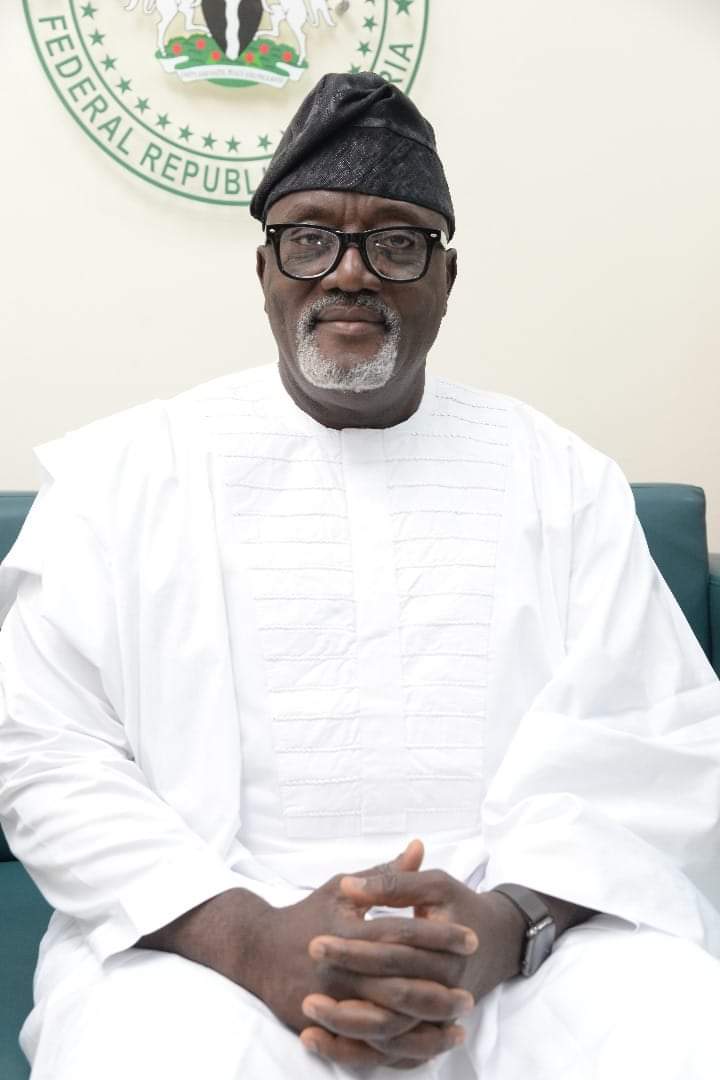
It is against this backdrop that the emergence of Adedeji Dhikrullahi Stanley Olajide, widely known as Odidiomo, into the 2027 governorship conversation in Oyo State acquires deeper significance.
His declaration is not merely another entry into the familiar cycle of political ambition; rather, it raises a more fundamental question about the relationship between leadership and public trust in a state where expectations are steadily evolving.
In politics, declarations often function as spectacles—moments designed to capture attention and signal intent. Yet, beyond the theatre lies a more enduring consideration: what foundation of trust underpins such ambition?
For Odidiomo, this question does not begin with his announcement; it traces back to years of relatively quiet engagement within communities.
Long before his governorship aspirations became public, his interventions had already taken root in the everyday experiences of ordinary citizens.
From educational support initiatives that widened access for students, to modest infrastructural improvements, healthcare outreach, and assistance for vulnerable households, his presence has been defined less by visibility and more by consistency.
These actions, though not always amplified, have contributed to the gradual construction of a trust-based relationship with segments of the public.
They suggest a model of leadership in which credibility is accumulated incrementally, rather than manufactured at the point of political entry.
This distinction is particularly relevant in the context of 2027. In an era where voters are increasingly sceptical of rhetoric, the currency of politics has shifted. Trust, once assumed, must now be demonstrated, and more importantly, sustained under scrutiny.
Odidiomo’s trajectory appears to invert the traditional sequence of political ambition. Rather than seeking office as a means to establish relevance, his candidacy seeks to formalise an already existing pattern of engagement.
What had operated within localised spaces of influence is now being projected onto the broader canvas of state governance.
However, this transition introduces a new dimension of accountability. Leadership at the state level demands more than goodwill or familiarity with community needs.
It requires the capacity to translate trust into policy, to scale individual interventions into systems that can address the complexities of a diverse and dynamic state.
Observers of his political style often highlight his inclination towards listening and dialogue. These qualities, while understated, are central to the cultivation of public trust.
They reflect a leadership approach that values inclusion and responsiveness, positioning governance as a collaborative process rather than a top-down directive.
Yet, the demands of governing Oyo State extend beyond interpersonal engagement. Economic development, infrastructural integration, youth empowerment, and social stability require not only sensitivity but also strategic coherence.
The electorate, increasingly discerning, will expect a framework that connects these priorities into a clear and actionable vision.
His emergence also occurs within a political environment where performance has begun to reshape expectations.
The emphasis on measurable outcomes and administrative discipline has recalibrated what citizens consider acceptable.
In such a context, trust is no longer static; it is dynamic, contingent upon the ability to deliver results consistently over time.
For supporters, Odidiomo represents a continuation of a governance ethos rooted in service and accountability. His record, they argue, aligns with the principles required to sustain and deepen public confidence.
However, continuity alone cannot suffice. Each electoral cycle brings with it new challenges, influenced by economic pressures, demographic shifts, and changing societal priorities.
The central question, therefore, is not whether trust has been built, but whether it can be scaled. Can the credibility established through community-level interventions evolve into a governance model capable of addressing systemic issues?
Can a leadership style grounded in quiet impact withstand the intensity and complexity of statewide administration?
As the political landscape gradually intensifies towards 2027, these questions will move from abstract reflection to practical evaluation. Campaigns will amplify voices, alliances will shift, and public scrutiny will sharpen.
Within this environment, the strength of any candidacy will rest not merely on its promises, but on the depth of trust it commands.
In this regard, Odidiomo’s declaration may ultimately be seen less as a starting point and more as a moment of transition, from established credibility to tested leadership.
It invites voters to consider not just what is being promised, but what has already been demonstrated.
Because in the final analysis, leadership in contemporary society is no longer defined by ambition alone.
It is measured by the ability to inspire confidence, to convert trust into tangible progress, and to sustain that trust in the face of complex realities.
As Oyo State looks ahead to 2027, the conversation may well shift from who seeks power to who has earned the confidence to wield it.
And in that shift lies the true test of leadership, not in the declaration, but in the trust that makes it credible.
