By Oyo Amebo
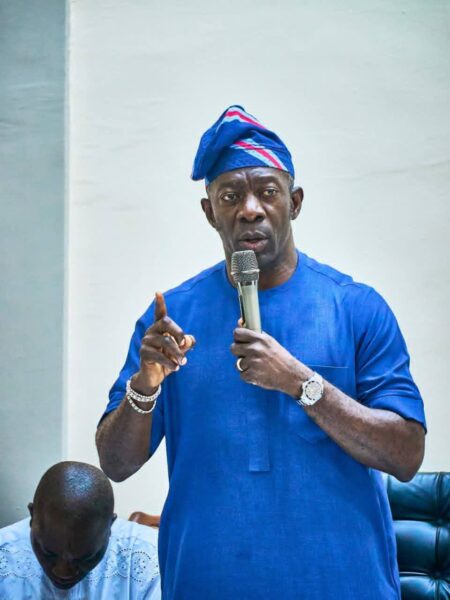
Leadership, at its finest, is not measured by authority but by the ability to ignite the potential of others. In Oyo State, Governor Seyi Makinde has embraced a philosophy that challenges the old tradition of ageing political hierarchies.
His belief is clear and intentional: young people are not leaders in waiting, they are leaders in motion. This philosophy is not merely spoken; it is woven into policy, appointments, and the daily rhythm of governance.
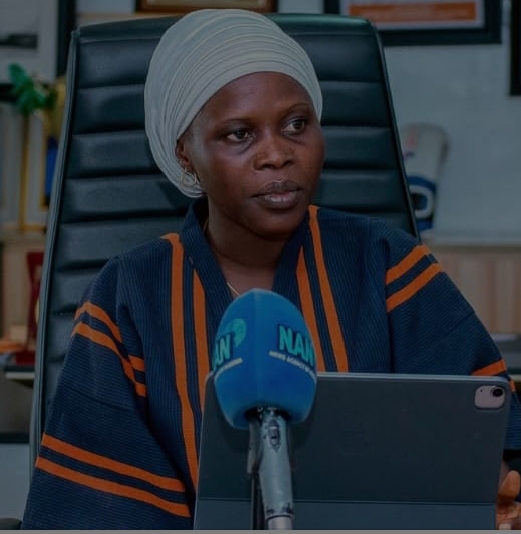
Among the brightest examples of this shift stands Wasilat Adegoke, the Commissioner for Youth and Sports, whose work illustrates the power of entrusting young minds with real responsibility.
Adegoke’s ascension is not a symbolic gesture but a deliberate act of transformation. Her leadership reflects the essence of Makinde’s generational renewal, showing that youth does not equate to inexperience but to clarity, creativity, and energy.
In a political environment often dominated by seniority, where innovation can struggle against tradition, her presence signals a refreshing recalibration. She embodies a leadership style defined by openness, empathy, and forward-thinking dynamism, qualities that have turned previously neglected youth sectors into fertile grounds for opportunity.
When she assumed office, youth development in Oyo was largely constrained by outdated models, training schemes that had no follow-through, sports programmes lacking structure, and empowerment initiatives that appeared promising on paper but rarely produced sustainable results in the real economy.
Adegoke’s first task was to redefine the purpose of youth engagement. She understood that empowerment could not be measured by the number of certificates distributed, but by the number of young people who could turn skills into stable livelihoods. Her mantra, “from learning to earning,” has since become a guiding principle within the ministry.
Under her leadership, dormant youth centres began to breathe again. Spaces that were once ignored or mismanaged evolved into lively centres of innovation, training, and enterprise.
Tailoring training, previously seen as a marginal skill, is now connected to broader value chains in the fashion sector, helping youths establish brand identities, access markets, and participate in exhibitions.
ICT training has moved beyond basic computer literacy into areas such as digital marketing, coding, content creation, and online entrepreneurship, bridging young people into the digital economy.
Agricultural initiatives now go beyond theoretical instruction; they incorporate agribusiness models that encourage youth to see farming not as a last resort but as a viable commercial venture.
The beauty of Adegoke’s work lies in her responsiveness. She listens, to young artisans, students, community organisers, athletes, and creative entrepreneurs. In meetings, she is known to discard pre-written scripts in favour of real conversations.
She adapts policies based on genuine feedback and remains accessible to the very people she serves. This style stands at the heart of Makinde’s governance ethos: leadership that listens before it acts.
One of her greatest achievements has been restoring sports as a unifying and catalytic force within communities. Where sports infrastructure had dulled, she injected new life.
Community tournaments have returned with renewed vibrancy, attracting young people from neighbourhoods that previously lacked safe recreational outlets.
School leagues have been revived, reconnecting thousands of students with opportunities for talent development, camaraderie, and healthy competition.
Grassroots coaching programmes ensure that children from less affluent backgrounds also receive training and guidance to pursue sports professionally if they choose.
Sports, under her leadership, has evolved from mere entertainment into a structured pathway for discipline, employment, and social cohesion.
Young athletes are now linked to opportunities for national trials, scholarships, and international exposure. Playing fields across Oyo State are no longer just grounds for recreation, they have become platforms for aspiration and community bonding.
Governor Makinde’s confidence in Adegoke reflects his broader commitment to generational transition. His administration includes several young commissioners, advisers, and agency heads who bring fresh perspectives and technological fluency into governance.
His appointments are not ornamental; he assigns young leaders positions where their decisions carry real weight. In doing so, he sends a clear message: the future must not be delayed, it must be empowered.
This culture shift has inspired young people across Oyo to see government differently. Public service, once perceived as a domain reserved for the older elite, now feels accessible.
Young women, in particular, see in Adegoke a reflection of what they can be, leaders whose voices carry influence, whose decisions shape policy, and whose contributions matter.
Her presence challenges stereotypes about gender and leadership in Nigerian politics, proving that competence and commitment, rather than age or gender, are the true credentials for public service.
The ripple effects of this youth-driven governance model are visible across communities. Youth-led enterprises are multiplying, not because government provides endless handouts, but because it offers pathways for skill, innovation, and collaboration.
Community-based football clubs, digital start-ups, small agribusiness ventures, creative studios, and local NGOs have found renewed encouragement.
Many young people who once doubted the relevance of government to their ambitions now engage actively with ministries and agencies, seeking partnerships, training, and mentorship.
Adegoke’s leadership has also fostered stronger bonds between government and grassroots communities. She is known to visit training centres unannounced, speak directly with instructors and trainees, and make immediate adjustments when necessary.
This hands-on approach has eliminated the disconnect that often undermines government programmes. Instead of assumptions, her ministry works with real-time insights, who needs support, what skills are trending, which communities require more attention, and what barriers young people face when transitioning into employment.
Her work in youth development is complemented by Makinde’s insistence that results matter more than political longevity. The administration prioritises measurable outcomes: how many youths gained jobs after training? How many sports talents were scouted?
How many start-ups survived beyond their first year? This results-oriented governance has helped ensure that empowerment programmes are not mere political rituals but catalysts of genuine economic participation.
Yet the transformation did not happen without challenges. Funding constraints, cultural skepticism, and infrastructural gaps posed initial hurdles.
Many young people were accustomed to disillusionment and hesitant to engage. Some stakeholders viewed youth leadership as risky or premature. Adegoke confronted these obstacles not with defensiveness but with consistent delivery.
Each successful programme, each revitalised centre, each empowered youth dismantled resistance and built new confidence in the system.
The change underway in Oyo is not simply administrative; it is cultural. It signals the beginning of a long-term renewal where youth are not treated as beneficiaries but as architects of development. It is a quiet revolution powered by trust, opportunity, and the audacity to challenge political tradition.
Makinde’s model of leadership is teaching an invaluable lesson: the surest way to prepare the future is to give it the tools to shape itself. And Adegoke’s example reinforces that when young leaders are trusted with responsibility, they do not diminish the system, they energise it.
Today, countless young women across the state are beginning to imagine futures in public service, community advocacy, sports management, and enterprise, all because they see someone like them thriving at the helm.
Young boys, too, see new pathways in sports, technology, and agriculture. Parents witness a system that values their children not as political spectators but as participants in governance.
In many ways, a new generation is already taking the lead in Oyo. They are learning, earning, building, competing, innovating, and organising.
And in this renewal, Governor Makinde’s quiet but deliberate philosophy continues to unfold: if young people are given space, guidance, and trust, they will not merely inherit the future, they will design it.