By Oyo Amebo
For years, the sound of water running from a public tap in Oyo State belonged to the past. Families queued at boreholes long before dawn. Jerry cans rattled against metal stands as children hurried to fetch what little could be found. Whole communities grew accustomed to living on promises that ran dry.
Water was no longer a public right; it had become a private battle.
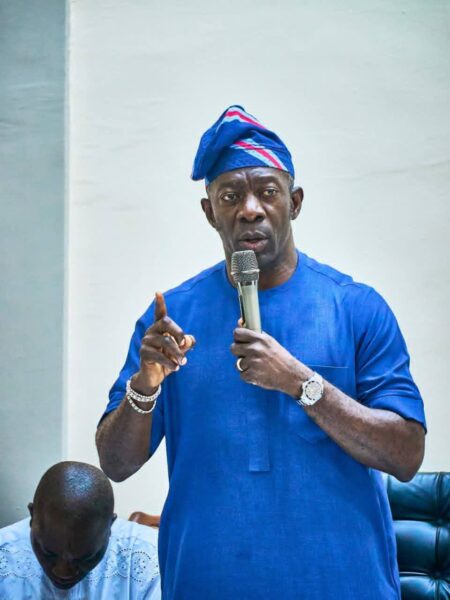
So, when Elias Adeojo took charge of the Oyo State Water Corporation, expectations were low. He was not introduced with banners or lofty rhetoric.
Yet beneath the quiet exterior was a conviction that governance could still mean something tangible, that water, clear and constant, could rebuild the bridge between people and power.
He often says, “Water is not charity; it’s evidence that government remembers its duty.”
That belief has since shaped a quiet revolution. Adeojo did not begin by chasing large, headline-grabbing schemes. Instead, he went where the need was deepest and the faith was faintest. In Ibarapa, where dry wells once defined daily life, solar-powered boreholes now shimmer in the sunlight.
Across parts of Ibadan, sensors monitor the underground veins of the city, detecting leaks before they become droughts. And in rural Oke-Ogun, a new generation of technicians are being trained not just to fix pipes but to preserve trust.
These are not grand gestures. Yet they ripple through lives in ways that can’t be captured in charts. Women who once trekked miles for water now run market stalls.
Children who once missed class to fetch water stay through lessons. Health centres hum quietly with activity, free from the old interruption of dry taps.
The transformation is as much about dignity as it is about development.
Inside the Water Corporation, the change has been no less remarkable. Once dismissed as an inefficient relic of bureaucracy, it now breathes with purpose.
Decisions are driven by data. Budgets are open. Fieldwork has replaced guesswork. The idea of accountability, once foreign, has become a shared language.
Adeojo has resisted the temptation of spectacle. He prefers small systems that last to large ones that crumble. “Big projects collapse when they forget small people,” he tells his team, a phrase that has quietly become the institution’s compass.
His model is built on partnership rather than patronage. Each project begins in conversation with the communities it serves. Local artisans build. Villagers plan. Everyone shares ownership. The result is not merely infrastructure, but belonging.
This grassroots approach has done what contracts and campaigns rarely achieve, it has changed how people feel about their government. In places long resigned to failure, there is now cautious pride.
Of course, challenges endure. The scars of neglect run deep. Old pipes still corrode beneath the earth. Funding remains tight. Trust takes time to mature. Yet Adeojo’s method is deliberate.
He opens the corporation’s doors to collaboration, with innovators, universities, and international partners, while keeping the water flowing at prices ordinary people can afford.
He is not one for titles or ceremony. He moves through communities unannounced, listening, observing, asking the questions that don’t make it into reports. What he seeks is not perfection, but honesty, to understand what water means to those who have gone too long without it.
Through that empathy, his leadership has acquired a rare quality: it connects rather than commands. It reminds people that governance, at its best, is a relationship of care.
Oyo’s water story is no longer one of neglect and despair. It is one of patience, method, and renewal. The pumps that hum across villages today do more than supply clean water, they signal the slow but steady repair of public faith.
Where silence once reigned, there is now the murmur of life returning, the laughter of children rinsing their hands, the hiss of taps that run without fear of stopping, and the quiet proof that hope, like water, can flow again.