There was a time when farming in Oyo State was a story written in sweat and survival. The soil bore the weight of hope, but progress was slow, and the tools of toil seldom changed. Generations inherited not just the land, but its limitations, cultivating with instinct, not innovation. In those days, to be a farmer was to endure, not to evolve.
But the winds over Oyo’s fields have changed direction. Across the state, farming is being reborn, not as a test of strength, but as an exercise in intelligence. The hoe and cutlass still exist, but they now share space with tablets, data, and drones. The age-old relationship between man and earth is being redefined by a new kind of cultivation: one that begins in the mind.
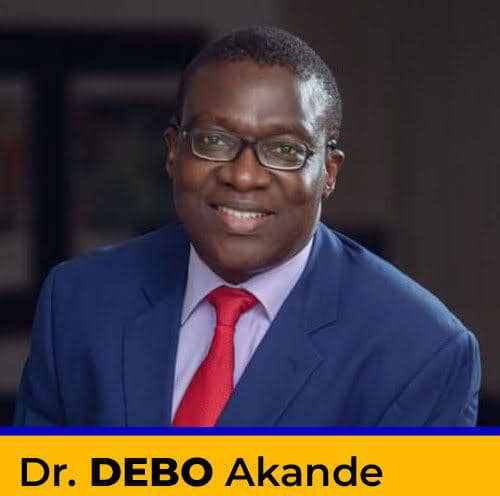
Dr Debo Akande, the Director-General of the Oyo State Agribusiness Development Agency (OYSADA) and Executive Adviser to the Governor on Agribusiness and International Cooperation has carved a niche for himself in this agency.
His revolution is not a noisy one; there are no grand gestures, no fiery declarations, just steady conviction and strategy. His belief is simple yet profound: before you plant the seed, you must first plant the idea.
“Agriculture is applied knowledge,” he says, “a living blend of science, economics, and technology.” It’s this philosophy that underlies the quiet renaissance reshaping Oyo’s agricultural landscape, where the field has become both a workplace and a classroom.
One of the most vivid symbols of this new direction is the Fashola Agribusiness Industrial Hub, a living ecosystem where learning and production intertwine.
Within its expanse, young farmers, students, and investors exchange ideas as easily as they exchange produce. Training sessions unfold beside greenhouses; conversations about soil health flow into discussions on digital marketplaces and export logistics. It is a space where knowledge is not stored but sown.
This shift is deliberate. Oyo is not merely growing crops, it is growing capacity. Through initiatives such as the Youth in Agribusiness Programme, the state is nurturing a generation that sees farming not as a fallback, but as a frontier.
Young people are learning how to use sensors, manage agritech start-ups, and navigate supply chains that reach beyond Nigeria’s borders. They are not just farmers, they are agripreneurs, blending curiosity with commerce to extract value where tradition once saw none.
Yet, what makes this movement truly remarkable is its reach. In villages once hollowed out by rural-urban migration, the tide is quietly reversing. Sons and daughters who once sought futures in cities are returning to the soil, armed with laptops, knowledge, and a new sense of purpose.
They bring with them not nostalgia, but innovation. With support from OYSADA, these returning farmers are proving that small farms can indeed be smart farms, and that technology can walk hand in hand with tradition.
Dr Akande’s understanding of education stretches far beyond the school gate. To him, policy itself is pedagogy, something that must learn, adapt, and evolve. “Policy,” he often says, “is not a decree, it’s an experiment.”
This experimental spirit now guides Oyo’s agricultural governance. Every framework, from rural infrastructure to export policy, is being treated as part of a living system, with continuous feedback from farmers, cooperatives, and investors.
This mindset has opened Oyo’s doors to the world. Partnerships with international research bodies, donor agencies, and agritech firms are now built on collaboration, not dependency. The exchange flows both ways: global expertise meets local ingenuity.
As a result, Oyo’s produce is entering markets that demand traceability, sustainability, and quality, proving that Nigerian farmers can meet global benchmarks without surrendering their roots.
The conversation around farming in Oyo is also widening to include the planet itself. Climate-smart agriculture, renewable energy, and soil regeneration are no longer buzzwords but living practices.
Farmers are learning to rotate crops, harness solar power, reduce waste, and revive ecosystems. “Sustainability is not charity,” Akande insists, “it’s good economics.” In Oyo, that principle has become policy.
The impact is quietly visible. Fewer losses after harvest. More factories processing local crops. Rising incomes and renewed rural confidence. But perhaps the greatest change lies in identity.
The farmer in Oyo today does not simply grow food; he grows knowledge. He experiments, analyses, and innovates. He sees his work not as labour, but as learning.
Dr Debo Akande has managed something rare: he has made governance itself an act of intelligence. By turning farms into laboratories and farmers into thinkers, he has proven that development begins not in budgets or blueprints, but in ideas.
Across Oyo’s farmlands, you can now feel that subtle transformation—the hum of machines beside the whisper of wind, the rhythm of old traditions meeting the pulse of new thinking.
Here, every seed carries more than the promise of harvest; it carries the hope of understanding. And in this intelligent cultivation of land and mind alike, Oyo is not merely feeding its people, it is teaching the world how to grow.