


By Oyo Amebo
In today’s political climate, leadership is no longer judged by eloquence, popularity, or the theatrics of ambition. Instead, it is defined by trust, carefully built, consistently demonstrated, and rigorously tested over time.

Across functioning democracies, those who endure in public office are not simply persuasive figures, but individuals whose records reflect alignment between promise and action.



This evolving standard has reshaped how citizens evaluate those who seek to govern them. Modern electorates are less inclined to be swayed by declarations alone; they look instead for evidence, proof that a candidate has already demonstrated commitment to public welfare before seeking authority.
A compelling global parallel can be drawn with Jacinda Ardern, whose leadership exemplified how empathy, decisiveness, and clarity of purpose can foster public confidence, particularly during periods of uncertainty.
While her tenure attracted both praise and critique, it reinforced a critical principle: legitimacy in governance is earned through consistent conduct, not proclaimed through ambition.
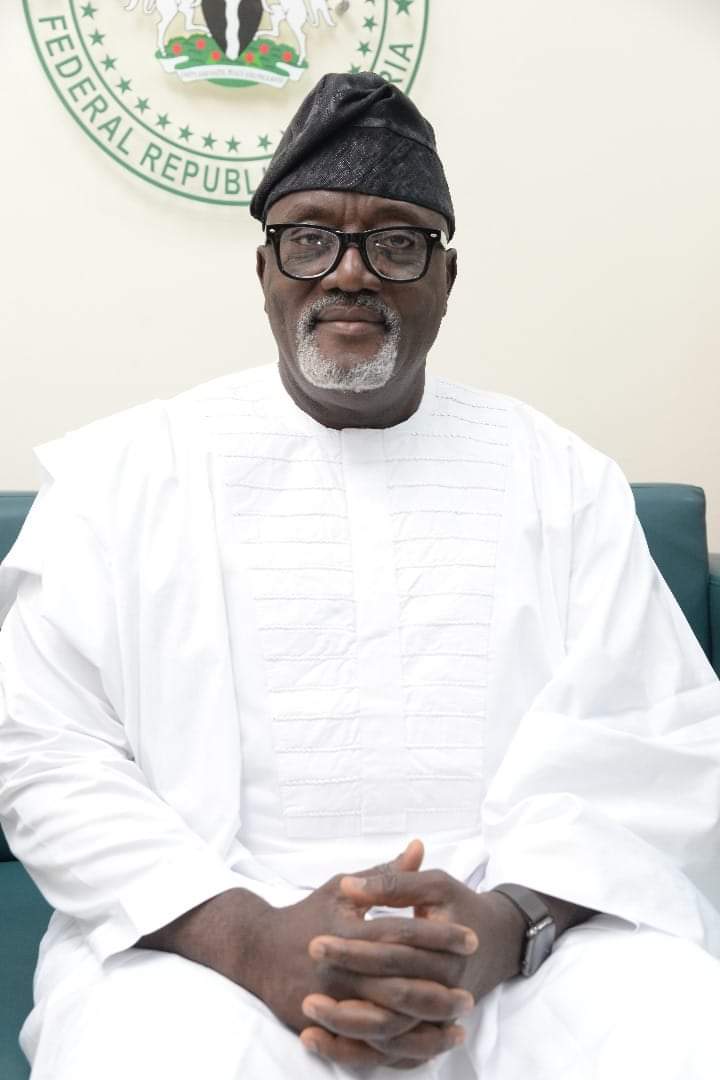
It is within this broader framework that the candidacy of Adedeji Dhikrullahi Stanley Olajide, popularly known as Odidiomo, should be understood.
His emergence in the discourse surrounding the 2027 Oyo State governorship is not merely another political bid; it represents a case study in why trust must precede power.
Unlike many aspirants whose visibility begins with their declarations, Odidiomo’s public relevance predates his ambition.
His engagement with communities across Oyo State has been neither abrupt nor performative. Instead, it has developed steadily over time, rooted in practical interventions that have touched everyday lives.
His contributions span educational support initiatives that have expanded opportunities for students, modest yet meaningful infrastructural efforts, accessible healthcare outreach programmes, and targeted assistance for vulnerable populations.
These actions were not always amplified in the public sphere, yet their cumulative effect has been significant: they have quietly fostered a relationship of trust between him and the people.
This distinction matters. It suggests a leadership model in which credibility is not manufactured at the point of seeking office but accumulated through sustained service.
In an era marked by scepticism towards political rhetoric, such a foundation is not merely advantageous, it is essential.
Indeed, the political economy of trust has shifted. Where once it could be assumed, it must now be earned and continually reaffirmed.
Voters increasingly demand authenticity, and they scrutinise candidates through the lens of prior behaviour rather than future promises.
Odidiomo’s trajectory challenges the conventional sequence of political ascent. Rather than using office as a platform to establish relevance, he approaches governance as a natural extension of an already established pattern of engagement.
His candidacy, therefore, is less about introduction and more about formalisation, an attempt to scale localised impact into statewide transformation.
This is precisely why Oyo stands to benefit from his leadership.
A state as diverse and dynamic as Oyo requires more than abstract goodwill; it demands a leader capable of translating trust into structured policy and measurable outcomes.
The transition from community-based interventions to state-level governance is not automatic, but it is made more credible when grounded in a proven record of service.
Observers frequently note Odidiomo’s predisposition towards listening and dialogue. These are not incidental traits; they are fundamental to effective governance.
A leadership style that prioritises inclusion and responsiveness fosters a sense of collective ownership, positioning government not as an imposed authority but as a collaborative enterprise.
However, the expectations of Oyo’s electorate extend beyond interpersonal qualities. Economic growth, infrastructural development, youth empowerment, and social cohesion require a coherent and strategic vision.
The task ahead is to integrate these priorities into a unified framework capable of delivering sustainable progress.
Importantly, the political environment in Oyo State has evolved. Citizens are increasingly attentive to performance metrics and administrative discipline.
Governance is no longer assessed in abstract terms; it is evaluated through tangible results. In such a context, trust becomes dynamic, it must be continually validated through delivery.
For supporters, Odidiomo embodies a continuity of service-driven leadership, one anchored in accountability and responsiveness. Yet continuity alone is insufficient.
Each electoral cycle introduces new complexities, shaped by economic realities, demographic changes, and shifting societal expectations.
The critical question, then, is not whether he has earned trust, it is whether he can scale it. Can the credibility built through grassroots engagement be translated into systems capable of addressing structural challenges?
Can a leadership style defined by quiet, consistent impact withstand the pressures and intricacies of governing an entire state?
These are legitimate considerations, and they will define the discourse as 2027 approaches. Political campaigns will intensify, alliances will evolve, and scrutiny will deepen.
In that environment, the strength of any candidate will rest not on rhetoric, but on the depth and durability of the trust they command.
Odidiomo’s candidacy should therefore be seen as a transition point: from established credibility to tested leadership.
It offers the people of Oyo an opportunity to evaluate not just what is being promised, but what has already been demonstrated.
Ultimately, the argument for why Oyo deserves Odidiomo is rooted in this simple but powerful premise: governance is most effective when it is entrusted to those who have already shown, in practice, a commitment to the public good.
Leadership today is not defined by the pursuit of power alone.
It is measured by the ability to inspire confidence, convert trust into meaningful development, and sustain that trust in the face of complex realities.
As Oyo State looks towards 2027, the choice may well come down to a fundamental question: not who desires power most, but who has done enough to deserve it.
