


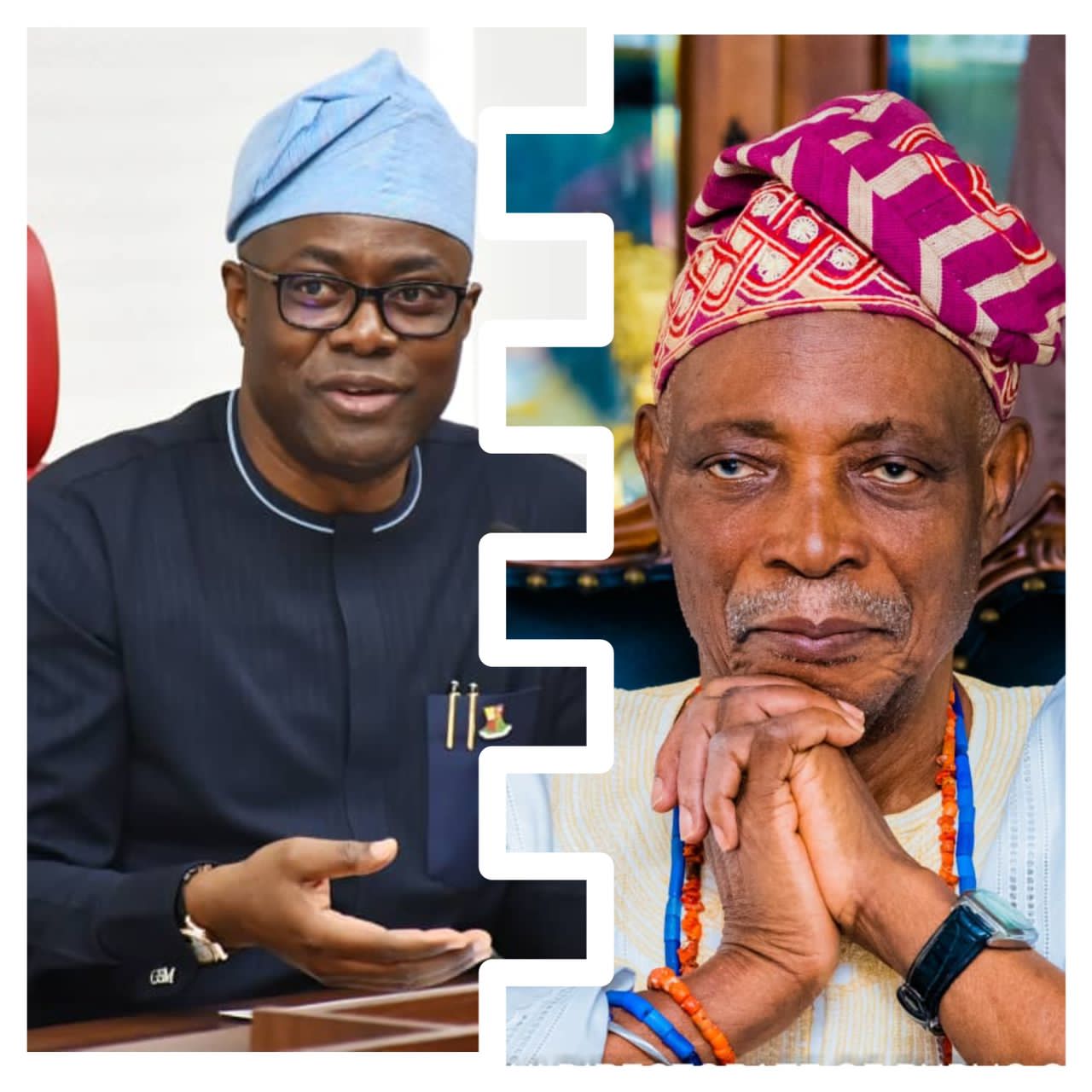
The wave of speculation surrounding the alleged impeachment of Oyo State Governor, Seyi Makinde, and the purported plan to dethrone the Olubadan of Ibadanland, Oba Rashidi Ladoja, has stirred concern across the state and beyond. Although no credible evidence has been presented to support either claim, the mere circulation of such rumours is enough to raise tension, deepen uncertainty, and distract public attention from more pressing issues of governance and development.

At a time when Oyo State requires calm, focus, and responsible leadership, any attempt to weaponise impeachment narratives or traditional institution controversies for political advantage would be reckless, destabilising, and deeply injurious to the public interest.



Impeachment is not a casual political tool. It is a grave constitutional process reserved for clear cases of misconduct or violation of public trust, not a device for political blackmail, distraction, or end-of-term power games. Governor Makinde is already in the closing phase of his administration, and it would be unreasonable to plunge the state into avoidable turmoil through unfounded plots or provocative rhetoric. Such an action, if seriously pursued, could trigger unnecessary political instability, weaken public confidence in democratic institutions, and create an atmosphere of anxiety within the state.



The same caution applies to the revered stool of the Olubadan of Ibadanland. The traditional institution remains one of the strongest symbols of identity, continuity, and communal harmony in Ibadanland. Any suggestion of dethronement, especially when driven by rumour or political calculation, carries dangerous implications. It risks undermining respect for traditional authority, provoking avoidable tension among subjects and interest groups, and tarnishing the dignity of an institution that commands both historical and cultural significance.

The implications of these alleged moves extend beyond Oyo State. In a democratic society, careless political scheming and the manipulation of traditional structures send the wrong signal to investors, development partners, and the wider international community. They project a climate of instability and elite conflict in a state that should instead be promoting order, institutional maturity, and economic progress. No society can thrive where baseless speculation is allowed to overshadow governance, peace, and the rule of law.
Those behind any such game plan, whether real or imagined, should immediately desist. The pursuit of narrow political interests at the expense of public peace is not only irresponsible but dangerous. Oyo State cannot afford actions or narratives capable of igniting division, weakening institutions, or heating up the polity unnecessarily.
Political actors, stakeholders, and opinion moulders must therefore exercise restraint and responsibility in both word and deed. Public discourse must not be polluted by sensational claims designed to create confusion or test the waters for unconstitutional and dishonourable conduct. Democracy must be protected through lawful engagement, while traditional institutions must be treated with the dignity they deserve.
At this critical moment, the people of Oyo State deserve stability, not scheming; maturity, not mischief; and progress, not provocation. Any attempt to impeach Governor Makinde without constitutional basis, or to unsettle the Olubadan stool through careless plots, should be rejected by all well-meaning citizens. Oyo State must not be dragged into needless crisis by those who place ambition above peace and responsibility.
