Across the length and breadth of Oyo State, the debate about what good government looks like has moved off the page and into people’s everyday lives.
You see it in children learning beneath safer roofs, traders who can move goods because roads are usable, families that draw water without fear, and neighbours who can access healthcare close to home. This is leadership that eschews rhetoric in favour of results.
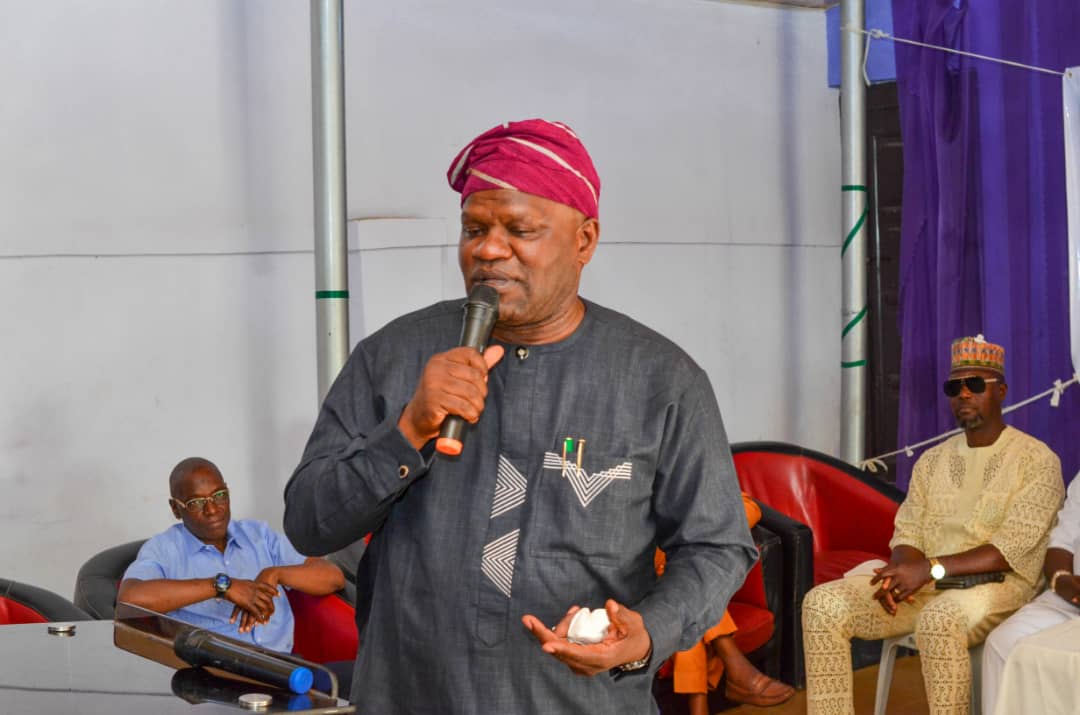
Under the stewardship of Honourable Abideen Tokunbo Adeaga at the Oyo State Community and Social Development Agency, public service has taken on a more modest, methodical character, one that places tangible community benefit above headline-grabbing projects.
His administration of the NG-CARES 1.0 programme signalled a clear pivot: spread impact widely, embed it deeply, and build systems to sustain it.
Instead of concentrating resources in a handful of showcase locations, Adeaga’s approach deliberately disperses interventions so that entire wards and rural settlements are not left behind.
That philosophy has altered expectations; governance now feels closer, more immediate and more inclusive to ordinary people.
The effects are practical and unmistakable. Schools once constrained by dilapidated infrastructure are being made fit for learning.
Primary healthcare has been decentralised as local centres are upgraded, so essential services are available within communities rather than miles away.
Clean water projects have reduced disease risk and improved everyday life, while upgraded rural roads have reconnected communities to markets and opportunity.
What distinguishes this effort, however, is less the number of projects and more the system behind them. Interventions are not scattered acts of charity but components of a coordinated framework: projects are monitored, evaluated and aligned with long-term development priorities to ensure they endure beyond initial completion.
That disciplined mindset was demonstrated at the close of NG-CARES 1.0, where stakeholders gathered in Ibadan not for fanfare but for sober appraisal and planning.
The technical review focused on strengthening oversight and preparing the ground for NG-CARES 2.0—a clear signal that progress is intended to be continuous rather than episodic.
Adeaga’s commitment goes beyond hard infrastructure. His long-running empowerment programmes have reached tens of thousands across Akinyele and Lagelu, providing financial assistance and opportunities designed to foster self-reliance and stimulate local enterprise. These are structured interventions meant to build capacity, not mere one-off handouts.
At a recent disbursement in Alengogo, hundreds received support calibrated to improve livelihoods—illustrating a recurrent theme in Adeaga’s leadership: development must be experienced at the level of the individual to be meaningful.
While his work sits squarely within Governor Seyi Makinde’s wider vision for the state, Adeaga’s execution is resolutely grassroots.
By marrying policy direction with sensitivity to local realities, he ensures that broad programmes translate into day‑to‑day improvements.
Across Oyo, a pattern is becoming clear: steady, well-managed interventions accumulating into genuine transformation. It is an approach that prizes consistency over spectacle and durable outcomes over optics.
In a time when grand pronouncements are many and lasting change is scarce, Adeaga’s model demonstrates how structured accountability, careful planning and genuine community engagement can reshape not just infrastructure but the lived experience of the people it intends to serve.