By Oyo Amebo
What happens when a constituency begins to question everything it once accepted as normal? What happens when the quiet frustrations of the people finally converge into a demand for something different, something real?
As 2027 draws closer, Egbeda/Ona Ara Federal Constituency stands at precisely such a moment. The familiar patterns of politics, name recognition, entrenched structures, inherited influence are no longer commanding automatic loyalty. Instead, a more provocative question is taking hold: who truly represents us?
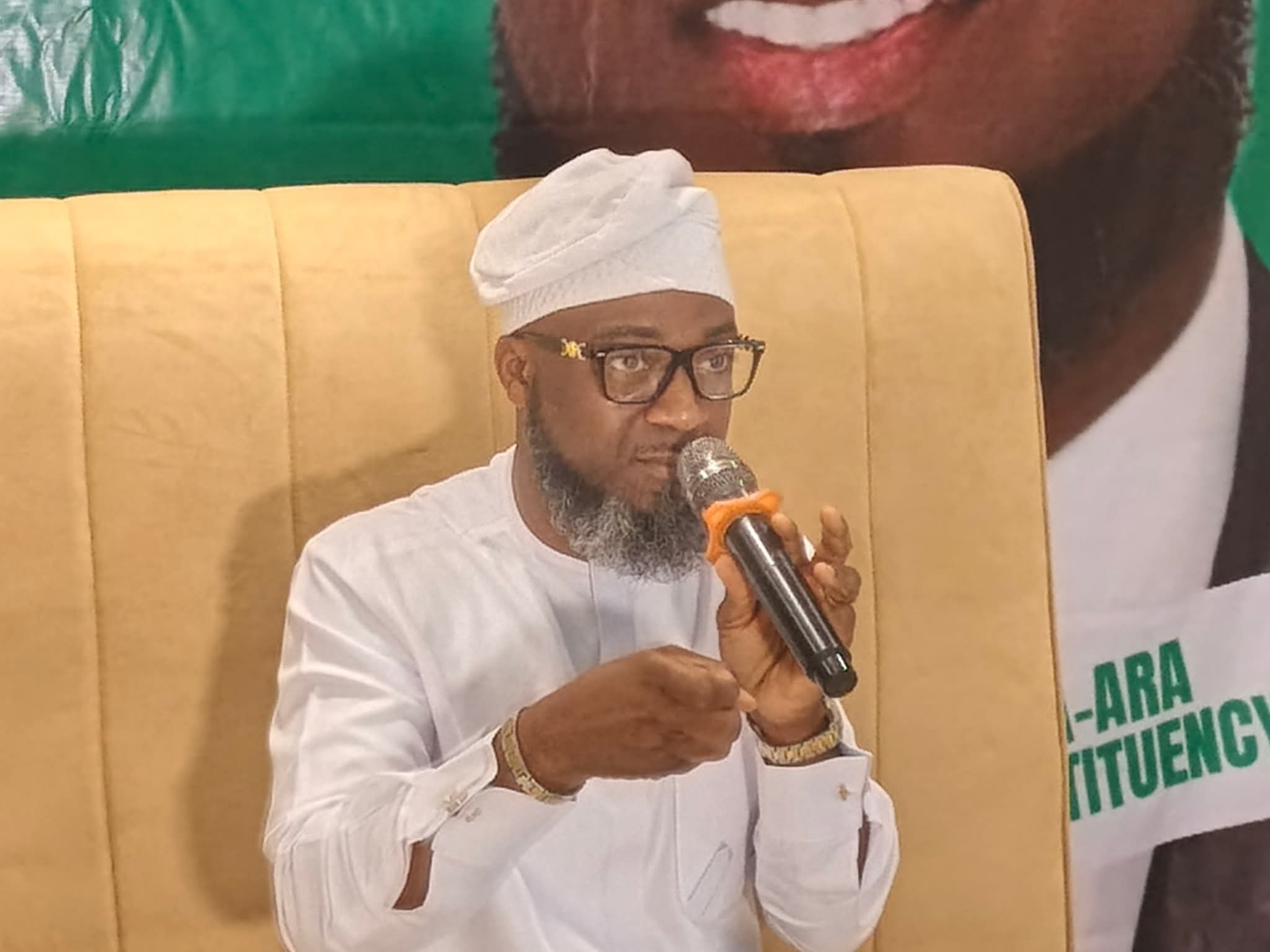
Into this moment steps Tosin Alabi, not as a conventional contender, but as a disruption.
Not born into political privilege.
Not shaped by the corridors of inherited power.
Not introduced to the people by elite endorsement.
So how does a figure like this command attention in a system designed to overlook him?
The answer lies in a story that refuses to be ignored.
Alabi’s journey is not polished for effect; it is forged through persistence.
“A son of nobody who became somebody.” The phrase lingers, not as a cliché, but as a quiet provocation.
If someone without backing can rise this far, what else might be possible? And more importantly—what excuses remain for a system that has long excluded voices like his?
Yet the real question is not about his past. It is about what his emergence means for the future.
Can a man who understands struggle represent it more faithfully than those who have only observed it from a distance?
Can lived experience translate into better policy, sharper advocacy, and more accountable governance?
Can the energy of a new generation succeed where old methods have stalled?
These are not abstract questions, they are the very issues confronting voters in Egbeda/Ona Ara today.
Supporters of Tosin Alabi argue that his strength lies precisely in this proximity to reality.
His focus on youth empowerment, education, and grassroots development is not theoretical; it reflects priorities shaped by direct experience. He does not need to imagine the challenges of the constituency—he has lived them.
And therein lies the disruption. Because if representation is meant to be a mirror of the people, then what does it say when someone like Alabi steps forward and fits that description more closely than the political norm?
“He knows where it hurts,” a resident remarked pointedly. “And that is why we believe he will fight where it matters.”
But every disruption invites resistance. Every shift in power raises discomfort. The question, then, is not whether Alabi represents change, he clearly does.
The question is whether Egbeda/Ona Ara is prepared to embrace what that change demands. To move away from familiarity. To rethink loyalty.
To prioritise authenticity over tradition.
This is the real contest ahead, not merely between candidates, but between ideas.
On one side stands the weight of established politics. On the other, the possibility of reinvention.
And at the centre of that tension stands Tosin Alabi, a figure whose candidacy forces a reckoning.
Because if leadership is truly about service, if representation is truly about understanding, if governance is truly about impact, then the rise of someone like him is not just noteworthy.
It is inevitable.
So the question remains, sharp and unavoidable:
Is Egbeda/Ona Ara ready to break from its past or will it watch a new future pass it by?