


By Prof. Dahud Kehinde Shangodoyin

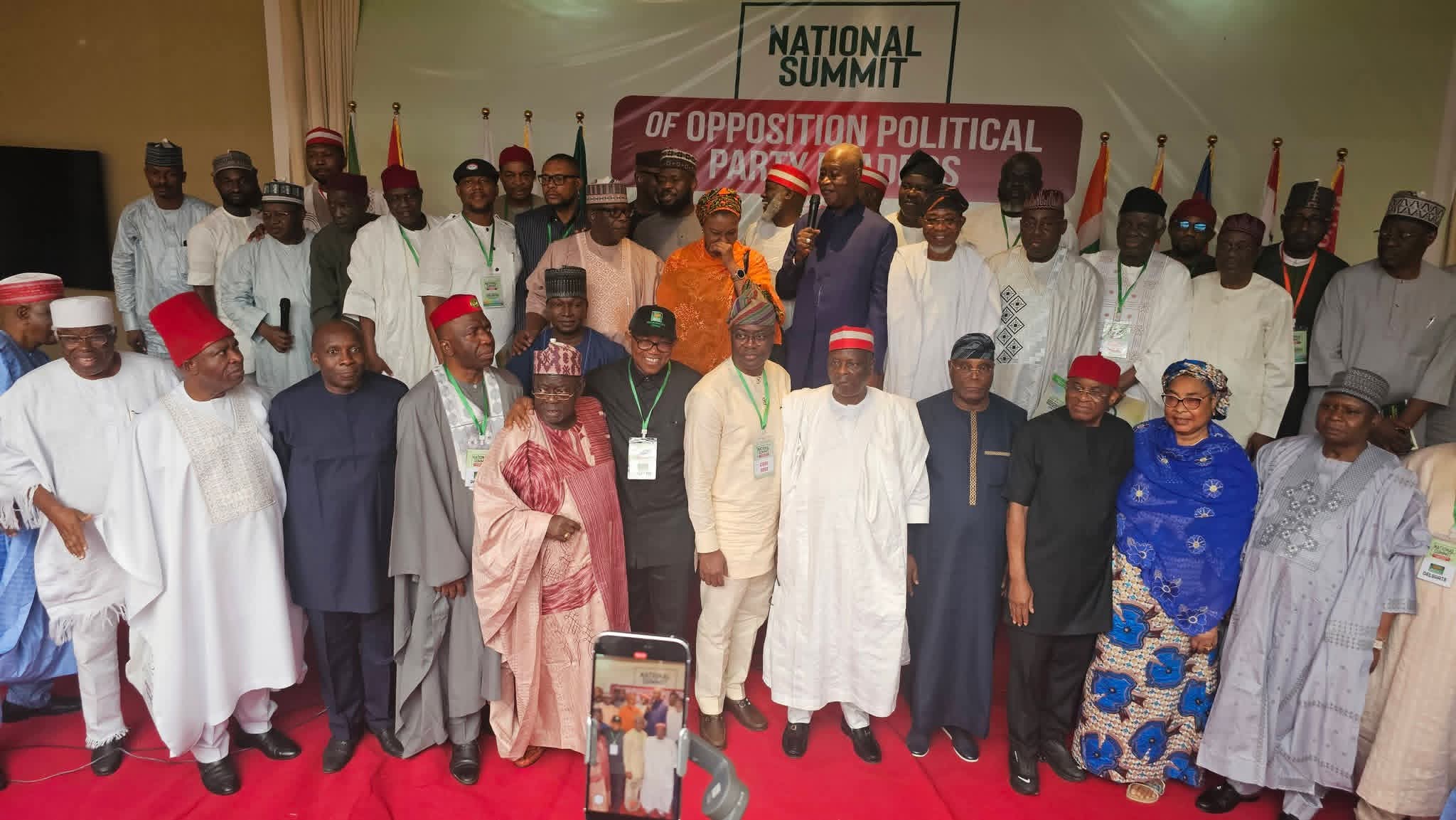
The National Summit of Opposition Political Party Leaders held in Ibadan, Oyo State, on Saturday, 25 April 2026, was more than a political meeting. It was a democratic intervention at a critical moment in Nigeria’s national journey. The summit, hosted by His Excellency, Engr. Seyi Makinde, FNSE, Executive Governor of Oyo State, brought together opposition leaders, civil society voices and democratic stakeholders to reflect on the future of Nigeria’s democracy. Governor Makinde warned that democracy without strong opposition risks sliding toward a one-party state, and he reminded Nigerians of the dangers of political intolerance and violence in the old Western Region. 

The outcomes of the summit are important because democracy does not survive by elections alone. Democracy survives when citizens have real choices, when opposition parties are strong enough to hold government accountable, when political leaders place national interest above personal ambition, and when institutions are protected from capture. A weak opposition creates arrogance in power; a divided opposition creates confusion among citizens; and a silenced opposition creates fear. Therefore, the Ibadan summit should be seen as a patriotic call to rescue democratic competition, rebuild trust, and restore the culture of constructive political engagement in Nigeria.




Historically, Ibadan and the old Western Region occupy a special place in Nigeria’s political development. The Western Region was once a model of visionary governance under leaders such as Chief Obafemi Awolowo, with landmark achievements in education, infrastructure, media, and social welfare. But the same region also witnessed the tragic consequences of political division, intolerance, and manipulation during the First Republic. The crisis within the Action Group, the 1962 emergency in the Western Region, the disputed politics of the mid-1960s, and the violence popularly remembered as “Operation Wetie” became part of the chain of events that weakened the First Republic and preceded the military coup of January 1966. 
That history makes Governor Makinde’s intervention deeply symbolic. By hosting opposition leaders in Ibadan, he was not merely organising a political event; he was reminding Nigeria that the mistakes of the past must not be repeated. The summit’s message is clear: political disagreement must not become political destruction; electoral competition must not become national instability; and ambition must never be allowed to consume the republic.
Governor Seyi Makinde deserves commendation for taking the bull by the horns. At a time when many leaders prefer silence, convenience, or political calculation, he chose courage. His action reflects the moral courage of Nelson Mandela, who understood that democracy requires reconciliation, inclusion and sacrifice. It also reflects the statesmanship of Sir Seretse Khama of Botswana, who led his country from colonial rule into stable democratic governance, institution-building and disciplined national development. Sir Seretse Khama became Botswana’s first President at independence in 1966 and is widely remembered for building one of Africa’s most stable democracies. 
Like Mandela and Khama, Governor Makinde’s leadership at this moment speaks to a larger democratic principle: power must be used to build bridges, not walls. Leadership must give courage to the people, not fear. A true democrat does not only seek victory for his party; he protects the political space that allows all Nigerians to participate freely and peacefully.
All participants, speakers, party leaders, civil society representatives, and democratic stakeholders who attended the summit deserve sincere commendation. Their presence showed that Nigeria still has men and women who believe in dialogue, unity of purpose, national rescue, and peaceful democratic struggle. The summit demonstrated that opposition politics should not be about bitterness or abuse, but about offering credible alternatives, defending citizens’ rights, protecting federalism, and ensuring that government remains accountable.
The importance of the summit’s outcomes can therefore be understood in five major ways.
First, it restored the urgency of democratic vigilance. Nigeria must not take democracy for granted. The erosion of opposition space, misuse of institutions, voter apathy, poverty, insecurity, and electoral distrust are all threats to democracy.
Second, it called for unity among opposition forces. Fragmentation weakens democracy. Where opposition parties are divided by ego and suspicion, the ruling party becomes too comfortable. A united democratic front can give Nigerians hope, choice and confidence.
Third, it placed Ibadan again at the centre of national political reflection. From the days of Western Region politics to the present, Ibadan has always been a political capital of ideas, resistance, reform and democratic conversation.
Fourth, it reminded political actors that history is a teacher. The tragedy of the First Republic must guide present conduct. Nigeria must never again allow political intolerance, electoral manipulation or regional bitterness to endanger national stability.
Fifth, it elevated Governor Makinde as a national voice for democratic renewal. By convening this summit, he showed leadership beyond Oyo State. He acted not only as a governor, but as a statesman concerned about the future of Nigeria.
In conclusion, the Ibadan National Opposition Summit was timely, historic and necessary. Its outcomes are important to the survival of democracy in Nigeria because they speak directly to the need for unity, courage, accountability, credible elections, peaceful competition and institutional reform.
Nigeria needs leaders who can think beyond today. Nigeria needs leaders who can protect democracy even when it is inconvenient. Nigeria needs leaders who understand that opposition is not an enemy of the state, but a pillar of democracy.
For this reason, His Excellency, Engr. Seyi Makinde, deserves profound commendation. He has shown courage, foresight and uncommon democratic responsibility. Like Nelson Mandela of South Africa and Sir Seretse Khama of Botswana, he has reminded us that leadership is not about occupying office alone; it is about defending the future of the people.
Written by Prof. Dahud Kehinde Shangodoyin
