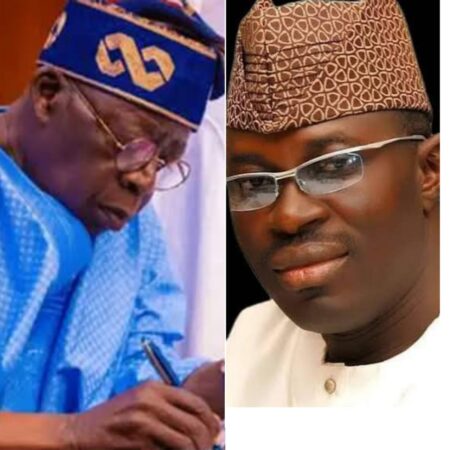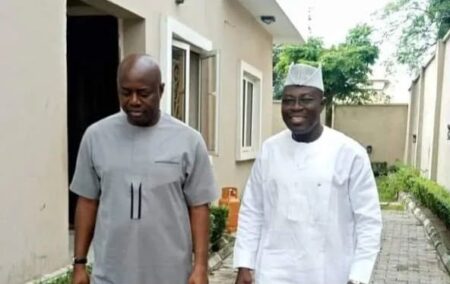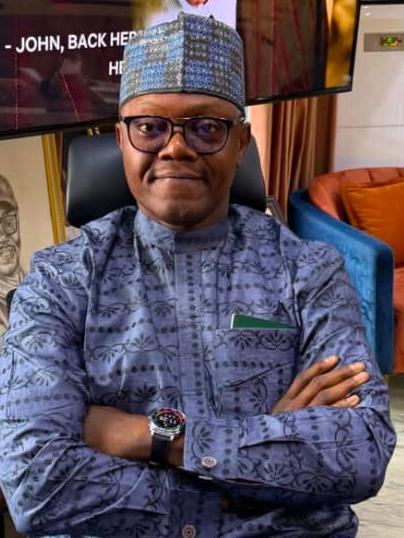
For 63 years, Nigeria’s presidency has oscillated between the far North and the South, leaving the Middle Belt as the nation’s perennial political bridge but never its driver. That imbalance is not merely symbolic. It has cost us cohesion, economic depth, and a grounded sense of equity. The Middle Belt is Nigeria’s cartographic and cultural center of gravity. It is the nation’s food basket, its mining heartland, and the one region where Christianity and Islam, farming and pastoralism, minority and majority identities meet daily and negotiate peace. Yet it has never produced a president. To heal Nigeria’s fractured trust and unlock latent growth, that must change in 2027. And the candidate who embodies this imperative is Arch Peter Agada.
1. Why the Middle Belt, and why now
A president from the Middle Belt does three things at once. First, it restores the principle of rotation to its full moral meaning. Zoning was designed to give every bloc a stake in power. Excluding the North Central and its contiguous cultural neighbors breaks that compact and breeds cynicism. Second, it places national security in the hands of a leader who lives the conflict map. The Middle Belt understands banditry, farmer-herder clashes, and mining-related violence not as talking points but as home-front realities. Third, it recenters economic policy on production. Nigeria’s debt and FX crises are symptoms of a consumption-heavy economy. The Middle Belt’s comparative advantage is production: yams in Benue, rice in Niger, tin and columbite on the Plateau, sesame in Nasarawa, ceramics in Kogi. A president from this zone governs with a bias toward making things, not just sharing revenue.
2. Why Arch Peter Agada is a must
Leadership is proven in two arenas: character and capacity. Arch Peter Agada brings both, refined in the unforgiving arena of Nigeria’s private sector. He is not a theorist of enterprise; he is a builder of physical and institutional structures. In a country where policy often dies at implementation, Agada has spent 30 years turning drawings into realities that stand, house people, and create value.
3. Agada’s private-sector record: a blueprint for national renewal
Agada’s career is defined by three pillars that map directly onto Nigeria’s most urgent needs:
- Built environment and industrial capacity: As MD/CEO of Cyrus Acoustic, Agada has delivered 200+ architectural projects across 5 continents. His practice specializes in permit-ready construction documents, landscape and site design, and 3D visualization that de-risks projects before a single block is laid. This is not vanity architecture. It is the unglamorous discipline of standards, compliance, and delivery. Nigeria’s housing deficit, abandoned public projects, and collapsing infrastructure are failures of design thinking and project discipline. Agada exports the opposite.
- Value-chain thinking and import substitution: Agada has publicly challenged Nigeria’s dependence on imported building materials and called for reevaluating architectural cost structures to reflect local realities. He argues for professional fee transparency and client education so that expertise is priced, respected, and sustainable. A presidency with that instinct tackles FX pressure at the root: design for what we have, build with what we make, and stop outsourcing the basics of shelter and commerce.
- Financial stewardship and movement building: Agada served as Director of Finance for the Obidient Movement through the 2023 cycle. He later resigned in March 2026 to launch The Movement Nigeria, citing the need for structure and coordination. Running the finances of a national volunteer movement demands two things Nigeria’s treasury needs: accountability without coercion, and scale without theft. He raised, tracked, and deployed resources in a low-trust environment and walked away when structure failed. That is how you handle public money.
4. From studio to Aso Rock: translating capacity to statecraft
Architecture teaches three disciplines politicians often lack: consequence, sequencing, and load-bearing truth. In Agada’s world, a bad foundation kills. A missed load calculation buries people. You iterate on paper, not after collapse. Apply that to governance and three shifts follow. First, security gets design logic. You don’t protect communities with communiqués; you design safe corridors, agro-industrial clusters, and layered response systems. Second, the economy gets project logic. Roads, rails, and power are not ribbon-cutting events. They are 20-year assets with maintenance schedules. Third, youth get a pipeline. A president who understands design, costing, and delivery sees 120 million young Nigerians not as a demographic threat but as a skilled labor force waiting for credible plans.
5. The unity dividend
The Middle Belt is Nigeria’s most religiously and ethnically plural zone. A leader from there cannot govern as a sectional champion; the coalition that elects him collapses if he tries. Agada’s constituency is competence. Drawings don’t care about tribe. Budgets don’t care about religion. Deadlines are ecumenical. That is the only identity that scales from Kwara to Cross River and from Sokoto to Bayelsa.
Conclusion
Nigeria does not need another turn-by-turn presidency. It needs a turning point. Electing a Middle Belt president ends the quiet disenfranchisement of the nation’s center. Electing Arch Peter Agada ensures that the turn is not merely symbolic but structural. He has built in the private sector the very things the public sector lacks: discipline, delivery, and design. The presidency is not a reward for region or religion. It is a job. And for this job, at this time, Arch Peter Agada is a must.