By Oyo Amebo
Politics, by habit, thrives on spectacle. It demands presence, orchestrates visibility, and measures relevance by the volume of announcements.
Yet, every so often, influence arrives differently, not as a declaration, not as a performance, but as a quiet, accumulating force.
Oyo State appears to be experiencing just such a moment.
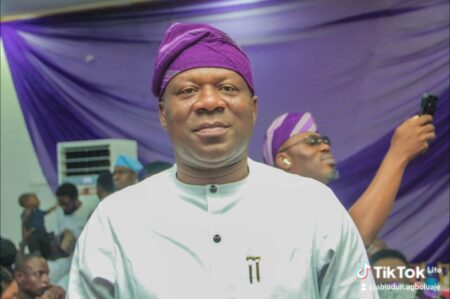
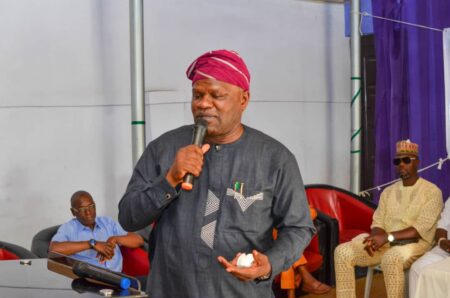
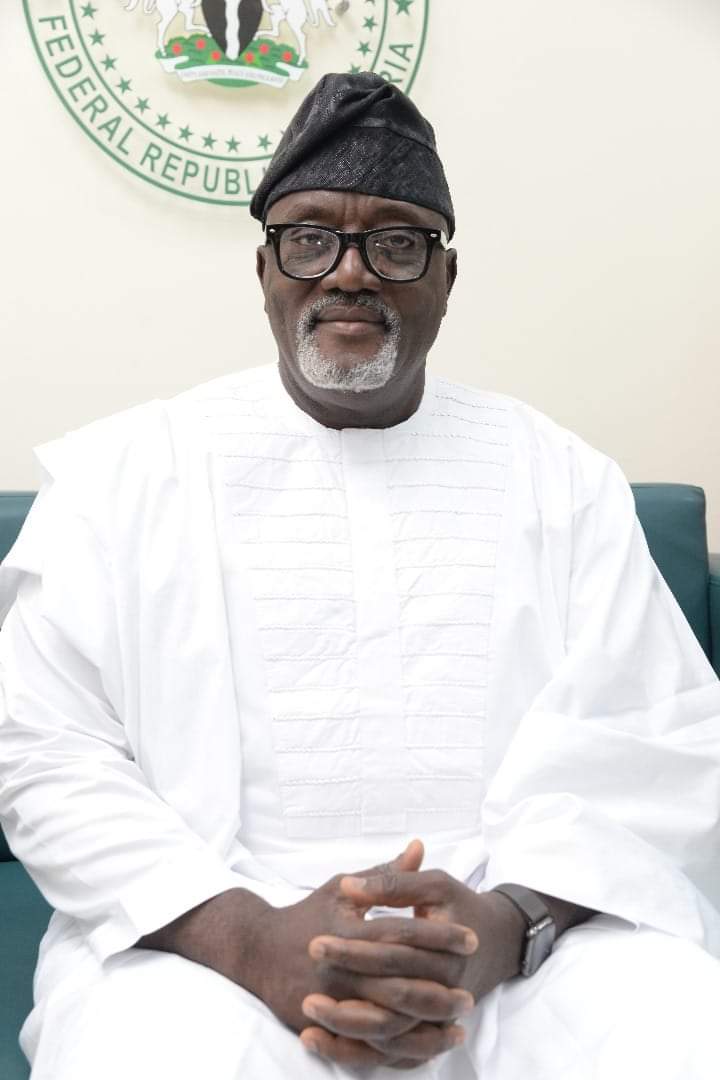
Honourable Adedeji Dhikrullahi Stanley Olajide, better known as Odidiomo, has emerged as an unannounced centre of political gravity. He has not broadcast ambitions, staged campaigns, or courted headlines.
And yet, in conversations that thread through local gatherings, professional networks, and discreet political circles, his name recurs, not as idle speculation, but as a touchstone of consideration. Relevance, in his case, has been earned rather than proclaimed.
What makes this phenomenon remarkable is its foundation in evidence. Odidiomo’s public record demonstrates a steady, deliberate approach: identify genuine needs, intervene decisively, and remain accountable for outcomes. In a political climate fatigued by promises unfulfilled, this discipline resonates.
Leadership, after all, is not a spectacle to be staged; it is a craft to be exercised consistently. Across the last political cycle, Odidiomo resisted the temptations that ensnare many. No rehearsed claims of readiness.
No media-crafted positioning. No gestures designed to test public attention. Instead, he remained anchored in service, attending to tangible challenges, measuring progress, and returning to refine solutions where they fell short.
It is this absence of noise that paradoxically amplifies his presence. While others trumpet ambition before delivery, Odidiomo’s credibility grows in quiet increments, verified by results rather than rhetoric.
Communities note the difference: engagements are not opportunities for empty endorsements but forums for accountability.
Feedback is absorbed, shortcomings acknowledged, and action follows swiftly. Familiarity is balanced with rigour; accessibility, with integrity.
Observers beyond the grassroots have begun to take note. Analysts no longer frame him as a curiosity; they measure, calibrate, and ponder the implications. Can political authority be sustained primarily through demonstrated competence?
Can trust, accrued patiently over time, outshine the machinery of mobilisation and spectacle? These are the questions Odidiomo provokes, not through assertion, but through proof.
By the close of 2025, his name had become more than an individual reference; it had become a symbol, a question, a subtle challenge to convention. What if leadership began not with ambition, but with assurance?
What if governance earned confidence before seeking expansion? These queries, once theoretical, now circulate with increasing seriousness across Oyo’s political discourse.
Whether Odidiomo will ultimately pursue a larger mandate remains undecided.
Yet the environment around him has already shifted. When influence arises organically, when credibility precedes announcement, the rules of engagement begin to bend.
Oyo is witnessing a subtle but significant transition: from politics measured by declaration to politics guided by demonstration; from spectacle to substance.
The question now is no longer whether leadership can emerge without noise, the answer is increasingly evident.
The deeper test is whether Oyo is prepared to fully embrace a politics grounded in evidence, sustained by trust, and affirmed by results. Odidiomo’s quiet ascent suggests that, for many, the answer is beginning to take shape.