


By Oyo Amebo

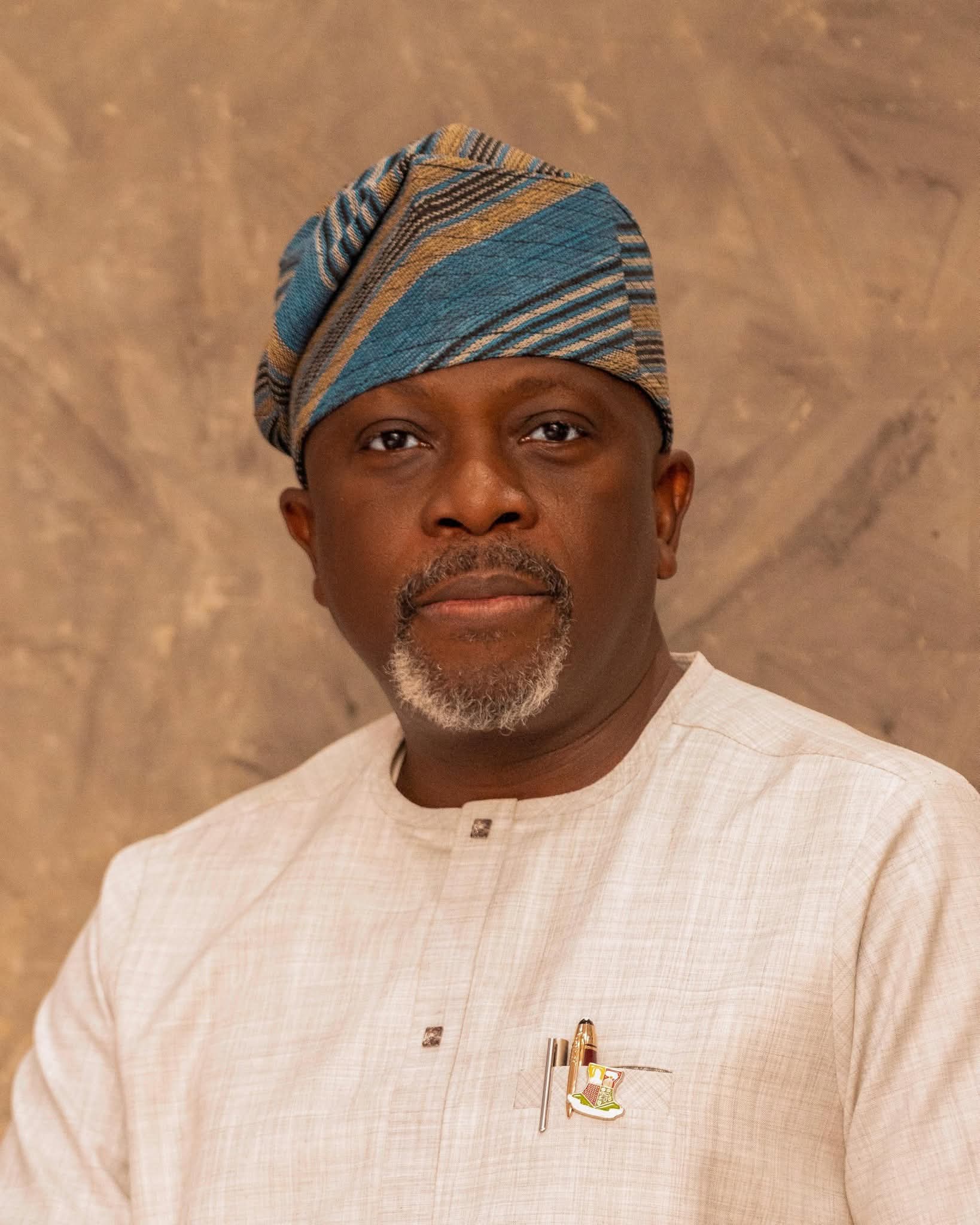
In a political culture where accessibility is often measured by how frequently a public official appears at beer parlours, responds to late-night calls, or indulges in the theatre of public familiarity, the question almost asks itself with a hint of mischief: why Segun Ogunwuyi of all people?
Why a man many critics describe as rigid?




Why someone accused, sometimes unfairly, of being inaccessible? And, perhaps most curiously in a society that romanticises the warmth of the Yoruba omoluabi ethos, why a figure whose public persona appears more disciplined than convivial?
Yet, beneath the sarcasm lies a more inconvenient truth, one that challenges the very assumptions on which such criticisms are built.
For what, precisely, is the job of a Chief of Staff if not to be rigid when necessary, guarded when required, and relentlessly focused on the machinery of governance rather than the optics of popularity?
In the inner architecture of government, the Chief of Staff is not a socialite. He is, in the most practical sense, the principal’s operational anchor, an “errand servant” in local parlance, though one entrusted with extraordinary responsibility.
He coordinates power without performing it, manages access without advertising it, and absorbs pressure so that the system above him appears seamless.
By that definition, Segun Ogunwuyi’s so-called rigidity begins to look less like a flaw and more like professional discipline. Since his elevation to the role in 2021 under Governor Seyi Makinde, there has been an almost conspicuous absence of the kind of friction that typically defines such proximity to power.
No publicised fallouts. No whispered tensions. No dramatic reshuffles that suggest internal discord.
Instead, there is continuity.
He chaired the transition committee that ushered in the governor’s second term. Within minutes of that inauguration, his reappointment was announced, an unusual gesture in a political environment where loyalty is often rewarded quietly, if at all. Even when the cabinet was dissolved, Ogunwuyi remained.
In politics, such consistency rarely happens by accident. It either signals a deep understanding of a leader’s temperament and expectations, or, as some might jokingly suggest, the mystical intervention of a well-pleased babalawo. But jokes aside, the more plausible explanation lies in competence, discretion, and an ability to read power without misreading its limits.
Critics, however, persist. They ask: is he humane enough? Does he embody the cultural softness expected of leadership in a Yoruba sociopolitical context? Does he carry unseen baggage that might render him electorally unappealing?
These are fair questions, at least on the surface. But they also reveal a fundamental misunderstanding of roles. A Chief of Staff who spends his time cultivating public charm at the expense of administrative efficiency risks becoming ornamental. Governance, particularly at a time of reform, is neither leisurely nor forgiving.
It demands long hours, constant movement, and the processing of decisions that rarely allow for social pleasantries. Can such a figure reasonably be expected to answer every call, reply every message, and still maintain the tempo required of the office?
The expectation, while popular, is unrealistic. More telling, perhaps, is what has not happened under his watch. In an era where allegations of appointment racketeering often trail corridors of power, Ogunwuyi’s tenure has not been defined by such scandals.
This stands in contrast to past administrations, where the sheer volume of political appointees sometimes bordered on the absurd, famously prompting even insiders to question who, exactly, had been appointed and by whom.
That era carried its own peculiar humour. Governance occasionally blurred into confusion. This one, by comparison, appears more structured.
Yet the most revealing insight into Ogunwuyi’s political character does not lie in administrative efficiency alone. It lies in a decision that, in Nigerian politics, borders on the unthinkable.
In 2022, as the political machinery of the Peoples Democratic Party in Oyo State prepared for the general elections, Ogunwuyi was positioned as a leading contender for a senatorial ticket from the Ogbomoso zone.
It was, by every conventional metric, the next logical step in his career, a progression from the House of Representatives to the Senate, from regional relevance to national visibility. The call came. The offer was made.
And he declined.
Governor Makinde would later recount the moment publicly, recalling how Ogunwuyi chose to remain within the state government rather than pursue a seat in the National Assembly. His reasoning was disarmingly simple: his loyalty, he said, was to the state and to the ongoing work of governance.
In a political environment where ambition is rarely postponed, let alone rejected outright, the decision landed with quiet force. It was neither dramatic nor performative, yet it has since echoed through Oyo’s political discourse as a rare instance where service appeared to take precedence over advancement.
It is this paradox that now defines the Ogunwuyi question.
A man criticised for being distant is, at the same time, deeply embedded in the operational success of government.
A figure labelled rigid has demonstrated flexibility where it matters most, choosing institutional continuity over personal ambition. A supposedly inaccessible aide has, in effect, made himself indispensable to the system he serves. And so the sarcasm returns, this time with sharper irony.
Why Ogunwuyi?
Why a man who does not campaign for attention but commands trust? Why someone who does not perform accessibility but delivers administrative stability?
Why an individual who, when presented with political elevation, chose instead to remain in the background where the real work is done?
Perhaps the better question is not why him, but why not. For in the unfolding narrative of Oyo politics, where the search for succession quietly intensifies, one principle remains constant: leadership is not merely about visibility. It is about reliability.
And if there is a case to be made, quietly but convincingly that continuity, loyalty, and disciplined service should define the next phase of governance, then the argument for Segun Ogunwuyi may already be writing itself.
Not in grand declarations, but in the steady, unremarkable consistency that politics so often overlooks, until it becomes indispensable.
