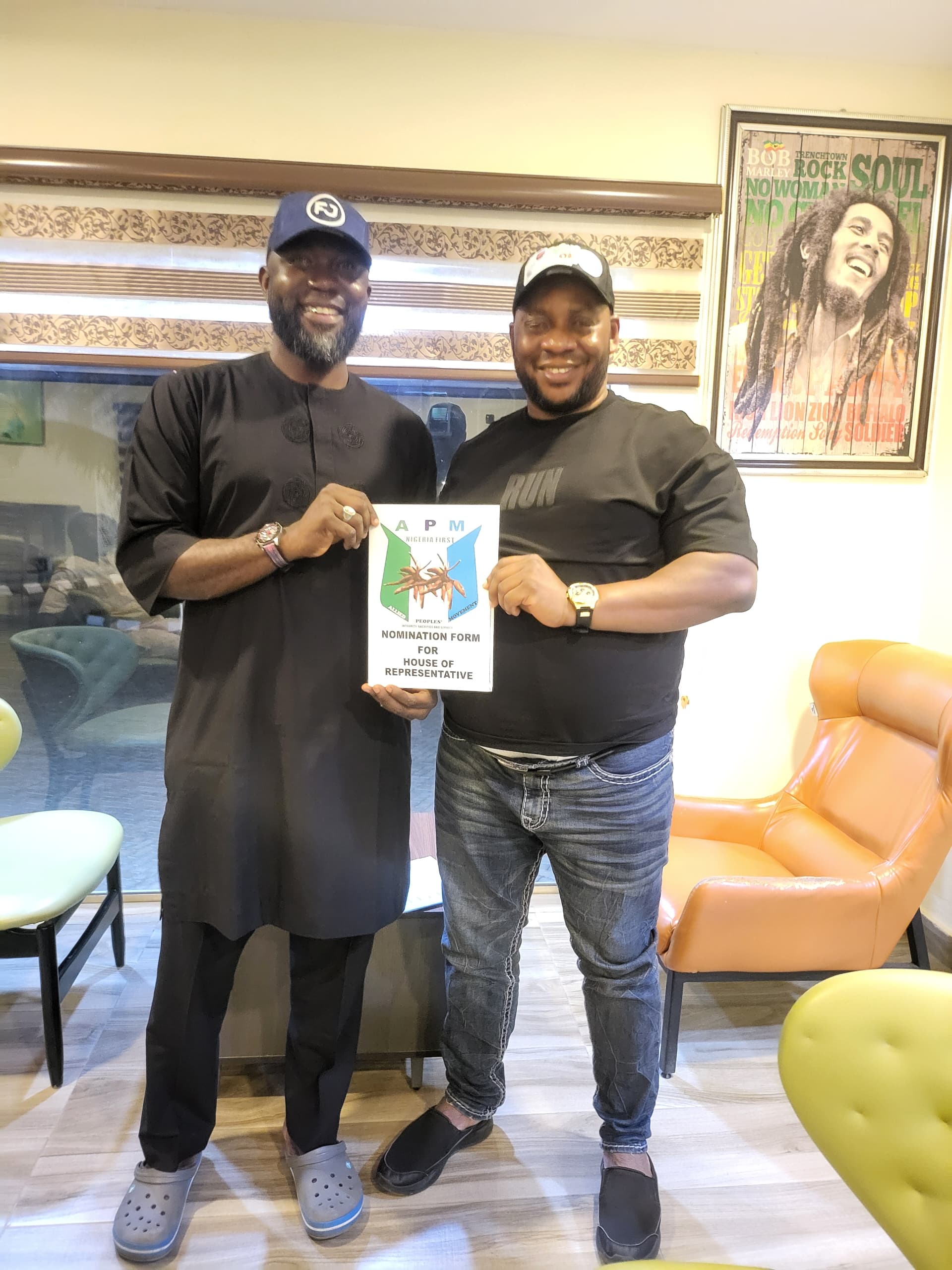
Long before conversations about 2027 began to drift through political circles in Ibadan, the names Akin Fagbemi and Saheed Akinade Fijabi had already settled into public consciousness for different reasons.
One earned attention through the quiet but difficult work of administration; the other through years of visible constituency politics that still linger in public memory.
But lately, across the streets and political corners of Ibadan Northwest/Southwest Federal Constituency, both names are increasingly being mentioned in the same breath.
Not with noise. Not with manufactured political excitement. Rather, with the kind of measured curiosity that usually accompanies the emergence of something potentially consequential.
There is an ease to their relationship that many within the constituency find remarkable. In private gatherings and political meetings, the connection between the two men appears less like a transactional alliance and more like a long-standing understanding between brothers who recognise each other’s strengths.
While Fagbemi brings the measured confidence of a technocrat shaped by public administration, Fijabi carries the enduring appeal of a politician whose years in the House of Representatives still command goodwill among many constituents.
Together, they represent two different currents of influence gradually converging within the constituency, governance and grassroots politics, institutional leadership and street-level connection, administrative performance and electoral experience.
And in a political environment where alliances are often hurriedly assembled without depth or trust, the growing closeness between the two Akins has become a subject of increasing fascination.
Not because either man has openly declared political intentions, but because people within the constituency can already sense the shape of a formidable movement quietly taking form.
For Akin Fagbemi, public recognition did not arrive through flamboyant politics or relentless self-promotion. It came instead through responsibility — the difficult, often thankless work of managing public institutions.
During his tenure as Executive Chairman of the Oyo State Road Traffic Management Authority between 2019 and 2023, he inherited an agency burdened by public scepticism and operational challenges. Yet, within a relatively short period, the agency began to assume a different image.
Discipline improved. Visibility increased. Public engagement became more structured. More importantly, the agency developed a level of operational confidence that many residents openly acknowledged.
Within government circles, his handling of the assignment strengthened his reputation as an administrator capable of managing pressure without losing composure.
His subsequent appointment as Chairman of the Oyo State Hospitals Management Board further reinforced that perception. In a sector where public frustration is often immediate and unforgiving, Fagbemi has continued to project the calm, methodical style that has gradually become associated with his leadership.
Yet, beyond official titles and appointments, his political value lies elsewhere, in his ability to maintain unusual closeness to grassroots communities despite occupying strategic government positions.
Those familiar with the constituency often describe him as a man who moves comfortably between government offices and local political spaces without appearing detached from either.
Fijabi’s political journey, however, followed a different rhythm.
By the time he completed his tenure in the House of Representatives in 2019, his political identity within Ibadan Northwest/Southwest had already become firmly established.
Unlike many legislators whose relevance fades once they leave office, Fijabi’s years at the National Assembly continue to generate conversations within the constituency.
Part of that memory is tied to visibility. Constituents remember projects. They remember empowerment initiatives. They remember accessibility. In local political discussions, his tenure is frequently referenced as a period when representation felt tangible and immediate.
Even among younger politicians within the constituency, there remains an acknowledgement of the political structure and grassroots loyalty he built during those years.
His enduring influence explains why his movements still attract attention and why his political relationships are carefully observed.
But perhaps the most intriguing aspect of the growing relationship between both men is what it symbolises within the constituency’s political culture.
Ibadan politics, like many political environments, has never been entirely free from rivalry, factional calculations and personality clashes.
Alliances emerge quickly and disappear just as suddenly. Mutual suspicion often thrives where cooperation should exist. Yet, the relationship between Fagbemi and Fijabi appears to resist that pattern.
Observers who have encountered both men together frequently speak about the visible absence of tension between them. There is no obvious struggle for superiority.
No subtle competition for political relevance. Instead, what appears evident is mutual regard — the kind that allows each man to remain secure within his own influence while recognising the value of the other.
That dynamic may ultimately explain why conversations around them continue to grow. Within the constituency, supporters increasingly see the possibility of a political partnership capable of merging administrative credibility with tested grassroots mobilisation.
For some, it is not merely about elections or positions. It is about the potential emergence of a coordinated leadership structure rooted in familiarity with the constituency and strengthened by complementary strengths.
While Fijabi brings years of political experience, electoral understanding and enduring grassroots acceptance, Fagbemi represents a newer layer of influence shaped by governance, institutional management and rising political visibility.
Together, they embody a political balance that many constituencies often struggle to produce, experience without stagnation and ambition without recklessness.
As 2027 gradually approaches, conversations around both men are solid, political calculations will evolve. Alignments sealed. Interests will unite.
But already, within many parts of Ibadan Northwest/Southwest, there is a growing sense that the political future of the constituency may not simply be determined by individual ambition, but by the strength of relationships capable of commanding trust across different political tendencies.
And for now, few relationships appear more closely watched than the one between the two Akins.
Quietly, steadily and without unnecessary drama, Akin Fagbemi and Saheed Akinade Fijabi are shaping a political narrative that many within the constituency believe could become one of the defining stories of the journey to 2027.
This piece was written by Segun Kehinde, the publisher of Goalpoachernews.